.webp&w=384&q=75)

Loading, please wait...
Loading, please wait...

Understanding circadian rescue sleep deprivation is essential for clinicians managing patient fatigue. Recently, findings have suggested that our internal biological clock can temporarily boost performance despite extreme wakefulness. This phenomenon occurs because the circadian signal provides an alerting drive during the early evening hours. Consequently, individuals may perform better on specific cognitive tasks even after thirty-five hours without any rest.
A recent study involving fifty-four healthy adults explored this mechanism. Participants stayed awake for thirty-five consecutive hours while performing various validated tests. Notably, researchers found that objective performance recovered more significantly than subjective feelings of exhaustion. Specifically, recovery rates for the Psychomotor Vigilance Task (PVT) reached up to 52.1%. In contrast, subjective sleepiness scores showed only a 23.45% improvement during the same period.
The two-process model of sleep regulation provides a vital framework for these results. Specifically, Process S represents the accumulating sleep pressure, whereas Process C represents the circadian cycle. These findings indicate that homeostatic load primarily drives subjective sleepiness. Furthermore, the biological clock maintains a stronger influence on objective cognitive tasks during acute sleep loss. Therefore, a professional might perform well during certain evening hours while still feeling severely exhausted internally.
These insights are vital for managing productivity in high-pressure environments. Doctors and emergency workers frequently face extended shifts that disrupt normal sleep patterns. However, recognizing that a temporary evening boost does not eliminate underlying sleep debt is crucial for long-term safety. Additionally, fatigue management protocols should account for these domain-specific differences to prevent critical errors in the workplace.
It is a phenomenon where cognitive performance partially improves in the evening despite a person being sleep-deprived for an extended period.
No. Research shows that objective tasks like vigilance and processing speed recover much better than subjective feelings of sleepiness.
Subjective sleepiness is heavily influenced by homeostatic sleep pressure (Process S), which continues to build the longer you stay awake, regardless of the temporary circadian boost.
Disclaimer: This content is for informational and educational purposes only. It is not intended as medical advice or a substitute for professional healthcare. Consult a qualified healthcare professional for any health-related concerns. Refer to the latest local and national guidelines for clinical practice.
References
Guo B et al. Domain-Specific Circadian Rescue following Sleep Deprivation. Sleep. 2026 Feb 27. doi: undefined. PMID: 41757508.
Borbély AA et al. The two-process model of sleep regulation: a reappraisal. J Sleep Res. 2016;25(2):131-143.
Banks S et al. Behavioral and physiological consequences of sleep restriction. J Clin Sleep Med. 2007;3(5):519-528.

Read summarized clinical updates, watch expert medical content, and earn CME certifications right from your smartphone.
Open your smartphone camera to scan and install.





A study reveals how circadian rhythms partially restore cognitive performance during sleep deprivation, showing significant differences between cognitive ta...
7 months ago

Explore why official drug package inserts fail to reflect modern evidence for clozapine prescribing. Learn how legal standards of care, case law, slow titration, and vital adverse event monitoring empower clinicians to prioritize evidence-based medical practice over outdated manufacturer labeling.
Today
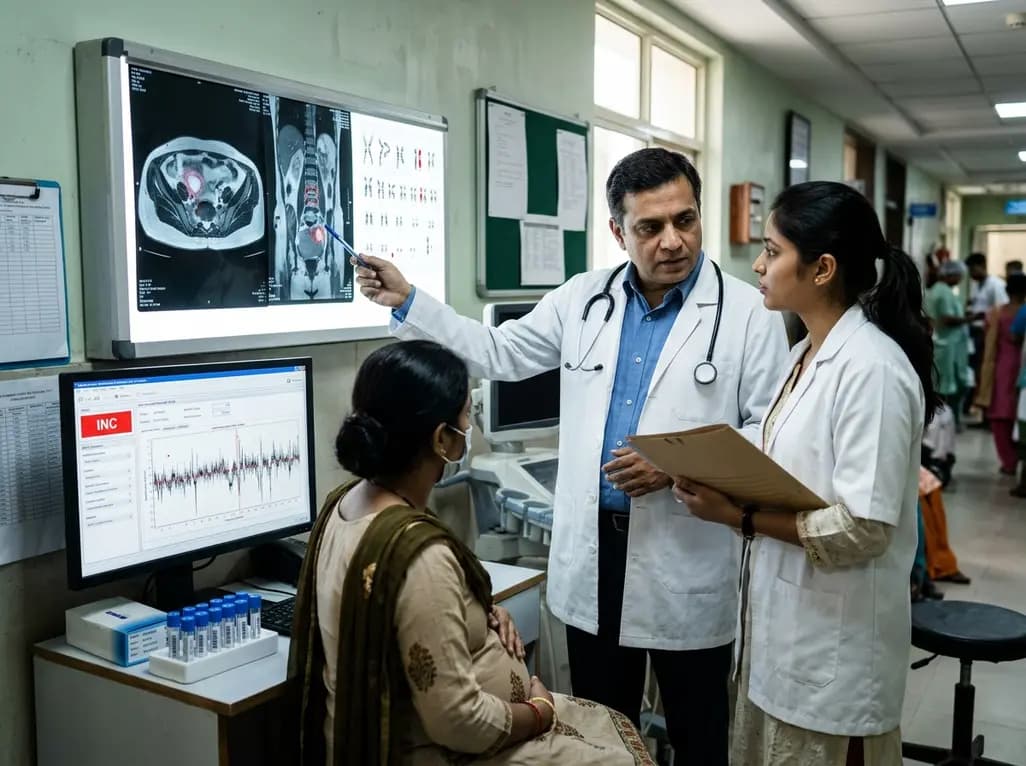
Occult maternal malignancy accounts for 3.82% of persistent unreportable NIPT results with genomic noise. Multiple chromosomal aberrations, notably on chromosome 18, warrant thorough oncological evaluation and whole-body MRI to ensure timely maternal diagnosis while preserving fetal care.
Today

This article reviews the forensic and clinical complexities of acute myocarditis arising on left ventricular hypertrophy in children, highlighting early diagnostic red flags and multidisciplinary postmortem autopsy protocols.
Today
A randomized controlled trial demonstrates that an eight-week dual-task training intervention significantly improves static and dynamic postural control over standard balance exercises in individuals with chronic ankle instability, addressing critical neurocognitive deficits during athletic and daily activities.
Today

A retrospective cohort study of 7,716 ICU patients from the MIMIC-IV database demonstrates that Gradient Boosting Decision Trees significantly outperform traditional SOFA scores in predicting in-hospital mortality among patients with sepsis and diabetes, with SHAP analysis providing clinical interpretability.
Today
