.webp&w=384&q=75)

Loading, please wait...
Loading, please wait...

Idiopathic normal pressure hydrocephalus (iNPH) represents a critical cause of reversible dementia, urinary dysfunction, and gait ataxia in older adults. Traditional pathophysiological models have focused almost entirely on impaired cerebrospinal fluid (CSF) resorption. However, new research reveals that choroid plexus enlargement plays an unexpected role in iNPH pathogenesis. By examining structural variations within cerebral ventricles, neuroscientists are reshaping our understanding of fluid production dynamics. Consequently, these findings challenge long-standing concepts and illuminate noninvasive therapeutic alternatives.
Historically, clinicians attributed ventricular enlargement in iNPH primarily to defective outflow through arachnoid granulations and reduced lymphatic absorption. Nevertheless, cerebrospinal fluid formation remains an active biological process driven by the choroid plexus epithelium. In this retrospective study, investigators analyzed 3T brain MRIs of fifty iNPH patients and fifty age- and sex-matched healthy controls.
The investigators discovered that individuals with iNPH exhibited substantially larger lateral ventricular choroid plexus area and volume compared to controls. Moreover, this volumetric expansion persisted after normalizing values against total intracranial volume. Therefore, choroid plexus enlargement represents an intrinsic pathological feature rather than a secondary artifact of ventriculomegaly. Additionally, cellular hypertrophy and sustained neuroinflammation may accelerate this tissue expansion. As a result, neuroimaging experts now view the choroid plexus as an active driver of hydrocephalus dynamics.
The discovery of choroidal hypertrophy introduces crucial questions regarding fluid hypersecretion and impaired intracranial compliance. Typically, the human choroid plexus secretes approximately 500 milliliters of fluid daily through specialized transmembrane transport systems. In iNPH, cellular expansion and vascular engorgement might accelerate fluid production beyond physiological resorption limits. Furthermore, choroidal enlargement can impair intracranial pulse dampening, transmitting damaging pressure waves through brain parenchyma.
Simultaneously, deficient parenchymal clearance worsens this fluid accumulation. Recent studies indicate that glymphatic influx and deep venous outflow decline with age and neurovascular disease. Consequently, when increased fluid secretion encounters diminished outflow capacity, ventriculomegaly inevitably progresses. Thus, choroid plexus expansion acts synergistically with impaired resorption to worsen clinical symptoms. Recognizing these dual pathophysiological forces helps clinicians better understand the development of Hakim's classic triad.
For decades, surgeons have relied on ventriculoperitoneal or ventriculoatrial shunts as the primary therapy for iNPH. Although surgical CSF diversion often improves gait and cognition, it carries persistent procedural liabilities. For example, elderly patients encounter risks of intracranial hemorrhage, bacterial infections, and subdural hematomas from overdrainage. Furthermore, mechanical shunt malfunction occurs frequently, requiring emergency revisions under general anesthesia.
Additionally, many frail patients present with complex systemic comorbidities that make invasive operations hazardous. Anticoagulant regimens, severe heart failure, and advanced age often restrict surgical eligibility. Moreover, repeated valve adjustments require dedicated clinic visits and imaging surveillance, straining family caregivers and healthcare facilities. Therefore, modern neurology requires durable, noninvasive interventions that regulate fluid dynamics safely. Addressing choroidal hypersecretion could provide lasting functional recovery without implanting mechanical hardware.
To circumvent the risks of invasive shunting, clinicians are exploring noninvasive volume-reductive therapies targeting the choroid plexus. Historically, endoscopic choroid plexus cauterization proved effective in pediatric hydrocephalus. However, performing intracranial endoscopy in frail geriatric patients carries notable morbidity. Consequently, noninvasive platforms such as transcranial magnetic resonance-guided focused ultrasound (MRgFUS) offer a compelling alternative.
Through precise stereotactic acoustic sonication, MRgFUS can noninvasively ablate or modify choroid plexus tissue without surgical craniotomy. Furthermore, real-time MR thermometry provides continuous thermal monitoring, preserving critical adjacent thalamic and ependymal structures. By reducing secretory tissue volume, focused ultrasound can attenuate CSF overproduction and stabilize ventricular dimensions. In addition, targeted stereotactic radiosurgery presents an alternative modality for selective tissue devascularization. Accordingly, these noninvasive techniques could transform hydrocephalus treatment into an outpatient, incisionless procedure.
Quantifying choroid plexus dimensions provides immediate diagnostic value for clinical neurologists and neuroradiologists. Differentiating iNPH from neurodegenerative conditions like Alzheimer's disease remains challenging in clinical practice. Although neuroimaging signs like disproportionately enlarged subarachnoid-space hydrocephalus (DESH) guide evaluation, their sensitivity varies widely. Therefore, incorporating choroid plexus volumetry into standard 3T MRI interpretation improves diagnostic confidence.
Furthermore, automated artificial intelligence segmentation can measure choroid plexus volumes during routine MRI processing. By combining these volumetric data with the callosal angle and Evans index, clinicians establish a comprehensive quantitative profile. Importantly, baseline choroid volume may predict patient responsiveness to diagnostic tap tests or targeted ablation. Thus, quantitative neuroimaging transforms qualitative assessment into personalized predictive medicine. Widespread implementation of these imaging biomarkers will optimize diagnostic pathways across clinical neurology centers.
Translating these discoveries into clinical reality demands rigorous multicenter clinical trials and collaborative efforts across medical specialties. First, longitudinal investigations must verify whether choroidal enlargement precedes ventriculomegaly or represents a secondary inflammatory phenomenon. Moreover, future studies should establish standardized volumetric thresholds across diverse demographic populations to guide therapeutic decisions.
In healthcare systems across India and globally, noninvasive therapeutic alternatives offer profound economic and clinical benefits. Mechanical shunt expenses, surgical infection risks, and geographic barriers to revision surgery pose heavy burdens for elderly patients. In contrast, noninvasive volume reduction could deliver definitive single-session treatment at advanced regional medical centers. Additionally, early diagnosis enables prompt intervention before irreversible axonal degeneration occurs. Ultimately, clarifying the pathological role of choroid plexus enlargement heralds a new era of restorative care for adult hydrocephalus.
Choroid plexus enlargement contributes to normal pressure hydrocephalus by accelerating cerebrospinal fluid secretion and impairing intracranial compliance. The expanded choroidal tissue produces excess fluid that overwhelms standard resorption mechanisms. Concurrently, altered vascular pulsatility and cellular hypertrophy within the ventricles exacerbate mechanical stress on periventricular subcortical motor pathways.
Conventional ventriculoperitoneal shunts carry substantial clinical risks, including catheter blockage, surgical infection, overdrainage subdural hematomas, and recurrent revisions. In contrast, noninvasive volume-reductive therapies eliminate foreign implanted hardware entirely. Consequently, these innovative procedures minimize procedural trauma, reduce anesthesia exposure, and offer safe alternatives for vulnerable geriatric patients with severe comorbidities.
Yes, 3T MRI effectively differentiates pathological choroid plexus expansion from normal physiological aging. While mild volumetric changes occur with advanced age, patients with iNPH demonstrate significant tissue enlargement even after normalizing for total intracranial volume. High-resolution 3D volumetric sequences provide objective morphometric data that consistently surpass standard healthy control thresholds.
Disclaimer: This content is for informational and educational purposes only and does not constitute medical advice, diagnosis, or treatment. Healthcare professionals should exercise their independent clinical judgment when managing individual cases. Refer to the latest local and national guidelines for clinical practice.
References

Read summarized clinical updates, watch expert medical content, and earn CME certifications right from your smartphone.
Open your smartphone camera to scan and install.





A landmark 3T MRI study reveals significant choroid plexus enlargement in idiopathic normal pressure hydrocephalus (iNPH). This neuroimaging discovery provides fresh insights into cerebrospinal fluid dysregulation and opens doors to noninvasive volume-reductive therapies, offering hope beyond surgical shunts.
Today

A multicity study highlights that over 80% of acute respiratory infections remain outside hospitals. Patients frequently choose community pharmacies and digital platforms. Integrating digital health data and retail pharmacy sales can fill critical surveillance gaps and improve early outbreak detection.
Today

Scandinavian register evidence reveals that neonatal birth length strongly predicts adult health and mortality, whereas birth weight dictates cognitive capacity. Symmetric growth restriction causes far more severe long-term deficits than asymmetric restriction, underscoring the need for comprehensive anthropometry.
Today
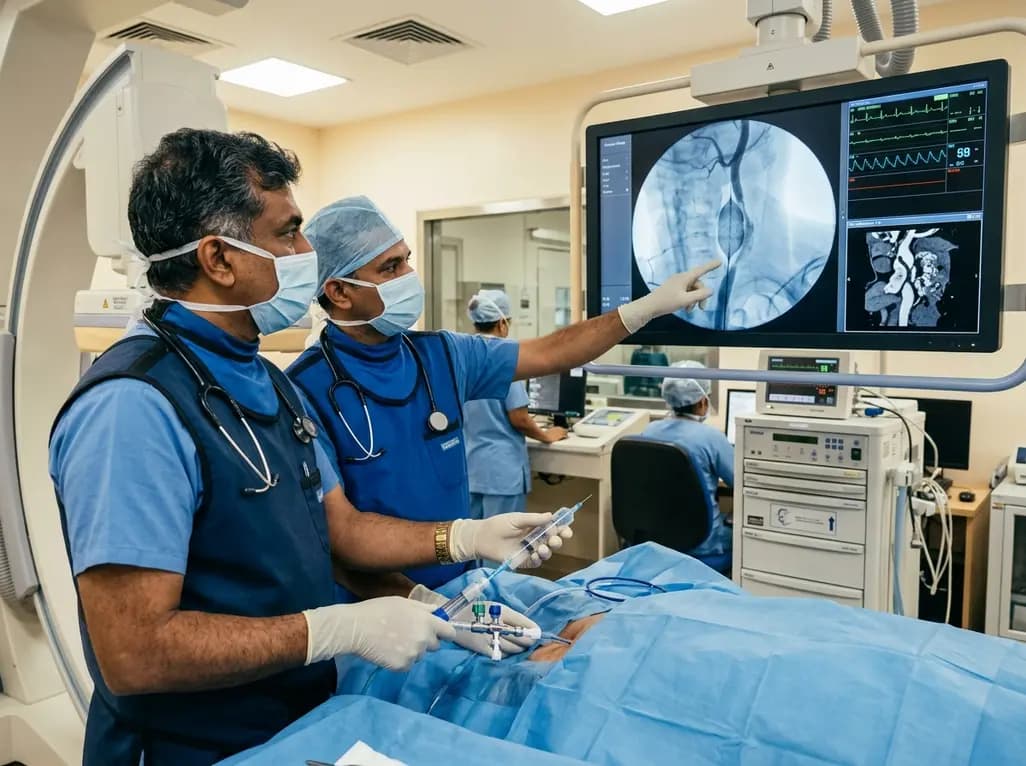
Discover how rescue cutting balloon angioplasty successfully modifies heavily calcified carotid stenosis, enabling stent delivery without baroreceptor instability and ensuring favorable long-term neurologic outcomes.
Today
A breakthrough study reveals that digoxin alleviates osteoarthritis by targeting LSP1 in synovial macrophages, preventing harmful extracellular trap formation and restoring SOD1 activity. This dual-action mechanism protects joint cartilage and offers a promising repurposing strategy for disease modification.
Today

Data from the 2026 Workforce Health Index reveals that 38.7% of urban employees and dependents exhibit abnormal glycemic control. Emerging at increasingly younger ages, this metabolic shift intersects with severe vitamin deficiencies, highlighting the urgent need for early workplace screenings and targeted clinical care.
Today
