

Loading, please wait...
Loading, please wait...

Cervical spine degeneration represents one of the most frequent causes of chronic musculoskeletal disability encountered in outpatient orthopedics and neurosurgery. Clinicians frequently encounter patients reporting severe, debilitating cervical spondylosis neck pain despite having imaging that demonstrates preserved cervical curvature and absent structural deformities. Historically, spine specialists attributed persistent axial symptoms primarily to mechanical malalignment and spinopelvic imbalances. However, emerging prospective evidence demonstrates that psychological distress and somatization influence perceived axial discomfort far more substantially than localized radiographic parameters.
For decades, orthopedic practice has focused heavily on radiographic parameters to explain spinal symptomatology. Surgeons routinely evaluate the cervical sagittal vertical axis, C2–C7 Cobb angles, and T1 slope to plan reconstructive procedures. Consequently, surgeons frequently assume that anatomical deviations directly drive subjective neck disability. While this paradigm holds true for marked structural deformities and fixed kyphosis, its utility in non-deformity degenerative disease remains controversial.
Degenerative disc disease and facet joint arthritis produce structural alteration without necessarily disrupting global spinal harmony. Therefore, relying exclusively on upright cervical radiographs often creates a misleading diagnostic picture. Clinicians frequently observe a stark discordance between profound patient suffering and near-normal radiological alignment. As a result, contemporary spine research is shifting its focus toward patient-reported outcome measures and systemic neuropsychiatric profiles. By recognizing axial discomfort as a multidimensional phenomenon, practitioners can better differentiate structural nociception from centrally augmented pain processing.
To address this clinical dilemma, researchers conducted a prospective, two-center cross-sectional investigation across two academic neurosurgical referral centers. The investigators extracted data from the prospective PANDA Registry between April 2024 and August 2025. They enrolled 130 consecutive patients admitted specifically for degenerative cervical spondylosis without severe spinal deformities. Crucially, the protocol excluded patients presenting with cranio-cervical junction anomalies, neoplasms, active spinal infections, primary spinal cord pathology, or previous reconstructions featuring unreadable shoulder shadows.
The study protocol paired standardized standing cervical radiographs with robust psychological profiling tools. Blinded evaluators measured seven key radiographic indices, including the McGregor slope, C1–C2 lordosis, C2 slope, subaxial C2–C7 lordosis, and cervical sagittal vertical axis. Concurrently, patients completed the Symptom Checklist-27, the Italian Ten-Item Personality Inventory, and the 10-item Connor-Davidson Resilience Scale. Furthermore, patients quantified their axial discomfort using a standardized Visual Analogue Scale. The investigators applied rigorous statistical corrections for multiple comparisons across predetermined analytical domains.
The radiographic measurements showed exceptional reproducibility, yielding intra-rater reliability values exceeding 0.9. Initial bivariate stratification divided patients into groups based on pain intensity. When comparing individuals with mild discomfort to those with severe pain, only upper cervical alignment demonstrated an initial difference. Specifically, C1–C2 lordosis appeared slightly increased in patients reporting Visual Analogue Scale scores of 7 or higher.
However, when researchers applied rigorous statistical adjustments to eliminate false-positive discoveries, this anatomical association completely disappeared. Subaxial curvature, cervical sagittal vertical axis, and C1–C2 lordosis showed no durable statistical relationship with axial neck pain intensity. Consequently, the investigators demonstrated that cervical sagittal balance parameters alone cannot explain the severity of perceived neck symptoms in patients without gross spinal deformity. These objective findings challenge the conventional surgical instinct to interpret minor sagittal deviations as the primary generator of axial discomfort.
In sharp contrast to the radiographic findings, psychometric assessments demonstrated robust, statistically preserved correlations with neck pain severity. When investigators stratified patients reporting moderate-to-severe pain, multiple domains of the Symptom Checklist-27 displayed pronounced elevations. Specifically, scores tracking dysthymic states, vegetative depressive symptoms, agoraphobic anxiety, and sociophobia differed sharply between pain cohorts.
Crucially, after applying stringent family-wise error corrections, vegetative somatic symptoms, dysthymia, and the Global Severity Index retained undeniable statistical significance. Patients experiencing heightened axial pain consistently reported prominent autonomic disturbances, unrefreshing sleep, mental exhaustion, and depressive dysphoria. Moreover, these psychological dimensions consistently overpowered any radiographic index in predicting pain severity. Therefore, persistent axial pain in degenerative neck disease appears heavily driven by emotional distress and centralized vulnerability rather than biomechanical angular changes.
These findings hold immediate clinical implications for spine surgeons, physiatrists, and pain medicine specialists. Operating exclusively to restore minor sagittal parameter imbalances in non-deformity spondylosis frequently leads to persistent postoperative axial pain. Consequently, clinicians must integrate formal psychological screening into their standard preoperative workup. Administering brief questionnaires such as the Symptom Checklist-27 enables surgical teams to identify vulnerable patients before scheduling elective decompression or fusion.
Furthermore, identifying elevated vegetative and dysthymic scores allows clinicians to establish realistic postoperative expectations. Surgical decompression relieves compressive radiculopathy and halts myelopathic progression, yet it rarely eliminates pain amplified by central distress. Thus, multidisciplinary care incorporating cognitive behavioral therapy, pain neuroscience education, and optimized pharmacotherapy should precede or accompany surgical intervention. By addressing affective distress proactively, surgical teams can significantly improve clinical satisfaction and reduce unnecessary procedural revisions.
Psychological distress, particularly somatization and depressive dysphoria, amplifies pain processing within the central nervous system. This state impairs descending inhibitory pathways and heightens somatic awareness. Consequently, patients perceive minor musculoskeletal and degenerative inputs as severe axial discomfort, independent of structural spinal alignment.
Sagittal balance parameters are critical for correcting rigid kyphosis or complex adult deformities, but they fail to predict axial pain severity in routine, non-deformity spondylosis. Relying solely on these radiographic angles without evaluating psychological profiles often leads to mismatched clinical expectations.
The Symptom Checklist-27 provides an efficient, validated assessment that evaluates vegetative, depressive, and anxiety dimensions in minutes. Incorporating this brief screening questionnaire alongside standard visual analogue scales allows surgeons to identify centralized distress and personalize patient counseling effectively before invasive interventions.
Disclaimer: This content is for informational and educational purposes only and is intended exclusively for healthcare professionals. Refer to the latest local and national guidelines for clinical practice.
References

Read summarized clinical updates, watch expert medical content, and earn CME certifications right from your smartphone.
Open your smartphone camera to scan and install.





A prospective multicenter study shows that psychological factors such as vegetative symptoms and dysthymia correlate more strongly with cervical spondylosis neck pain than sagittal alignment, highlighting the urgent need for routine preoperative mental health screening.
Today

A large UK cohort study of over 3.9 million patients found no substantive difference in the risk of peripheral neuropathy between systemic fluoroquinolones and cephalosporins, providing clinical reassurance while affirming known risks such as tendon rupture.
Today

A novel high-permeation vesicle-in-gel platform enhances transdermal fulvestrant delivery, achieving sustained release, robust intradermal retention, and superior antitumor efficacy in breast cancer models while circumventing the drawbacks of painful intramuscular depot injections.
Today

A recent study highlights the utility of measuring cardiac effort after surgery. In older, frail individuals undergoing cardiac surgery, combining continuous ECG with the six-minute walk test provides vital physiologic insights, demonstrating that heart rate responses mirror cycle ergometry.
Today
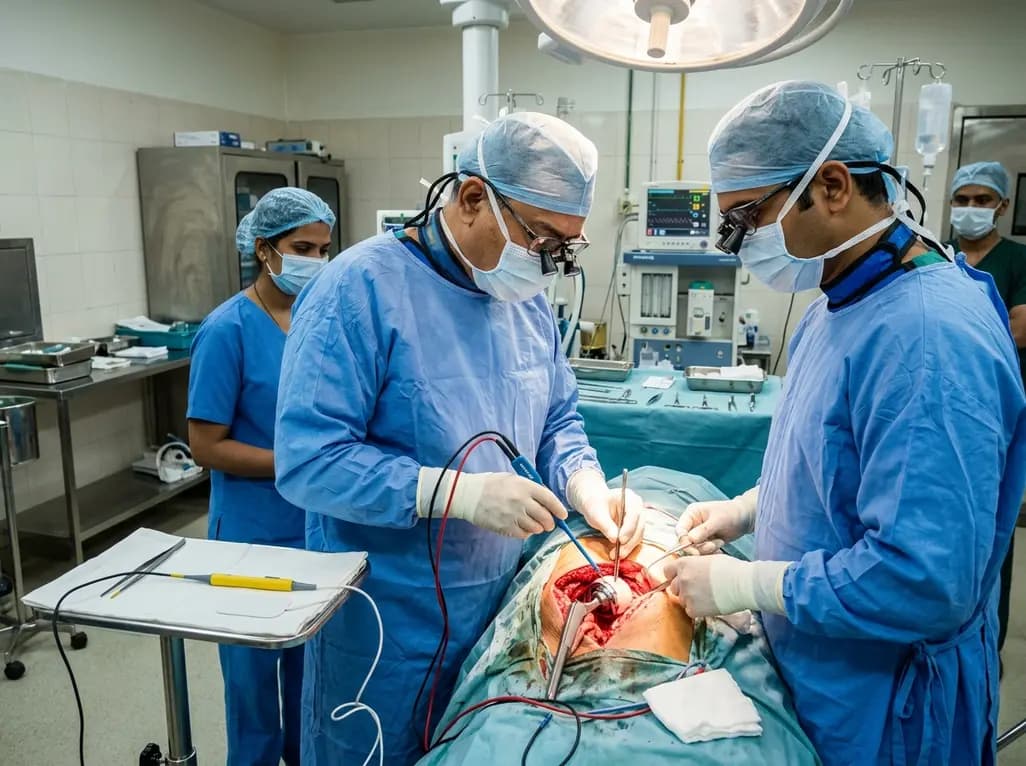
A systematic review and meta-analysis of 8 RCTs evaluated bipolar versus monopolar electrocautery in primary total hip and knee arthroplasty. Pooled data revealed no significant differences in haemoglobin drop, blood loss, or length of stay, concluding that routine bipolar electrocautery is not supported.
Yesterday

A critical review evaluates whether starch-polyphenol complexes meet structural and metabolic criteria to qualify as type 5 resistant starch. The proposed tiered evidence framework distinguishes true inclusion complexes from simple mixtures, clarifying mechanisms for glycemic modulation and gut fermentation.
Today
