.webp&w=384&q=75)

Loading, please wait...
Loading, please wait...

Managing malignant ventricular arrhythmias remains one of the most challenging frontiers in modern electrophysiology. Clinicians frequently encounter patients with implantable cardioverter-defibrillator shocks and recurrent electrical storms that resist conventional antiarrhythmic drug therapies. Consequently, catheter ablation for VF has become a pivotal intervention to control recurrent arrhythmic episodes. While electrophysiologists have established clear ablation protocols for ischemic cardiomyopathy, evidence guiding non-ischemic cardiomyopathy management has remained comparatively scarce. Understanding the comparative efficacy across these distinct etiologies is critical for optimizing long-term patient survival and procedural success.
Historically, ventricular fibrillation was regarded as an unmappable, chaotic rhythm unsuitable for targeted ablation. However, contemporary electrophysiological mapping demonstrates that recurrent episodes often rely on specific initiating triggers and pre-existing arrhythmogenic substrates. Premature ventricular complexes originating from diseased tissue or the Purkinje network frequently induce these life-threatening events. Therefore, catheter ablation offers an effective therapeutic strategy by eliminating initiating triggers and homogenizing structural substrates in patients with advanced cardiac pathology.
Electrophysiological substrates differ substantially between ischemic cardiomyopathy and non-ischemic cardiomyopathy. In ischemic cardiomyopathy, coronary occlusions typically produce dense, subendocardial, confluent scars with well-demarcated border zones. Conversely, non-ischemic cardiomyopathy often presents with patchy, mid-myocardial, or subepicardial fibrosis. These structural variations create distinct challenges during electroanatomic voltage mapping and radiofrequency delivery.
A recent clinical study evaluated 45 consecutive patients undergoing catheter ablation for recurrent ventricular fibrillation, comparing 17 ischemic patients with 28 non-ischemic patients. High-density bipolar and unipolar voltage mapping demonstrated that left ventricular scar burden was significantly larger in the ischemic cohort. However, both patient groups exhibited a comparable prevalence of abnormal Purkinje potentials. Thus, while the gross macroscopic scar distribution varies, the microstructural electrical pathways that sustain ventricular fibrillation share substantial physiological commonalities across both etiologies.
The comparative trial revealed encouraging clinical outcomes for both patient cohorts following interventional treatment. Over a multi-procedure follow-up period, the estimated one-year ventricular fibrillation-free survival reached 87% in ischemic patients and 85% in non-ischemic patients. Statistical analysis confirmed no significant difference in arrhythmia-free survival between groups (log-rank p = 0.93).
These findings demonstrate that targeted ablation achieves durable arrhythmia control in non-ischemic cardiomyopathy despite its traditionally complex substrate architecture. Historically, clinicians reported lower procedural success rates in non-ischemic substrates when treating monomorphic ventricular tachycardia. Nevertheless, when operators address ventricular fibrillation triggers and unipolar low-voltage zones concurrently, non-ischemic patients achieve clinical benefits equivalent to their ischemic counterparts. Consequently, catheter ablation serves as a reliable treatment modality regardless of the underlying cardiomyopathy etiology.
Successful procedural outcomes depend heavily on integrating trigger elimination with comprehensive substrate modification. In the study cohort, operators performed trigger premature ventricular complex ablation in 42% of ischemic patients and 39% of non-ischemic patients. Concurrently, scar homogenization was completed in 76% of ischemic patients and 57% of non-ischemic cases.
Because non-ischemic fibrosis frequently resides within mid-myocardial or epicardial layers, standard endocardial bipolar voltage mapping may fail to identify the entire arrhythmogenic zone. In contrast, unipolar voltage mapping evaluates electrical signals across deeper tissue layers, unmasking intramural arrhythmogenic substrates. By targeting unipolar low-voltage regions alongside documented trigger sites and abnormal Purkinje arborizations, operators effectively suppress the triggers and perpetuating substrate that fuel fibrillatory wavelets.
Achieving optimal clinical outcomes frequently requires structured procedural planning and repeat interventions. Recurrent ventricular fibrillation often involves multiple distinct triggers, meaning that initial single-procedure ablation may not eliminate all potential arrhythmogenic foci. Therefore, comprehensive patient counseling should emphasize the potential necessity of staged or repeat ablation sessions to achieve complete electrical stability.
Furthermore, managing hemodynamic stability during mapping remains paramount. Operators must balance extensive lesion delivery with myocardial protection, particularly in patients presenting with severely reduced left ventricular ejection fraction. Advanced contact-force sensing catheters and real-time intracardiac echocardiography help operators deliver durable transmural lesions while avoiding collateral tissue damage. Consequently, these technological enhancements have markedly improved procedural safety profiles in high-risk cardiac cohorts.
These clinical findings carry significant practical implications for cardiologists managing refractory ventricular arrhythmias. First, clinicians should not withhold catheter ablation from non-ischemic patients solely due to the perceived complexity of non-ischemic substrate patterns. The comparable one-year arrhythmia-free survival confirms that catheter ablation offers robust protection against recurrent electrical storms across diverse patient populations.
Second, electrophysiologists should adopt a combined mapping protocol that systematically incorporates trigger identification, abnormal Purkinje potential eradication, and unipolar voltage assessment. Early referral for catheter ablation reduces implantable defibrillator shocks, minimizes hospital admissions, and prevents progressive myocardial damage from recurrent arrhythmic collapse. As interventional electrophysiology advances, early invasive rhythm control will continue to play a central role in comprehensive heart failure and arrhythmia care.
Electrophysiologists primarily target triggering premature ventricular complexes that originate from the Purkinje arborization or diseased scar border zones. These short-coupled ectopics fire rapidly into vulnerable ventricular tissue, initiating fibrillatory wavelets. By mapping the earliest activation site during spontaneous ectopy and delivering radiofrequency energy, operators successfully eliminate the initial arrhythmogenic trigger before ventricular fibrillation can propagate across the myocardium.
Ischemic cardiomyopathy typically displays dense, confluent subendocardial scars corresponding to specific coronary territories, creating clear border zones detectable via bipolar voltage mapping. In contrast, non-ischemic cardiomyopathy often involves patchy, mid-myocardial, or subepicardial fibrosis without distinct territorial boundaries. Consequently, operators frequently utilize unipolar voltage mapping to detect deeper intramural substrates that standard bipolar recordings might otherwise miss during endocardial electroanatomic navigation.
Unipolar voltage mapping utilizes a broader field of view than bipolar mapping, allowing operators to detect electrical abnormalities located deeper within the mid-myocardium and subepicardium. Because non-ischemic fibrosis frequently spares the immediate subendocardium, standard bipolar signals may appear normal. Unipolar mapping identifies these concealed arrhythmogenic substrates, guiding effective radiofrequency energy delivery to deeper layers and ensuring comprehensive ventricular substrate homogenization.
Disclaimer: This content is for informational and educational purposes only. It is not intended to be a substitute for professional medical advice, diagnosis, or treatment. Always seek the advice of your physician or other qualified health provider with any questions you may have regarding a medical condition. Refer to the latest local and national guidelines for clinical practice.
References

Read summarized clinical updates, watch expert medical content, and earn CME certifications right from your smartphone.
Open your smartphone camera to scan and install.





A retrospective study demonstrates that catheter ablation for recurrent VF yields comparable 1-year VF-free survival in non-ischemic (85%) and ischemic cardiomyopathy (87%). Combining PVC trigger elimination with substrate homogenization offers a highly effective therapeutic strategy for complex arrhythmias.
4 weeks back
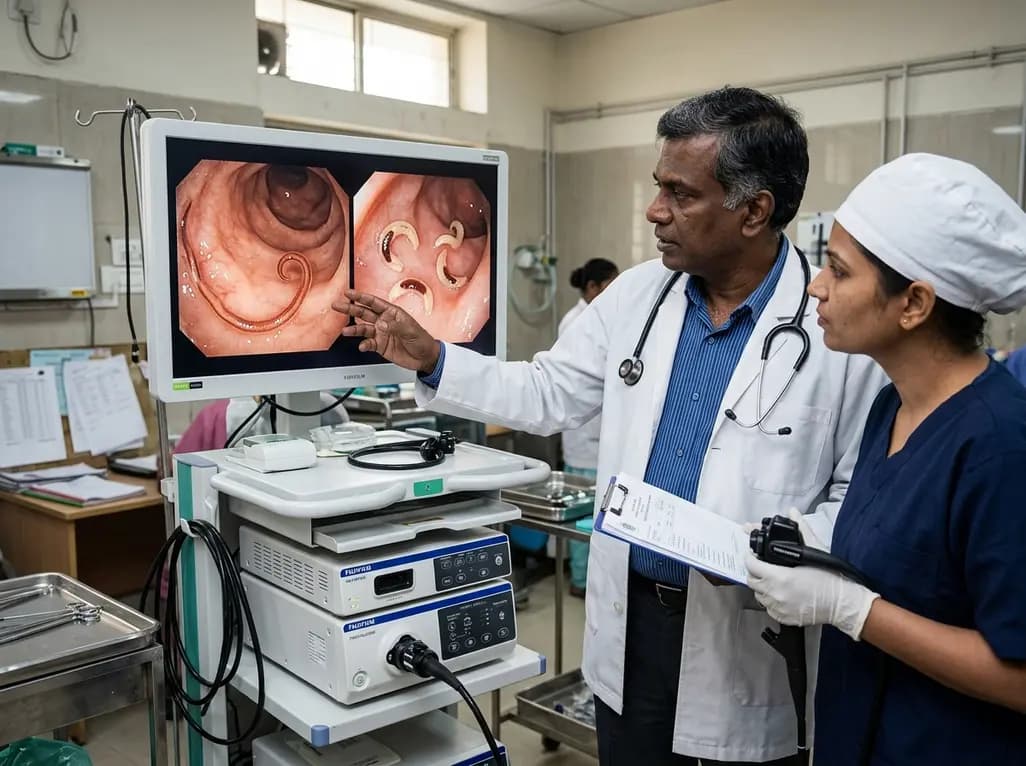
A review of incidental intestinal parasitic infections detected during colonoscopy, highlighting diagnostic morphology, the absence of peripheral eosinophilia, and tailored antihelminthic treatment.
Today

A nationwide South Korean study shows underreporting of smoking among women dropped from 57.4% to 36.4% between 2008 and 2021. However, over one-third of female smokers still conceal their habit, highlighting the critical role of cotinine verification in clinical risk assessment.
Today

PepsiCo and Monster Beverage have challenged the FSSAI ban on the energy drink label in Indian courts. While companies highlight supply disruptions, regulatory actions spotlight severe cardiovascular and metabolic risks associated with excessive caffeine, sugar, and taurine consumption, especially in adolescents.
Today

A new study evaluates the rheological stability of decellularized peripheral nerve matrix hydrogels under varied storage conditions. Findings show -80°C storage and freeze-drying preserve gelation kinetics and mechanical stiffness, offering key insights for shipping and translational clinical applications.
Today

A Bayesian multilevel meta-analysis reveals that aerobic training combined with moderate carbohydrate restriction modestly lowers HbA1c in type 2 diabetes. However, sparse data and very low certainty leave incremental benefits over exercise or diet alone unproven, highlighting the need for individualized care.
Yesterday
