.webp&w=384&q=75)

Loading, please wait...
Loading, please wait...

Clinicians continuously seek reliable biomarkers to stratify perioperative mortality in transplant oncology. A recent retrospective investigation demonstrated that the preoperative CALLY index in HCC independently predicts recipient mortality following living donor liver transplantation (LDLT). Specifically, the index integrates three biological parameters: serum C-reactive protein, serum albumin, and total lymphocyte count. Consequently, this composite biomarker captures systemic inflammation, host nutritional reserves, and cellular immune competence. In cirrhosis and primary liver cancer, chronic inflammation drives muscle wasting and immune paresis. Therefore, traditional staging systems that concentrate solely on tumor dimensions often overlook systemic physiological fragility. Living donor liver transplantation demands substantial biological resilience from the recipient during the perioperative phase. When clinicians assess liver transplant candidates, they must evaluate both oncological biology and host physiological reserve. Although anatomical criteria guide recipient selection, they do not quantify systemic frailty. Furthermore, acute inflammatory states diminish hepatic synthetic capacity and impair post-transplant regenerative recovery. By combining inflammatory markers with nutritional and immunological metrics, the score provides a comprehensive profile of recipient health. Thus, evaluating this parameter prior to surgery helps transplant teams identify fragile recipients who need structured physiological support.
The retrospective investigation evaluated 239 consecutive patients with hepatocellular carcinoma who underwent living donor liver transplantation. Over follow-up, researchers analyzed overall survival, early mortality rates, and tumor recurrence patterns. Notably, the 5-year area under the receiver operating characteristic curve for the prognostic score reached 0.65 with a 95% confidence interval of 0.53 to 0.77. Patients with low baseline scores experienced significantly poorer overall survival compared to those with preserved scores. Moreover, the 1-year mortality rate was substantially higher among recipients in the low-score cohort, reaching 12.7% versus only 4.0% in the higher-score cohort. Multivariable Cox proportional hazards analysis confirmed that a low score independently predicted higher mortality, yielding a hazard ratio of 2.17. Furthermore, incorporating the biomarker into the baseline clinical prognostic model significantly improved the concordance index from 0.513 to 0.612, demonstrating a clear gain in discriminatory capacity. The statistical calibration remained consistent between the models, which reinforces the incremental clinical value of the biomarker. Consequently, these findings highlight that biological depletion markedly impairs post-transplant survival during the critical first year. Transplant teams can therefore leverage this objective calculation to enhance risk stratification prior to donor graft procurement.
A critical insight from this clinical study is the clear divergence between host mortality and tumor biology. While a low score strongly predicted recipient death, it demonstrated no significant association with hepatocellular carcinoma recurrence. In contrast, elevated protein induced by vitamin K absence or antagonist-II, widely recognized as PIVKA-II, independently correlated with tumor recurrence. Therefore, the findings suggest that the score functions primarily as an indicator of systemic recipient condition rather than malignant aggressiveness. In living donor liver transplantation, surgeons often worry that systemic inflammatory biomarkers merely mirror advanced tumor progression. However, this study proves that systemic immune-inflammatory exhaustion can exist independently of microvascular invasion or aggressive histological features. Severe cirrhosis, portal hypertension, and subclinical bacterial translocation frequently stimulate systemic inflammation while depressing serum albumin. Consequently, depleted recipients succumb to sepsis, graft dysfunction, or multi-organ failure rather than metastatic malignancy. Recognizing this fundamental distinction allows clinicians to decouple oncological staging from host physiological reserve. Surgeons should not necessarily exclude patients with low baseline scores from curative transplantation. Instead, clinicians must recognize that these individuals require specialized perioperative management to prevent non-oncological mortality.
Because the biomarker highlights modifiable host factors, it opens substantial opportunities for targeted preoperative interventions. Pre-transplant nutritional depletion and sarcopenia frequently worsen outcomes after major hepato-pancreato-biliary surgery. Therefore, identifying candidates with suppressed scores enables multidisciplinary teams to implement intensive nutritional prehabilitation prior to donor hepatectomy. Clinical dietitians can prescribe branched-chain amino acid supplementation and high-protein oral nutrition to elevate circulating albumin levels. Additionally, structured exercise regimens supervised by physical therapists preserve functional reserve and skeletal muscle mass. In living donor procedures, surgical teams enjoy the unique advantage of scheduling the operative date electively. Unlike deceased donor allocation, where organs arrive unpredictably, living donor transplantation allows a window for optimization. Consequently, clinicians can delay surgery briefly to treat occult infections, stabilize systemic inflammation, and correct severe malnutrition. Furthermore, serial monitoring of the biomarker during the waiting period can evaluate recipient response to prehabilitation therapy. If inflammatory markers fall and nutritional indices improve, surgical teams can proceed with greater confidence. Thus, proactive intervention converts a static prognostic assessment into an actionable therapeutic pathway for fragile candidates.
Currently, international transplant protocols rely heavily on conventional tumor criteria alongside the Model for End-Stage Liver Disease score. Although the MELD score evaluates renal and hepatic dysfunction, it overlooks subclinical malnutrition and immune dysregulation. Therefore, incorporating composite biomarkers like this inflammatory-nutritional index addresses a crucial blind spot in recipient assessment. Modern transplant oncology requires multidimensional evaluation that encompasses tumor genetics, recipient physiology, and donor graft characteristics. Moreover, routine clinical laboratories already measure C-reactive protein, albumin, and lymphocyte counts during workups. As a result, calculating the score incurs zero additional financial cost or procedural burden for healthcare systems. In developing healthcare environments where healthcare resources remain constrained, cost-effective prognostic tools offer immense clinical value. Multidisciplinary transplant boards can easily integrate this score into digital medical records for automated risk stratification. Furthermore, identifying high-risk recipients alerts intensive care specialists to prepare advanced hemodynamic and sepsis monitoring protocols postoperatively. Surgical teams can also tailor immunosuppressive protocols carefully to prevent opportunistic infections in immunocompromised hosts. Ultimately, combining oncological markers like PIVKA-II with host systemic scores provides a balanced, comprehensive roadmap for optimal surgical outcomes.
Clinicians calculate the index using serum albumin, total lymphocyte count, and C-reactive protein. Specifically, the formula multiplies the albumin level by the absolute lymphocyte count and divides the product by C-reactive protein. Because this ratio incorporates three distinct biological domains, it captures nutritional adequacy, immune competence, and systemic inflammation in a single value. Higher numerical scores indicate favorable physiological reserve, whereas lower scores reflect systemic exhaustion and advanced inflammatory-nutritional depletion.
The index reflects systemic host physiology rather than underlying tumor biology or invasiveness. In this study, lower scores strongly correlated with non-oncological mortality, such as severe post-transplant sepsis and multi-organ failure. In contrast, oncological recurrence stems from microscopic vascular invasion, aggressive tumor grade, and elevated tumor markers like PIVKA-II. Therefore, the score serves as a sensitive measure of recipient fragility, helping clinicians identify patients vulnerable to surgical complications rather than cancer relapse.
Transplant teams can use low scores to identify vulnerable candidates who require aggressive preoperative optimization. Because living donor liver transplantation allows flexible scheduling, clinicians can delay elective surgery to implement structured nutritional prehabilitation. Teams can administer targeted oral nutritional supplements, treat occult systemic infections, and prescribe supervised physical therapy. Consequently, optimizing physiological reserve before surgery mitigates early postoperative mortality and improves long-term survival in high-risk liver transplant recipients.
Disclaimer: This content is for informational and educational purposes only... Refer to the latest local and national guidelines for clinical practice.
References

Read summarized clinical updates, watch expert medical content, and earn CME certifications right from your smartphone.
Open your smartphone camera to scan and install.





A retrospective study demonstrates that the CALLY index in HCC independently predicts post-LDLT overall survival and one-year mortality without correlating with tumor recurrence, offering a practical biomarker to assess recipient physiological reserve and guide pre-transplant prehabilitation.
Today
A study reveals that patients with chronic gastritis and inflammatory bowel disease exhibit marked skin resistance drops across specific thoracic dermatomes (T5-T9 and T8-T12), correlating with visceral referred pain severity and offering a non-invasive biomarker.
Today

A landmark biomechanical study demonstrates that sports bra support and running shoe cushioning interact significantly to influence tibial acceleration, breast motion, and comfort in female runners, providing crucial insights for clinical counseling in sports medicine and women's health.
Today
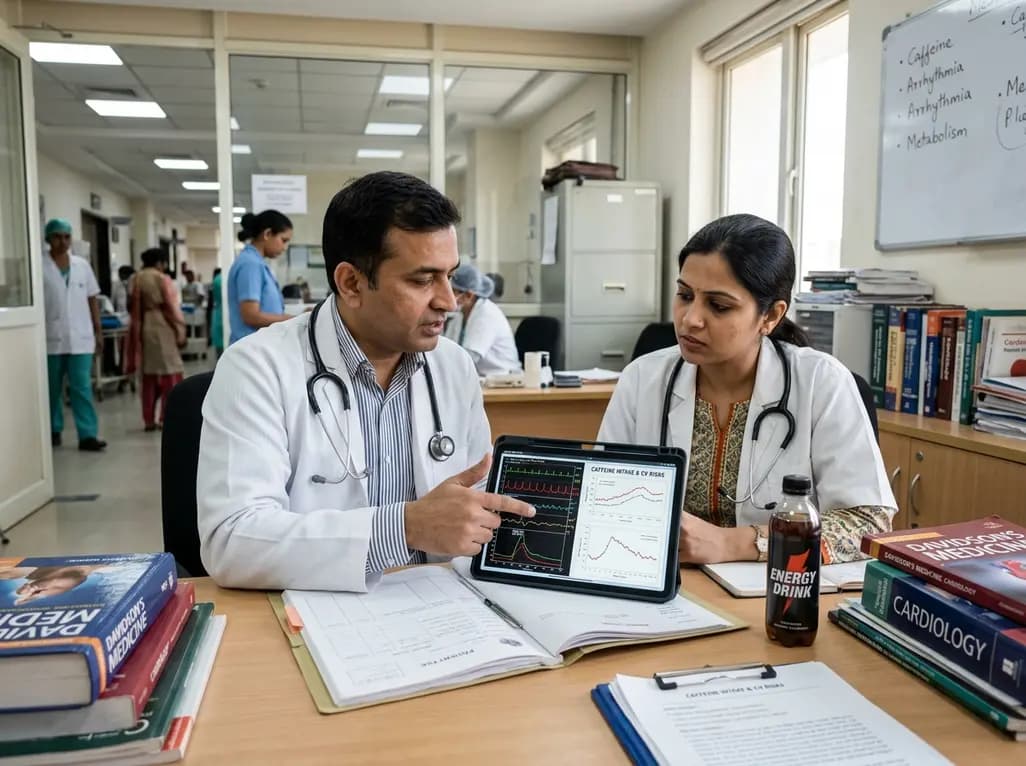
The Delhi High Court declined immediate relief to PepsiCo regarding fresh manufacturing of products using the energy drink label. As regulatory bodies enforce strict standards on caffeinated beverages, medical professionals must evaluate the cardiovascular, metabolic, and pediatric risks linked to excessive intake.
Today

This review explores advances in antibacterial photothermal therapy, highlighting photothermal agents across NIR-I and NIR-II windows. By overcoming biofilm defenses and multidrug resistance without conventional antibiotics, these biomaterial platforms offer transformative options for complex clinical infections.
Today

A landmark Monte Carlo simulation study reveals widespread perchlorate and chlorate exposure through vegetables and drinking water, presenting significant thyroid disruption risks in young children. Learn the physiological mechanisms, dietary drivers, and preventive strategies for clinical practice.
Today
