.webp&w=384&q=75)

Loading, please wait...
Loading, please wait...
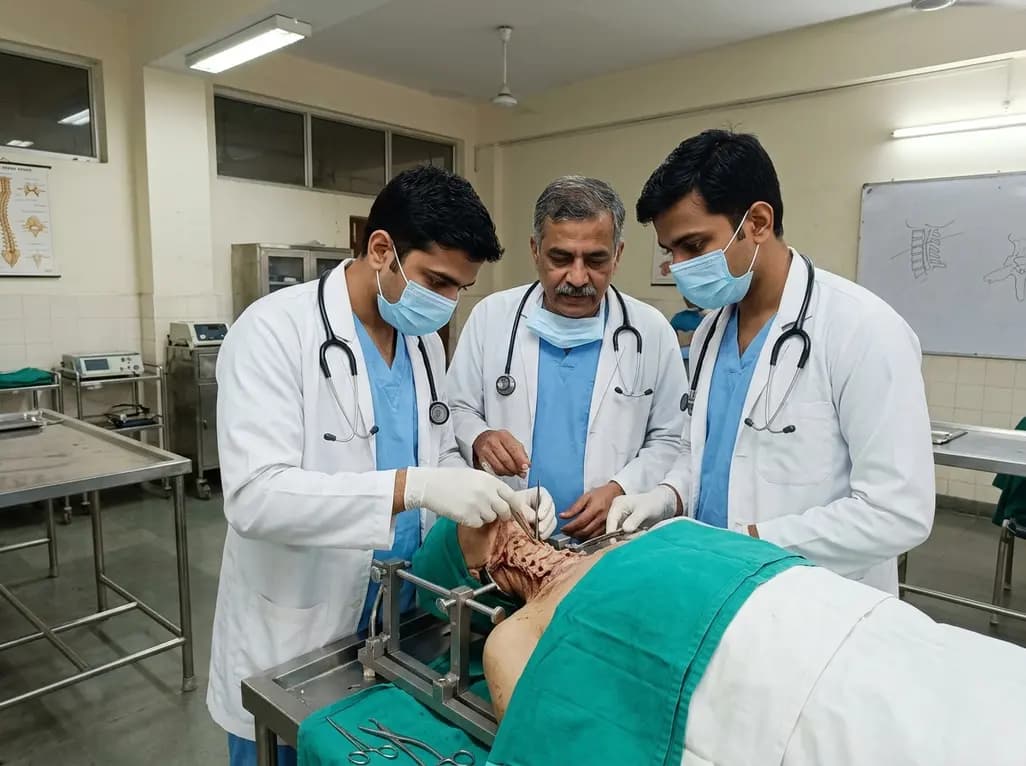
Operative management of the cervical spine represents one of the most demanding subspecialties within modern neurosurgery and orthopedics. Due to the high density of critical neurovascular structures and the narrow margin for error, mastering these interventions requires rigorous technical preparation. Consequently, cervical spine surgery training must provide realistic, off-patient environments where surgeons can refine their skills without compromising patient safety. A prospective cohort study recently published in Acta Neurochirurgica evaluated the educational utility and longitudinal clinical impact of a structured, three-day cadaveric simulation course. The investigators assessed how intensive dissection and guided instrumentation directly affect surgical confidence and operative autonomy. By evaluating participants across several months, the researchers demonstrated that simulated wet-lab experiences produce enduring gains in clinical practice. In particular, trainees translated their laboratory experience into real-world operative independence, especially during high-stakes anterior and posterior decompressive interventions. Furthermore, the findings emphasize that simulation acts as an essential catalyst for bridging the gap between supervised assistance and independent operative proficiency.
Surgical access to the cervical spine requires navigating intricate anatomical corridors bordered by the carotid sheath, vertebral arteries, esophagus, and spinal cord. Therefore, surgeons must possess exceptional three-dimensional spatial orientation and tactile sensitivity before executing bone resection or instrumentation. While virtual reality and synthetic sawbone models offer initial procedural orientation, they fail to replicate tissue elasticity, tissue planes, and structural resistance accurately. In contrast, human cadaveric tissue provides authentic haptic feedback that allows surgeons to gauge proper bone depth, tissue retraction tensions, and screw trajectories. Moreover, anatomical variations are common across human specimens, presenting realistic challenges that closely mirror real operating room scenarios. Engaging with unexpected osseous morphometry or vascular proximity in a controlled laboratory setting builds resilient decision-making skills. Consequently, hands-on wet labs provide an irreplaceable foundation for surgical trainees. Inexperienced surgeons gain the confidence needed to handle complex tissue planes without exposing vulnerable patients to early learning-curve complications. Thus, cadaveric dissection remains the gold standard benchmark in spinal surgical education.
To evaluate the true educational value of simulation, researchers conducted a prospective study following 24 surgical participants through a comprehensive three-day course in Sweden. The curriculum integrated advanced anatomical dissection with faculty-supervised instrumentation, covering both anterior and posterior cervical approaches. To quantify educational outcomes rigorously, investigators applied Kirkpatrick’s four-level training evaluation framework, gathering data across pre-course, immediate post-course, and six-month longitudinal assessments. Remarkably, all participating surgeons reported that the instructional curriculum fully met their educational expectations. The primary objectives centered on assessing whether simulated practice would translate into measurable changes in clinical self-efficacy and real-world surgical volume. During the hands-on sessions, faculty members provided immediate, granular feedback while participants performed challenging steps such as corpectomies, facet exposure, and pedicle screw instrumentation. In addition, the participants completed standardized self-assessment instruments designed to track their evolving comfort levels. By tracking participants over a six-month interval, the study moved beyond transient post-course enthusiasm to assess genuine practice changes in active hospital settings.
The longitudinal findings revealed substantial, lasting improvements in operative autonomy when participants returned to their clinical duties. At the six-month follow-up evaluation, a significant majority of respondents demonstrated increased independent performance across all practiced operative approaches. Specifically, the highest rates of perceived improvement occurred in anterior cervical discectomy and fusion (ACDF) procedures, with 78.9% of surgeons reporting higher autonomy. Similarly, 68.4% of participants noted significant independence gains when performing cervical laminectomies. When asked to identify the most valuable curricular components, 68.4% of respondents cited hands-on cadaveric dissection, while 15.8% prioritized direct expert guidance. Furthermore, the data showed a direct correlation between laboratory exposure and an increased volume of independently performed surgical cases. These findings demonstrate that realistic wet-lab environments mitigate the hesitation that often delays surgical progression. As a result, trainees acquire the technical fluidity and procedural competence necessary to transition from passive observation to confident execution under variable operative conditions.
Modern surgical residency and fellowship programs face increasing constraints, including restricted working hours and heightened medicolegal scrutiny. Consequently, opportunities for progressive operative autonomy in live operating theatres have become increasingly limited. Structured cadaveric workshops directly resolve this dilemma by providing a low-anxiety environment dedicated exclusively to deliberate practice. Surgeons can safely practice complex maneuvers, test unconventional instruments, and recover from simulated technical errors without endangering patient health. Moreover, repeated exposure to difficult procedural steps develops muscle memory and spatial familiarity, significantly flattening the operative learning curve. In addition to technical dexterity, trainees cultivate vital non-technical skills, including systematic problem-solving and ergonomic instrument handling. When surgical teams practice together in high-fidelity wet labs, interprofessional communication and surgical workflow efficiency also improve noticeably. Therefore, integrating structured cadaveric courses into training pathways shortens the timeline required for junior surgeons to achieve independent clinical mastery, ultimately optimizing long-term patient outcomes.
The integration of structured cadaveric training holds tremendous potential for elevating surgical standards globally, including in emerging healthcare ecosystems like India. In resource-diverse environments, spine surgeons often encounter advanced pathologies and neglected degenerative conditions requiring immediate, precise surgical intervention. However, access to dedicated cadaveric facilities can vary widely depending on institutional infrastructure and anatomical donation programs. Therefore, surgical societies and academic medical centers must collaborate to establish centralized regional simulation hubs. By organizing subsidized, high-impact hands-on workshops, healthcare systems can democratize access to advanced surgical education. In addition, combining cadaveric dissection with digital pre-planning and virtual modules can maximize laboratory efficiency and reduce institutional costs. Emphasizing standardized, outcome-measured curricula ensures that every surgeon attains baseline procedural safety before operating independently. Ultimately, institutional investment in realistic surgical simulation creates a sustainable pipeline of proficient spine surgeons capable of delivering high-quality neurosurgical and orthopedic care.
Cadaveric spine surgery training provides realistic anatomical spatial orientation, accurate tactile feedback, and risk-free operative practice. Furthermore, it allows surgical trainees to master complex dissection planes, refine screw placement trajectories, and manage simulated procedural complications, which significantly accelerates the learning curve and reinforces surgical confidence.
Hands-on cadaveric simulation allows surgeons to practice safe tissue retraction, precise disc space preparation, and appropriate interbody cage sizing under faculty supervision. Consequently, longitudinal data show that nearly 79% of trainees report substantial improvements in operative autonomy and independently perform ACDF procedures after completing structured training.
Kirkpatrick's evaluation model provides a structured framework to measure educational efficacy across multiple tiers, ranging from initial participant satisfaction (reaction) to clinical behavioral changes and patient outcomes. As a result, educators can systematically determine whether simulation workshops successfully translate into genuine operative independence and sustained practice modifications.
Disclaimer: This content is for informational and educational purposes only and does not constitute medical advice. Refer to the latest local and national guidelines for clinical practice.
References

Read summarized clinical updates, watch expert medical content, and earn CME certifications right from your smartphone.
Open your smartphone camera to scan and install.





A prospective study in Acta Neurochirurgica demonstrates that a 3-day cadaveric training course in cervical spine surgery significantly increases surgical confidence and self-perceived autonomy at 6-month follow-up, especially for ACDF and laminectomies.
last month
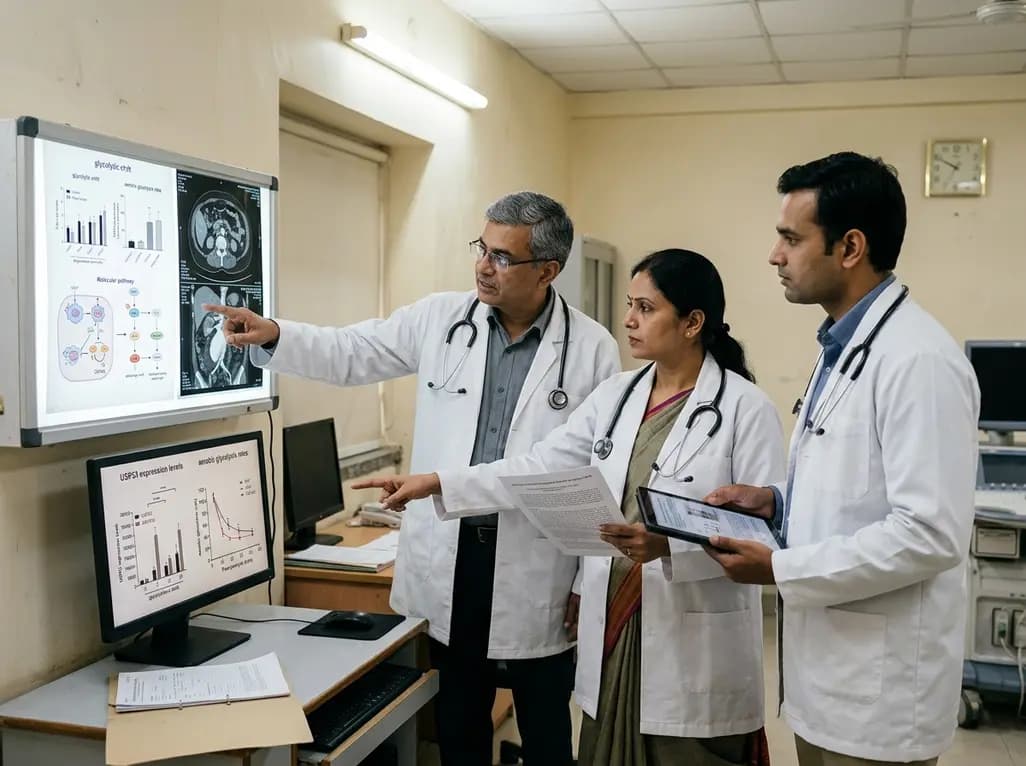
Abdominal aortic aneurysm rupture remains a catastrophic vascular emergency. Groundbreaking research reveals that USP53 accelerates aneurysm progression by reprogramming smooth muscle cell metabolism toward aerobic glycolysis, highlighting a promising target beyond conventional diameter-based surveillance.
Today

A pharmacometric and machine learning study reveals that specific vaginal bacteria alter cervical antiretroviral exposure, highlighting the need for precision HIV PrEP strategies.
Today

A nationwide Swedish cohort study shows oral glucocorticoid exposure over 1-2 years strongly predicts overall organ damage in SLE, while cardiovascular risk reflects cumulative doses across 3 years. These findings reinforce early steroid minimization and cautious long-term maintenance.
Today
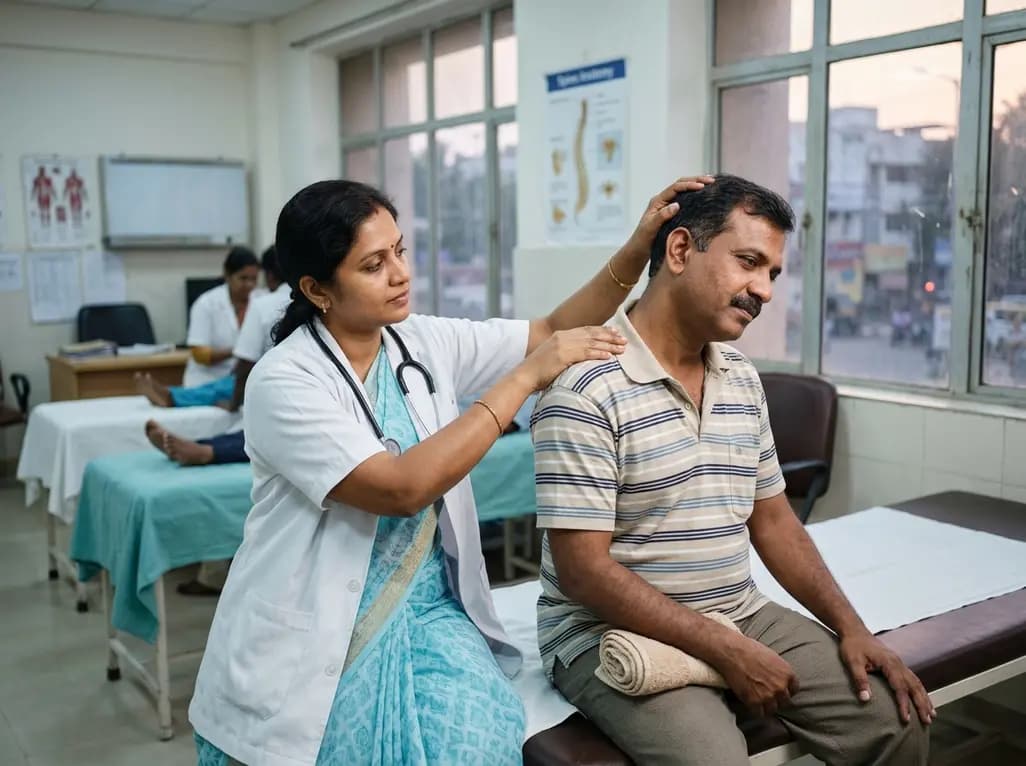
A scoping review highlights neural mobilization as a promising adjunct in managing cervicogenic headache. Integrating neurodynamics into multimodal physical therapy improves pain, range of motion, and posture, though standardized protocols and larger clinical trials are still needed.
Today
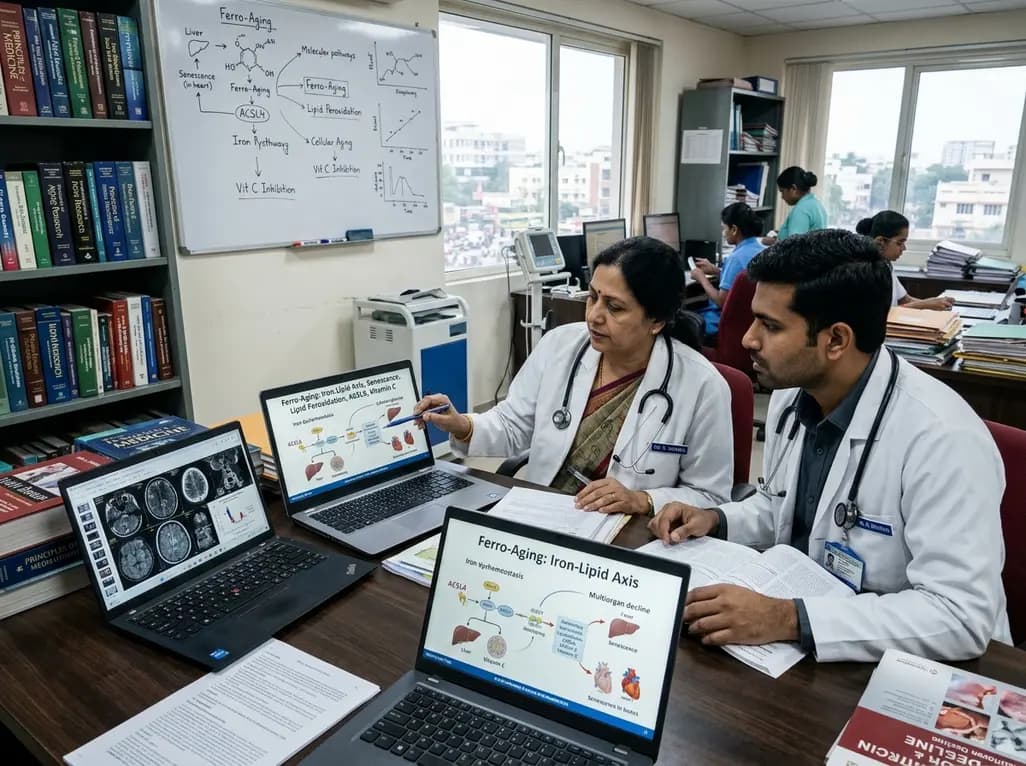
Recent research defines ferro-aging as a conserved iron-lipid axis driving organ decline across primates. Age-related iron dyshomeostasis stimulates ACSL4-mediated lipid peroxidation, promoting cellular senescence. Notably, vitamin C directly inhibits ACSL4, suppressing phospholipid oxidation and multi-organ decay.
Today
