

Loading, please wait...
Loading, please wait...
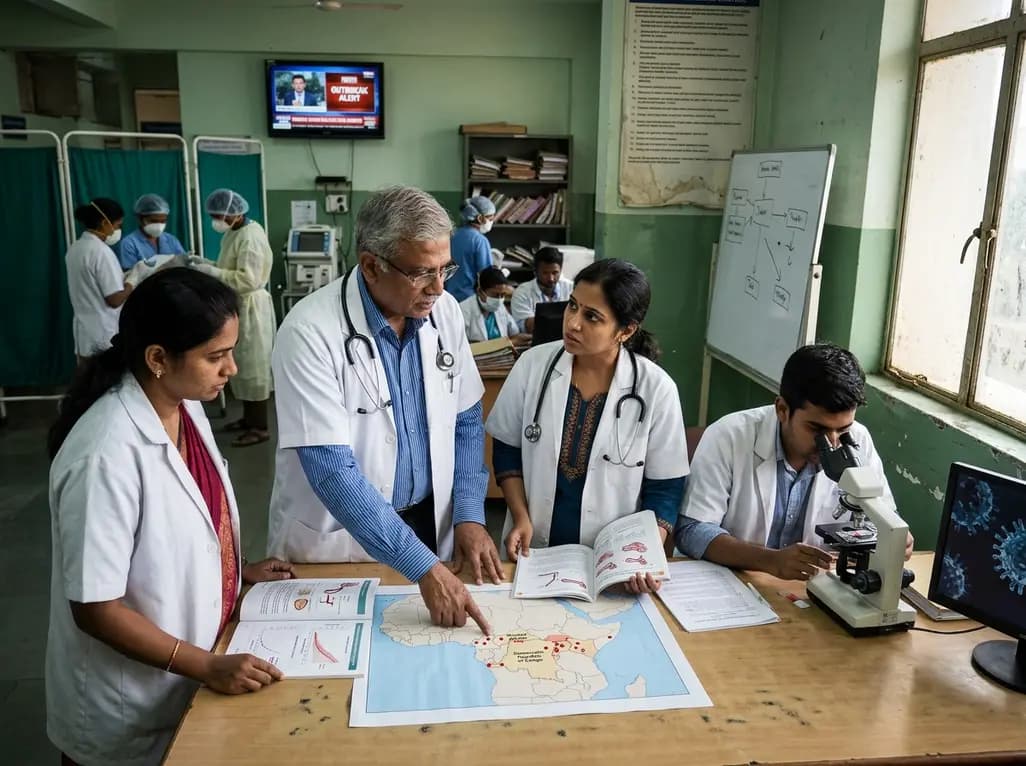
The ongoing Bundibugyo Ebola outbreak in the Democratic Republic of the Congo has escalated into a historic public health crisis. Official surveillance figures confirm that cases have now surpassed twelve thousand individuals across eight provinces. Consequently, healthcare authorities face unprecedented operational difficulties in curbing viral transmission. This epidemic represents the second-largest filovirus event ever documented globally. Clinicians worldwide must therefore understand the distinct epidemiologic and biological features of this formidable pathogen to enhance diagnostic vigilance.
Government registries indicate that confirmed infections have reached 12,021 cases, alongside 5,904 recorded fatalities. In addition, field investigations suggest that official tallies may significantly underestimate true community mortality. Satellite surveillance in hard-hit territories reveals substantial cemetery expansions that exceed reported tallies. The outbreak began in mid-May within Ituri province before rapidly expanding across seven adjacent administrative regions. Furthermore, ongoing armed conflict and population displacement severely hinder contact tracing teams. Africa CDC recently revealed that responders successfully link only fifteen percent of incident cases to known exposure chains. Consequently, unmonitored community transmission drives sustained secondary spread across remote health zones. Health facilities in affected districts operate under severe material constraints and acute workforce shortages. Local transmission networks now extend into densely populated transit corridors. Thus, public health agencies warn of heightened risks regarding interprovincial and cross-border dissemination. Meanwhile, medical agencies emphasize that community mistrust complicates outbreak containment. Therefore, robust risk communication remains vital alongside epidemiological interventions.
Bundibugyo virus belongs to the Filoviridae family and represents one of six known ebolavirus species. Historically, this species demonstrated lower case-fatality rates than Zaire ebolavirus, typically ranging between thirty and fifty percent. However, the current epidemic demonstrates marked lethality and rapid human-to-human transmission. Direct contact with infected blood, vomitus, feces, or deceased bodies spreads the pathogen efficiently. The incubation period typically spans two to twenty-one days, during which individuals remain asymptomatic and non-infectious. Initially, patients present with non-specific constitutional symptoms including abrupt fever, profound asthenia, and severe myalgia. Gastrointestinal manifestations such as intractable vomiting, watery diarrhea, and severe abdominal pain generally follow within several days. In addition, biochemical assessments frequently reveal pronounced transaminitis, hypoalbuminemia, and severe electrolyte derangements. Clinicians must recognize that overt hemorrhage occurs in only a fraction of infected individuals. Instead, hypovolemic shock and multiorgan failure drive mortality in most fatal cases. Because early symptoms mirror malaria and typhoid, prompt molecular confirmation via reverse-transcription polymerase chain reaction is imperative. Moreover, clinicians should not rule out filovirus infection simply because external bleeding is absent. Timely diagnostic confirmation prevents dangerous delays in patient triage and protective isolation.
Containing this extensive viral epidemic presents unprecedented logistical and humanitarian obstacles. Responders currently fail to trace eighty-five percent of newly diagnosed cases back to established contacts. Consequently, undetected chains of transmission propagate silently within rural communities. Protracted civil insecurity in eastern regions frequently forces health personnel to suspend vital surveillance operations. Furthermore, attacks on treatment centers and transit checkpoints disrupt medical supply chains and laboratory specimen transport. Strained local healthcare infrastructure lacks sufficient isolation beds, personal protective equipment, and essential diagnostic reagents. In addition, unsafe traditional burial customs continue to generate dangerous superspreading events across rural villages. Families often wash deceased relatives without biohazard protection, exposing dozens of mourners to lethal viral loads. Fear and misinformation also deter symptomatic individuals from seeking admission at designated treatment units. Many patients instead seek care from informal healers, thereby exposing community practitioners to lethal pathogens. Thus, health organizations must establish trusted partnerships with local community elders to overcome pervasive stigma. Responders must therefore combine rigorous infection control with culturally compassionate care models.
Currently, regulatory agencies have approved neither specific vaccines nor monoclonal antibody therapies for Bundibugyo ebolavirus. Licensed countermeasures such as Ervebo and mAb114 offer protective efficacy solely against the Zaire species. Therefore, early and aggressive supportive intensive care remains the cornerstone of clinical survival. Providers must rapidly correct severe hypovolemia using balanced crystalloid solutions guided by hemodynamic monitoring. Additionally, clinicians should promptly address profound hypokalemia, hyponatremia, and metabolic acidosis caused by profuse diarrhea and emesis. Early oral or enteral nutritional support preserves intestinal mucosal integrity and enhances clinical recovery. Clinicians also administer broad-spectrum empirical antimicrobials and antimalarials while awaiting confirmatory viral molecular testing. Recent clinical protocols have explored compassionate off-label antivirals like remdesivir during acute admissions. Observational data suggest that prompt initiation of remdesivir alongside aggressive fluid resuscitation may substantially reduce overall mortality. However, definitive randomized clinical trials are urgently required to establish efficacy benchmarks. Furthermore, healthcare workers must rigorously follow standardized donning and doffing protocols during every clinical interaction to prevent accidental self-contamination.
Although the primary epidemic remains centered in Central Africa, global health authorities stress international vigilance. Modern aviation enables rapid intercontinental travel well within the twenty-one-day incubation window of the pathogen. Consequently, the Ministry of Health and Family Welfare in India has reinforced public health border preparedness. Indian health authorities have activated thermal screening and health self-declaration requirements for arriving passengers from affected territories. Airport Health Organizations closely review incoming travelers through dedicated health desks and digital portals like Air Suvidha. Indian physicians, particularly in emergency departments and infectious disease units, must obtain meticulous travel histories from febrile patients. Any traveler returning from Central Africa who develops fever, unexplained weakness, or gastrointestinal distress requires immediate isolation. Furthermore, hospital administrators must establish clear triage protocols and maintain airborne and contact precautions. Suspected cases require urgent notification to state surveillance units and the National Centre for Disease Control. Prompt institutional preparedness ensures that potential imported filovirus cases face swift containment without triggering secondary domestic outbreaks.
Q1: Why are existing Ebola vaccines ineffective against this outbreak?
Licensed Ebola vaccines, including the Ervebo vaccine, target the glycoprotein of the Zaire ebolavirus species specifically. Because the Bundibugyo ebolavirus has a substantially distinct genomic sequence and surface antigen structure, existing vaccines do not provide cross-protective immunity. Consequently, researchers are expediting candidate vaccines explicitly designed for Bundibugyo virus, but none have achieved regulatory approval yet.
Q2: How does Bundibugyo virus spread between humans?
Transmission occurs through direct contact with broken skin or mucous membranes and the blood, secretions, or other bodily fluids of infected individuals. Furthermore, contact with surfaces and materials contaminated with these fluids, such as clothing or bedding, presents serious infection risks. Unprotected participation in traditional burial rituals also represents a major transmission pathway during active epidemics.
Q3: What initial protocols should Indian hospitals follow for suspected cases?
Clinicians must immediately isolate any patient presenting with acute fever and compatible symptoms who traveled to affected regions within twenty-one days. Additionally, healthcare personnel must wear full personal protective equipment before conducting evaluations. Facilities must avoid invasive procedures unless critically necessary and immediately notify district surveillance officers and the National Centre for Disease Control for specialized diagnostic processing.
Disclaimer: This content is for informational and educational purposes only. It does not constitute medical advice or replace professional judgment. Refer to the latest local and national guidelines for clinical practice.
References

Read summarized clinical updates, watch expert medical content, and earn CME certifications right from your smartphone.
Open your smartphone camera to scan and install.





A massive Bundibugyo Ebola outbreak in the Democratic Republic of Congo has surpassed 12,000 cases and nearly 6,000 deaths. With no approved targeted vaccines, healthcare professionals worldwide must understand clinical indicators, transmission dynamics, and border screening protocols.
Today

A simulation study evaluated emergency physicians performing EPSS and Teichholz methods for bedside LVEF estimation. While EPSS proved faster and more accurate for novices, hands-on training equalized skills across preserved EF, though EPSS showed significant error in severe ventricular dysfunction.
Today
Researchers have engineered a sensitive electrochemiluminescent sandwich immunosensor utilizing silver nanoparticles and quantum dots to quantify placental growth factor, paving the way for rapid, accurate, and accessible early preeclampsia screening in clinical practice.
Today
This report reviews the successful off-pump surgical retrieval of a migrated patent ductus arteriosus closure device in an 8-week-old preterm infant, preventing cardiopulmonary bypass morbidity while relieving aortic obstruction.
Today
A real-world cross-sectional study in Thailand reveals that a web-based bone health self-assessment tool effectively captured clinical risk profiles, prompting DXA recommendations in 37% of users—over half of whom were below standard screening ages due to non-age clinical vulnerabilities.
Today
A landmark 30-year cohort study reveals that progressive dysglycemia from young adulthood impairs midlife memory, processing speed, and brain structure. These findings highlight an urgent need for Indian physicians to screen young adults early to prevent neurological decline.
Today
