.webp&w=384&q=75)

Loading, please wait...
Loading, please wait...
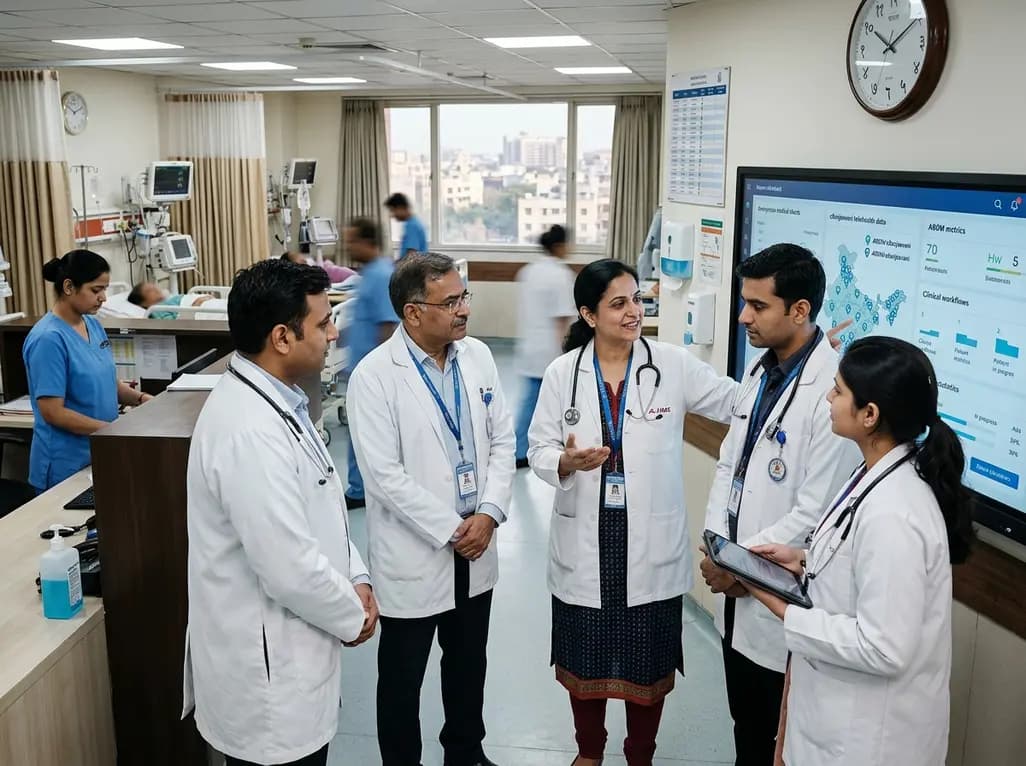
Global healthcare systems currently face unprecedented pressures, including surging clinical demand, escalating operational expenditure, and workforce shortages. In an era where Western models struggle to preserve efficiency, India's healthcare system has emerged as a beacon of clinical productivity, digital innovation, and accessible delivery. Speaking on the HealthTech Hour podcast, Dr Penny Dash, Chair of NHS England, noted that Britain could gain immense insight from India's operational agility. Consequently, Dash remarked that the developing nation is poised to become the definitive global exemplar in clinical provision. She emphasised that while advanced Western economies experiment with isolated technologies, Indian healthcare innovators deploy digital tools at a scale others only envision.
Furthermore, this public endorsement from one of the highest-ranking leaders in British healthcare underscores a fundamental paradigm shift. Historically, lower- and middle-income nations looked toward Western structures like the United Kingdom's National Health Service for structural inspiration. Today, however, the reverse trend is rapidly unfolding. Indian clinical leadership, supported by agile tech entrepreneurs and forward-thinking policymakers, has systematically dismantled financial barriers to quality medical consultations. Therefore, studying the structural blueprints of Indian delivery pathways provides invaluable lessons for international health administrators and clinicians navigating systemic strain.
To understand the modern success of India's healthcare system, one must examine its long-standing commitment to industrial-grade standardisation. Decades before digital algorithms governed clinical pathways, pioneering Indian institutions engineered remarkably efficient treatment methodologies. For instance, renowned models such as high-volume ophthalmic surgery hubs and specialized cardiac institutes transformed complex operations into streamlined, reproducible assemblies. In these high-throughput centers, clinical teams segregate distinct procedural tasks, allowing master surgeons to focus exclusively on critical operative maneuvers while trained allied health personnel handle preparatory steps.
Consequently, these rigorous operating blueprints eliminated procedural bottlenecks and drastically reduced operative turnover intervals. Dr Dash specifically observed that contemporary health technology essentially represents the modern iteration of standardised processes that India mastered twenty years ago. Rather than replacing physical discipline, software now reinforces these physical pathways. Clinicians operate within predictable diagnostic frameworks, which substantially diminishes human error and curbs administrative friction. By embedding standard operating procedures into daily practice, Indian medical institutions achieve peer-reviewed surgical outcomes while simultaneously servicing patient volumes that Western facilities would consider unmanageable.
Standardised processes achieve their highest potential only when paired with nationwide interoperability. Through the Ayushman Bharat Digital Mission (ABDM), India has constructed one of the most comprehensive public digital health backbones in the world. ABDM establishes a unified architectural framework connecting patients, hospitals, diagnostic laboratories, and independent physicians through distinct Ayushman Bharat Health Accounts. Consequently, this interconnected network eliminates repetitive administrative documentation, reduces diagnostic duplication, and enables longitudinal tracking across disparate medical ecosystems.
In addition, public telemedicine infrastructure has bridged the historical divide between secondary tertiary urban hospitals and remote rural communities. The national eSanjeevani platform stands as a quintessential illustration of this democratization, having safely facilitated hundreds of millions of teleconsultations. Rural patients visit local primary health facilities where community healthcare workers seamlessly connect them via video consultation with specialist doctors located hundreds of kilometers away. Therefore, patients receive timely specialized triage without enduring catastrophic travel expenses. By migrating routine medical consultations and chronic care follow-ups into digital domains, the system drives down the marginal unit cost of medical delivery, preserving valuable physical hospital capacity for acute inpatient interventions.
Beyond transactional telemedicine, India rapidly integrates practical artificial intelligence into preventive and diagnostic public health workflows. Clinicians across resource-limited environments frequently utilize lightweight machine-learning applications to accelerate diagnostic workflows. For example, automated software platforms analyze chest radiographs to rapidly detect pulmonary tuberculosis in mobile screening units, significantly shortening diagnostic delays. Similarly, algorithmic diabetic retinopathy screening tools deployed in rural vision clinics evaluate retinal fundus photography instantly, alerting consulting ophthalmologists to microvascular damage before irreversible blindness occurs.
Simultaneously, municipal health agencies leverage spatial data modeling and predictive machine intelligence to forecast localized vector-borne outbreaks. By integrating meteorological patterns, historical epidemiological reports, and municipal drainage mapping, predictive algorithms pinpoint emerging clusters of dengue and malaria weeks before clinical presentations spike. Consequently, public health officers can execute localized larvicidal vector control and preposition medical supplies proactively. This transition from passive reaction to algorithmic surveillance demonstrates how digital technologies safeguard vulnerable populations at a negligible per-capita expense, offering a blueprint that resource-constrained universal health programs worldwide can readily adopt.
Although the technological triumphs of Indian medicine capture international admiration, clinicians must remain vigilant regarding inherent implementation hazards. Rapid digitisation often encounters structural hurdles, including algorithmic bias, uneven broadband access across tier-three regions, and digital literacy deficits among elderly cohorts. Moreover, the widespread aggregation of clinical information necessitates stringent cybersecurity measures. Clinicians and healthcare administrators must strictly uphold patient data privacy and statutory security compliance under applicable national digital privacy mandates.
Furthermore, excessive reliance on automated screening tools can inadvertently foster clinical de-skilling among junior doctors. While machine intelligence excels at standard pattern recognition, it cannot replace nuanced physical examination, empathetic communication, or holistic clinical judgment. Similarly, telemedicine platforms must enforce clear clinical boundaries, ensuring that non-specific complaints masking surgical emergencies undergo prompt in-person evaluation. Therefore, medical leaders must champion a balanced hybrid model. By preserving compassionate human-centered bedside examination while utilizing scalable software pipelines, health systems safeguard ethical practice without compromising operational velocity.
As the UK National Health Service attempts to tackle mounting waiting lists and structural deficits, the Indian experience offers tangible operational strategies. First, health services must aggressively decouple routine non-complex clinical tasks from overburdened tertiary hospitals. Implementing standardized task-sharing models, supported by real-time telemedicine, allows primary healthcare teams to manage common chronic conditions locally. Consequently, hospital-based subspecialists avoid clinical burnout while maintaining sharp procedural expertise.
Second, healthcare administrations must abandon fragmented, proprietary digital record silos in favor of open, interoperable architectural standards. When patient records move smoothly across primary, secondary, and private sector providers, systemic productivity surges naturally. Finally, technology procurement must prioritize frugal, scalable solutions over exorbitantly priced software platforms that offer marginal workflow improvement. By prioritizing standardisation, affordable digital integration, and aggressive accessibility, global healthcare systems can establish resilient, patient-centric delivery models prepared for upcoming demographic challenges.
Q1: Why did the NHS England Chair praise India's healthcare system?
Dr Penny Dash commended the Indian healthcare ecosystem for its unique ability to deliver high-quality, scalable clinical care at dramatically low unit costs. She noted that India effectively democratises medical access by successfully combining early standard operating processes with forward-thinking digital tools like nationwide telemedicine, creating an operational model that Western nations facing financial and capacity bottlenecks should actively study and emulate.
Q2: How does the Ayushman Bharat Digital Mission improve clinical workflows?
The Ayushman Bharat Digital Mission establishes an open digital architecture linking patients, healthcare providers, and diagnostic centers through unique health accounts. This structure enables seamless interoperability, allowing clinicians instant access to verified patient histories, prior diagnostic investigations, and pharmacological records. Consequently, it minimizes duplicate diagnostic testing, accelerates clinical triage, and simplifies outpatient management across both public and private healthcare facilities.
Q3: How are artificial intelligence tools utilized for public health in India?
Public health programs in India actively deploy artificial intelligence to enhance diagnostic capacity and epidemiologic surveillance. Clinicians use automated image-analysis software for rapid point-of-care screening of pulmonary tuberculosis and diabetic retinopathy in underserved locations. Additionally, municipal authorities analyze regional climate patterns and historical case data with predictive machine-learning models to forecast localized dengue and malaria outbreaks, enabling timely preventive vector intervention.
Disclaimer: This content is for informational and educational purposes only. It does not constitute medical advice or replace professional judgment. Refer to the latest local and national guidelines for clinical practice.
References

Read summarized clinical updates, watch expert medical content, and earn CME certifications right from your smartphone.
Open your smartphone camera to scan and install.





NHS England Chair Dr Penny Dash recently highlighted that Britain should learn from India's healthcare system. By pairing standardised processes with scalable digital frameworks like ABDM and eSanjeevani, India is democratising clinical access and driving down unit costs, establishing a powerful global model.
4 weeks back
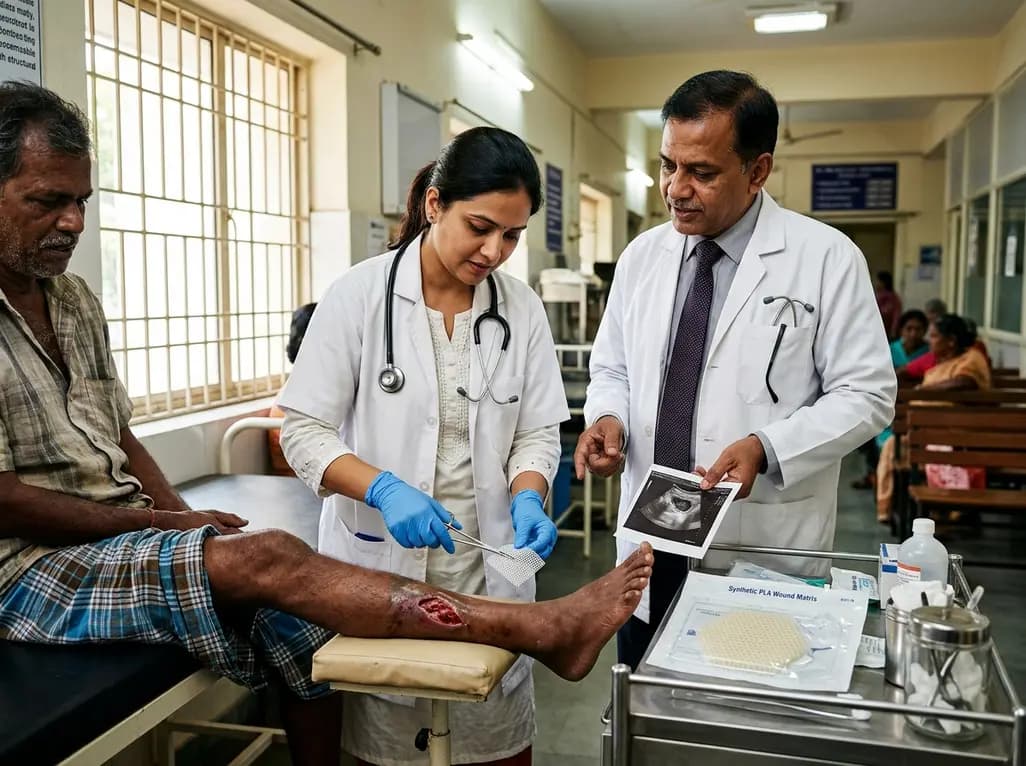
A recent clinical case series highlights the synthetic polylactic acid matrix as an innovative local therapy for refractory pyoderma gangrenosum. The bioresorbable scaffold demonstrated complete ulcer closure and favorable scar quality across chronic wounds, presenting a viable regenerative modality.
Today
A nationwide South Korean study shows underreporting of smoking among women dropped from 57.4% to 36.4% between 2008 and 2021. However, over one-third of female smokers still conceal their habit, highlighting the critical role of cotinine verification in clinical risk assessment.
Today
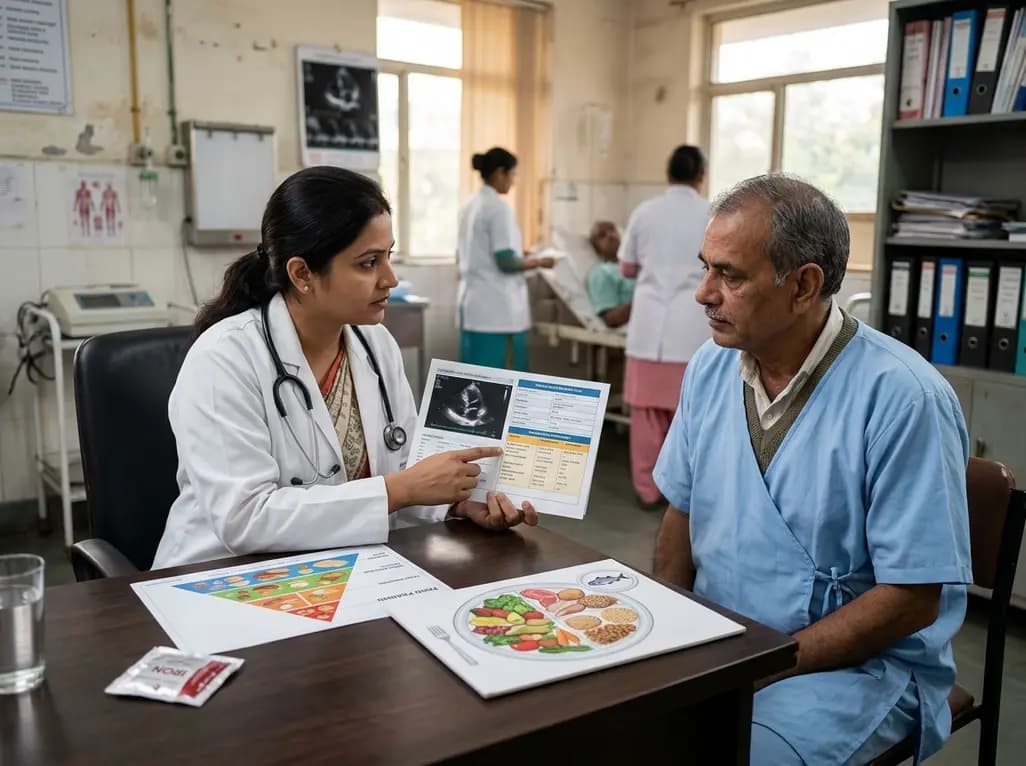
A scientific statement highlights the crucial role of nutrition in managing chronic heart failure. It emphasizes GLIM-based screening, individualized dietary patterns like the Mediterranean diet, appropriate protein and energy intake, avoiding unnecessary fluid restriction, and targeted iron supplementation.
Today
A new study evaluates the rheological stability of decellularized peripheral nerve matrix hydrogels under varied storage conditions. Findings show -80°C storage and freeze-drying preserve gelation kinetics and mechanical stiffness, offering key insights for shipping and translational clinical applications.
Today
A qualitative meta-synthesis highlights the complex interplay between gender dysphoria, minority stress, and eating disorders in transgender and gender-diverse individuals. Clinicians must recognize these distinct drivers to offer supportive, gender-affirming, and interdisciplinary eating disorder care.
Today
