.webp&w=384&q=75)

Loading, please wait...
Loading, please wait...

Traumatic brain injury represents an urgent global health priority that causes immense morbidity and mortality worldwide. Low- and middle-income countries bear a disproportionate share of this clinical burden. Historically, traumatic brain injury research has drawn almost exclusively from high-income patient cohorts. These wealthy nations possess established digital registries, extensive funding, and sophisticated neurointensive infrastructure. Consequently, international clinical guidelines reflect high-resource capabilities that rarely match realities in developing economies. Clinicians in countries like India confront unique injury mechanisms, delayed hospital transfers, and resource limitations. Therefore, researchers must diversify data collection strategies to build universally relevant neurotrauma recommendations.
Rapid urbanization, dense traffic corridors, and increasing motorization have precipitated a severe neurotrauma surge across developing nations. In India and comparable regions, road traffic collisions account for an overwhelming majority of severe cranial injuries. Consequently, emergency departments frequently manage young, economically productive individuals who suffer polytrauma alongside critical intracranial injuries. In contrast, trauma demographics in high-income nations feature an increasing proportion of elderly patients sustaining low-velocity domestic falls. This striking epidemiological contrast indicates that therapeutic priorities and preventative strategies must diverge substantially between regions. Furthermore, prehospital emergency infrastructure across resource-limited environments remains fragmented and unevenly distributed. Injured patients often face prolonged, unmonitored transit times across vast distances before reaching tertiary neurosurgical centers. As a result, catastrophic secondary brain insults—including systemic arterial hypotension and severe hypoxemia—develop long before hospital arrival. Local neurosurgeons and intensivists must repeatedly stabilize severely decompensated patients under profound physiologic stress. Therefore, trauma specialists cannot simply extrapolate high-income survival models to local patient populations without adjusting for these prehospital delays. Understanding these regional determinants remains fundamental to designing effective neurotrauma management pathways.
Most widely recognized neurocritical guidelines originate from academic medical centers in North America and Western Europe. Consequently, these protocols assume immediate access to round-the-clock computed tomography, invasive intracranial pressure monitoring, and advanced microdialysis. Intensive care specialists in well-funded centers routinely titrate targeted therapies based on cerebral perfusion pressure metrics. However, district hospitals and secondary care centers across low-income regions face critical resource constraints. Many centers lack functional intracranial pressure monitors, specialized consumable kits, or dedicated neurointensive nursing staff. Therefore, clinical algorithms that mandate invasive neuromonitoring offer minimal practical guidance for bedside clinicians in these settings. Healthcare providers must instead rely on serial neurological evaluations, pupillary reactivity tracking, and bedside ultrasound assessments. In addition, existing clinical guidelines rarely address endemic systemic comorbidities that complicate acute trauma care. For instance, chronic anemia, malnutrition, uncontrolled diabetes, and endemic infections like tuberculosis substantially modify cerebral autoregulation and recovery trajectories. When standard protocols ignore these prevalent medical conditions, clinicians struggle to achieve predicted therapeutic outcomes. Thus, global guidelines must incorporate adaptable, resource-stratified recommendations that empower clinicians across all healthcare tiers.
To rectify these persistent disparities, international stakeholders must fundamentally reform traumatic brain injury research paradigms. Historically, research funding bodies have concentrated capital within wealthy academic medical institutions, reinforcing a cycle of high-income data curation. These studies analyze sophisticated imaging biomarkers and genomic profiles from relatively homogenous patient populations. Meanwhile, clinical registries systematically miss millions of trauma admissions occurring across resource-constrained public hospitals worldwide. Furthermore, conventional datasets rarely capture variables that govern patient outcomes in developing health systems. For example, registries seldom record referral pathway tiers, transit modes, bystander first aid, or out-of-pocket medical expenses. High-income academic centers possess the infrastructure and statistical expertise to assist in collecting these crucial variables. Therefore, international investigators must collaborate transparently with regional clinicians to incorporate globally representative variables into mainstream datasets. Integrating these broader parameters will facilitate robust cross-contextual comparisons and illuminate true global treatment outcomes. In addition, global funding agencies must deliberately support neurotrauma studies in regions bearing the heaviest clinical caseloads. Ultimately, inclusive data curation will generate credible evidence that drives pragmatic clinical decisions across diverse practice settings.
Standardized international trauma registries must expand beyond conventional physiological metrics to reflect the multidimensional realities of global trauma. First, registries must record precise time intervals between injury occurrence, primary facility presentation, and definitive surgical decompression. In many developing healthcare ecosystems, patients transfer through multiple intermediary clinics before receiving definitive neurosurgical care. Consequently, documenting these referral bottlenecks provides policymakers with actionable data to optimize regional trauma bypass protocols. Second, global registries must evaluate non-invasive neuromonitoring techniques that resource-limited intensive care units can realistically deploy. For instance, serial optic nerve sheath diameter ultrasound and automated infrared pupillometry offer dependable insight into intracranial dynamics. Researchers must rigorously study whether protocolized management guided by these non-invasive metrics matches outcomes achieved with invasive monitors. Furthermore, international registries should systematically capture socioeconomic determinants, such as household catastrophic health expenditure and long-term caregiver availability. In low-resource settings, family economic collapse often prevents post-discharge rehabilitation, resulting in poor functional recovery. Thus, documenting socioeconomic variables alongside clinical parameters generates a far more accurate prognostic perspective for traumatic injuries.
Transforming global neurotrauma care requires equitable, reciprocal partnerships between high-income institutions and low- and middle-income clinical researchers. Historically, academic collaborations often exhibited parachute research tendencies, where outside investigators gathered local data without developing local research capacity. This outdated model failed to empower frontline clinicians or address regional scientific priorities. Therefore, contemporary partnerships must deliberately elevate researchers from developing nations to co-principal investigator roles and executive steering committees. Clinicians working in high-volume public hospitals contribute unmatched clinical expertise and deep understanding of systemic healthcare barriers. Consequently, their frontline perspective must shape study design, outcome metric selection, and guideline development from the outset. Furthermore, international neurosurgical and critical care societies should fund specialized research fellowships and statistical workshops for emerging regional scholars. When local clinicians lead clinical investigations, they design interventions that fit their health systems' technological and economic realities. Such collaborative initiatives will replace paternalistic guideline dissemination with true global scientific consensus. Ultimately, representative data and equitable collaboration will guarantee that evidence-based guidelines improve neurological recovery for traumatic brain injury patients across every continent.
High-income guidelines heavily depend on immediate invasive intracranial pressure monitors, continuous advanced imaging, and specialized neurointensive ICUs. In contrast, many Indian healthcare centers face equipment shortages, delayed patient arrivals, and high patient volumes. Clinicians must therefore rely on bedside clinical monitoring, serial neurological examinations, and protocolized clinical interventions to optimize patient survival.
In high-income nations, traumatic brain injury primarily affects elderly individuals following low-energy ground-level falls. Conversely, low- and middle-income countries experience an epidemic of head injuries among young, productive adults, largely caused by road traffic collisions and occupational trauma. Consequently, the socioeconomic consequences and rehabilitation requirements differ dramatically between these two clinical populations.
Future global registries must document prehospital transport duration, bystander resuscitation efforts, systemic secondary insults, and availability of essential surgical resources. Furthermore, registries should record out-of-pocket costs, nutritional status, and long-term functional recovery metrics. Tracking these practical real-world indicators enables researchers to build pragmatic prediction models and evidence-based treatment algorithms for resource-limited settings.
Disclaimer: This content is for informational and educational purposes only... Refer to the latest local and national guidelines for clinical practice.
References

Read summarized clinical updates, watch expert medical content, and earn CME certifications right from your smartphone.
Open your smartphone camera to scan and install.





Traumatic brain injury disproportionately affects low- and middle-income countries, yet clinical guidelines rely almost entirely on high-income data. Integrating representative clinical variables into global registries is essential to build equitable, evidence-based neurotrauma protocols worldwide.
Today

Chronic eosinophilic pneumonia can present with atypical bronchoalveolar lavage findings and an organizing pneumonia pattern, necessitating surgical lung biopsy.
Today

Discover the crucial distinctions between mesonephric and mesonephric-like proliferations of the female genital tract. Learn the key histomorphologic, immunohistochemical, and molecular differences essential for accurate diagnosis and clinical management.
Today
Kikuchi-Fujimoto disease rarely presents with refractory shock and sinus bradycardia in children. This case report highlights life-threatening hemodynamic instability requiring intensive care, preserved cardiac contractility, and the critical diagnostic role of early excisional lymph node biopsy.
Today
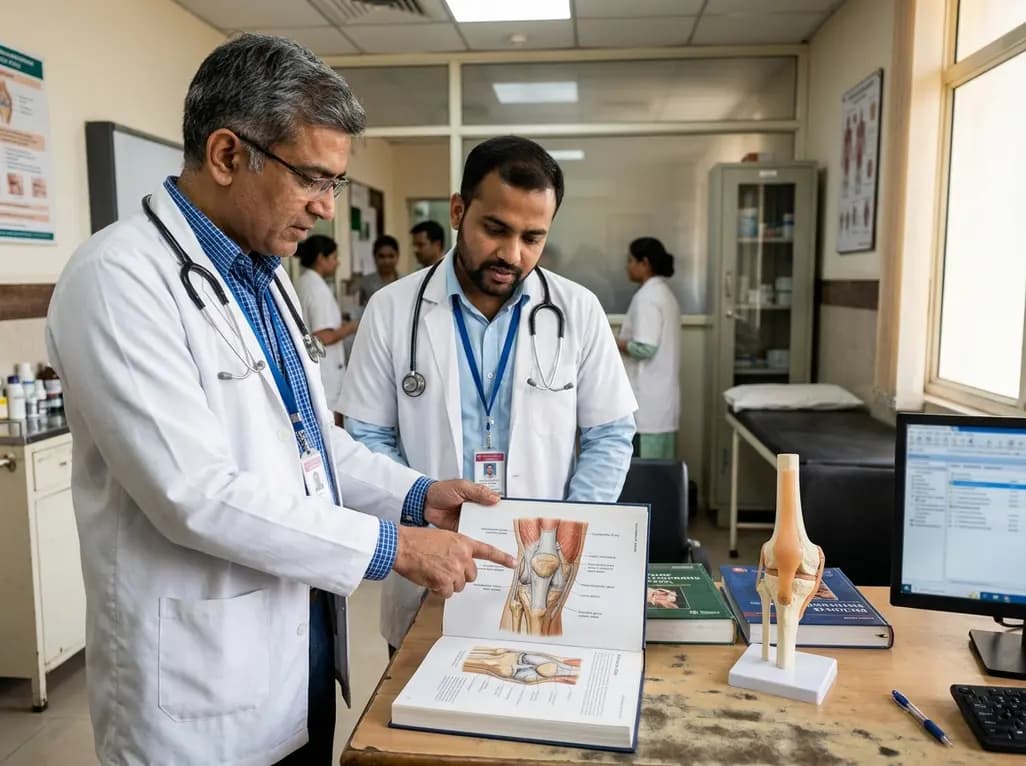
A narrative review investigates whether the articularis genus muscle functions as an independent anatomical entity or blends with the vastus intermedius. We evaluate its morphology, role in retracting the suprapatellar bursa, and direct clinical significance in anterior knee pain and arthroplasty.
Today

A Bayesian multilevel meta-analysis reveals that aerobic training combined with moderate carbohydrate restriction modestly lowers HbA1c in type 2 diabetes. However, sparse data and very low certainty leave incremental benefits over exercise or diet alone unproven, highlighting the need for individualized care.
Today
