.webp&w=384&q=75)

Loading, please wait...
Loading, please wait...
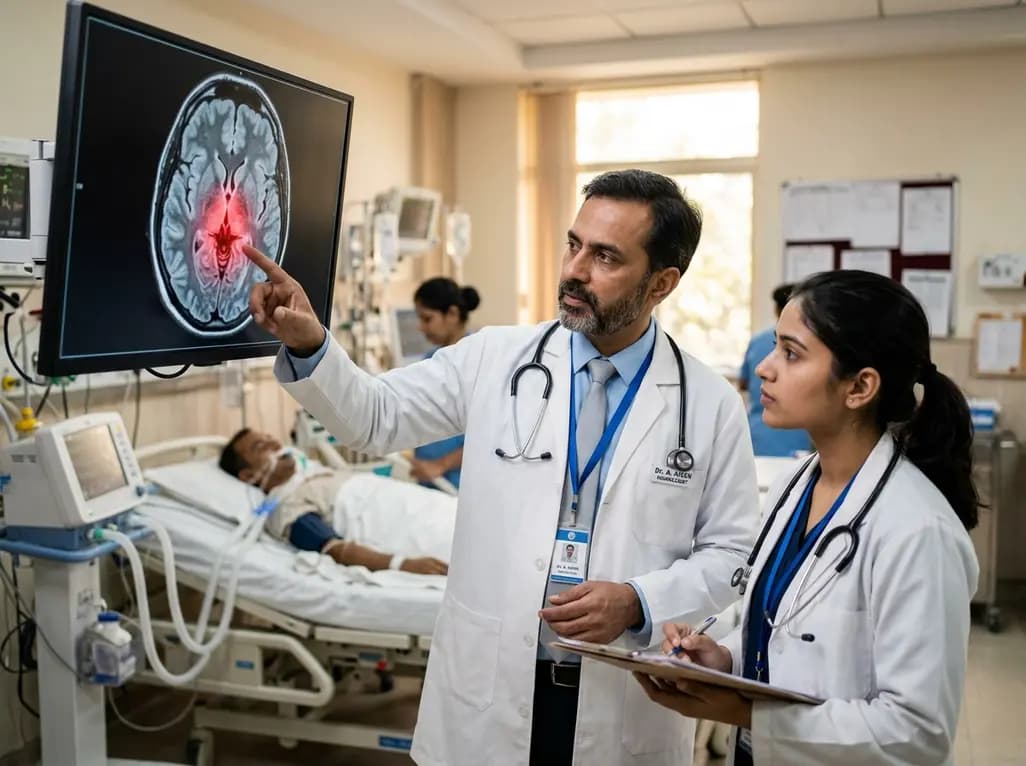
The brainstem theory of consciousness challenges longstanding neuroscientific dogma by positing that raw subjective experience originates within subcortical structures rather than the cerebral cortex. Historically, neuroscientists attributed higher cognitive tasks and the internal sensation of being to the neocortex. However, emerging neurobiological evidence indicates that primary sentience fundamentally depends on ancient brainstem computations. Clinical observations in neurosurgery, critical care, and anesthesiology consistently demonstrate that extensive neocortical damage does not universally eliminate subjective feelings. Conversely, minute focal lesions in key brainstem nuclei reliably extinguish all awareness and induce immediate coma. Therefore, clinicians must re-examine how neural circuits synthesize sensory inputs and generate subjective awareness.
The brainstem theory of consciousness posits that the fundamental feeling of sentience evolved long before the expansion of the mammalian neocortex. Primitive organisms, such as early fish and reptiles, successfully navigated complex, threatening environments without complex cortical architecture. These animals relied heavily on dedicated brainstem circuits to process vital sensory stimuli and execute survival behaviors. Furthermore, pain serves as the ultimate evolutionary template for raw subjective experience. While modern cerebral structures dramatically refine sensory discrimination and cognitive evaluation, they do not create basic feeling states de novo. Instead, ascending projections from the brainstem distribute primal feelings throughout higher anatomical hubs. Consequently, the brainstem acts as the foundational engine of sentience, continuously generating the core feeling of existence that allows higher-order cognitive processing to occur smoothly.
Pain provides compelling empirical evidence supporting subcortical consciousness models because it represents the most unambiguous manifestation of raw phenomenal awareness. Notably, direct electrical stimulation of the cerebral cortex rarely produces intense, acute pain experiences during intraoperative functional mapping. In sharp contrast, direct stimulation of specific subcortical structures, including the periaqueductal gray and adjacent tegmentum, reliably evokes profound distress. Furthermore, painful epileptic seizures originating primarily within cortical gray matter remain exceptionally rare in clinical practice. Massive bilateral cortical infarctions frequently leave nociceptive distress intact, even when comprehensive cognitive processing is completely lost. Thus, peripheral nociceptive signaling translates into authentic subjective suffering at lower neuroanatomical tiers. This essential physiological architecture demonstrates that pain sensation does not require sophisticated cortical mantle computation to reach conscious awareness.
Distinct clinical patterns following acute neurological injury strongly support a primary brainstem origin for phenomenal consciousness. Large cortical strokes, extensive lobectomies, and severe bilateral hemispherectomies produce localized cognitive deficits, such as severe aphasia, agnosia, or profound amnesia, without abolishing basic arousal or underlying sentience. Strikingly, pediatric patients with hydranencephaly, who completely lack functional cerebral hemispheres, still demonstrate emotional responsiveness, sleep-wake cycles, and unmistakable expressions of pain or pleasure. Conversely, tiny ischemic or hemorrhagic lesions localized to the dorsal pontine tegmentum or midbrain reticular formation immediately plunge patients into deep, unresponsive coma. Furthermore, general anesthetics produce rapid reversible loss of consciousness predominantly by disrupting these precise brainstem pacemaker nuclei. Therefore, clinical outcomes demonstrate that the brainstem retains an absolute monopoly on the fundamental generation of wakeful awareness.
Evolutionary biology provides a clear rationale for why primary sentience remains firmly anchored within primitive brainstem circuitry. Constructing an entirely new neural engine for subjective feeling in the burgeoning neocortex would represent an inefficient metabolic and genetic investment. Consequently, evolution preserved the ancient, robust brainstem mechanisms responsible for affective evaluation and survival-oriented sensations like pain, hunger, and primal fear. As the neocortex expanded like a biological supercomputer across millions of years, it developed massive reciprocal axonal projections connecting directly back to these subcortical nuclei. This sophisticated modular expansion allowed mammals to acquire refined spatial mapping, granular sensory feature extraction, and complex executive foresight. However, this expansive neocortical supercomputer still channels its sophisticated outputs through the ancestral brainstem engine to imbue abstract representations with genuine emotional and conscious significance.
Adopting this revised subcortical paradigm carries significant therapeutic implications for anesthesiologists, intensivists, and pain management specialists. When managing disorders of consciousness, clinicians must recognize that intact behavioral responsiveness does not perfectly correlate with internal phenomenal experience. Patients diagnosed with severe cortical injury may retain significant subcortical capacity for experiencing distress, necessitating proactive analgesia even when higher cortical activity appears entirely absent. Furthermore, neuro-monitoring technologies that rely exclusively on cortical electroencephalography may occasionally overlook deep subcortical arousal and covert awareness. In critical care units, therapeutic strategies aimed at promoting neuro-recovery should prioritize protecting and stimulating vital brainstem networks. Ultimately, acknowledging the brainstem as the primary generator of sentience transforms our fundamental clinical approach to coma prognosis, intraoperative awareness prevention, and palliative neuro-rehabilitation.
The neocortex refines pain processing by localizing the physical injury, analyzing its precise intensity, and integrating contextual memories with emotional anticipation. However, cortical networks do not generate the raw subjective unpleasantness of pain. Instead, subcortical brainstem circuits translate nociceptive signaling into primitive suffering, which the neocortex subsequently processes into detailed, multidimensional conscious perceptions.
Brainstem lesions directly disrupt the essential ascending reticular activating system and foundational sentience circuits, which completely abolishes global consciousness and causes profound coma. In contrast, cortical lesions destroy specific functional modules without shutting down global arousal. Consequently, extensive neocortical damage induces targeted neurological deficits, such as aphasia or motor paralysis, while preserving basic wakefulness.
Most modern depth-of-anesthesia monitors evaluate cortical electroencephalographic activity, which might fail to detect persistent subcortical processing. Understanding that brainstem nuclei generate raw wakefulness encourages anesthesiologists to track subcortical and autonomic parameters alongside cortical metrics. This comprehensive dual assessment guarantees sufficient hypnotic depth and prevents covert intraoperative awareness during complex surgical interventions.
Disclaimer: This content is for informational and educational purposes only and does not constitute medical advice. Refer to the latest local and national guidelines for clinical practice.
References
Devor M et al. Brainstem Theory of Consciousness. Neuroscientist. 2026 Aug 25. doi: 10.1177/10738584261470362. PMID: 42638616.
Merker B. Consciousness without a cerebral cortex: A challenge for neuroscience and medicine. Behav Brain Sci. 2007;30(1):63-81.
Damasio A, Damasio H. Exploring the concept of homeostasis and its neural substrates in feeling and consciousness. Nat Rev Neurosci. 2016;17(2):125-132.

Read summarized clinical updates, watch expert medical content, and earn CME certifications right from your smartphone.
Open your smartphone camera to scan and install.





The brainstem theory of consciousness challenges classical cortical paradigms by proposing that raw sentience and subjective experience originate within primitive subcortical structures rather than the neocortex.
last month

A nationwide English cohort study shows that interstitial lung diseases are no longer rare, with incidence jumping 30% and 200,000 active cases. This analysis highlights clinical implications for diagnosis, multi-disciplinary management, and global health priorities across respiratory and internal medicine.
Today

A nationwide South Korean study shows underreporting of smoking among women dropped from 57.4% to 36.4% between 2008 and 2021. However, over one-third of female smokers still conceal their habit, highlighting the critical role of cotinine verification in clinical risk assessment.
Today

PepsiCo and Monster Beverage have challenged the FSSAI ban on the energy drink label in Indian courts. While companies highlight supply disruptions, regulatory actions spotlight severe cardiovascular and metabolic risks associated with excessive caffeine, sugar, and taurine consumption, especially in adolescents.
Today

A new study evaluates the rheological stability of decellularized peripheral nerve matrix hydrogels under varied storage conditions. Findings show -80°C storage and freeze-drying preserve gelation kinetics and mechanical stiffness, offering key insights for shipping and translational clinical applications.
Today

A Bayesian multilevel meta-analysis reveals that aerobic training combined with moderate carbohydrate restriction modestly lowers HbA1c in type 2 diabetes. However, sparse data and very low certainty leave incremental benefits over exercise or diet alone unproven, highlighting the need for individualized care.
Yesterday
