.webp&w=384&q=75)

Loading, please wait...
Loading, please wait...

Surgeons frequently debate preoperative criteria to optimize surgical success, particularly for elective abdominal wall reconstruction. In modern surgical practice, umbilical hernia repair represents one of the most routinely performed procedures across general surgery departments globally. Nevertheless, clinicians often struggle to establish standardized preoperative body mass index cutoffs specifically for umbilical defects. While high body mass index thresholds remain widely adopted to optimize patients undergoing complex ventral hernia reconstruction, clear and universal guidelines for umbilical interventions remain scarce. Consequently, clinicians must determine whether strict body mass index limits prevent surgical failure or merely delay essential care. A comprehensive multi-hospital study evaluated whether established thresholds appropriately predict postoperative outcomes in this specific patient cohort.
Historically, healthcare systems established rigid body mass index cutoffs, often set at 35 or 40 kg/m², for major ventral hernia operations. Clinicians implemented these protocols primarily to reduce wound complications, surgical site infections, and long-term mechanical failure. However, umbilical defects often present unique anatomical and physiological considerations compared to extensive incisional defects. Because primary umbilical openings typically involve smaller defect diameters, applying broad ventral hernia thresholds without direct evidence creates clinical uncertainty. Therefore, surgical teams need concrete data to evaluate if patient optimization protocols tailored for extensive incisional repairs truly benefit patients with primary umbilical hernias. Additionally, evaluating these parameters helps healthcare organizations create balanced guidelines that maximize success without arbitrarily denying surgical access.
To address this clinical dilemma, researchers conducted a comprehensive retrospective chart review across a large county-wide health system between 2014 and 2016. The investigation examined 411 adult patients undergoing elective umbilical hernia procedures. Within this diverse cohort, the mean patient age was 45 years, and 52% of the participants were male. Furthermore, approximately 23% of the study population presented with a body mass index equal to or exceeding 35 kg/m². The investigative team meticulously tracked baseline characteristics, operative details, defect measurements, and long-term recurrence rates. Overall, documented clinical recurrences developed in 30 patients, representing a baseline recurrence rate of 7.2%. Among these individuals with recurrent hernias, 43% subsequently required formal reoperation. Consequently, the data provided robust statistical power to explore specific preoperative risk factors associated with procedural failure.
Bivariate statistical analysis initially revealed several variables significantly associated with surgical recurrence, including elevated body mass index, advanced age, larger intraoperative defect size, pulmonary disease, and hepatic cirrhosis. However, multivariate logistic regression isolated the independent predictors of procedural failure. Notably, a body mass index of 35 kg/m² or greater independently correlated with a more than threefold increase in recurrence risk (odds ratio 3.2, 95% confidence interval: 1.2 to 8.6, p = 0.02). In addition, intraoperative defect size significantly influenced mechanical durability, as larger fascial gaps experienced greater lateral wall tension. Therefore, these statistical findings confirm that severe obesity serves as a strong independent predictor of surgical failure in umbilical hernia surgery, mirroring patterns observed in broader ventral abdominal wall reconstructions.
Beyond body habitus, the investigation revealed that liver disease dramatically escalates clinical failure rates. Multivariate logistic regression established that underlying cirrhosis served as the single most potent independent risk factor for recurrence, demonstrating an alarming odds ratio of 16.1 (95% confidence interval: 3.3 to 85.8, p < 0.001). Patients suffering from cirrhosis frequently experience persistent ascites, chronic malnutrition, impaired collagen synthesis, and elevated intra-abdominal pressure. Consequently, the constant hydraulic strain against the newly repaired fascial plane promotes tissue breakdown and mesh detachment. Surgeons must therefore approach cirrhotic patients with extreme caution. Optimal preoperative paracentesis, medical optimization of portal hypertension, and specialized surgical techniques remain indispensable to prevent catastrophic early recurrence in this vulnerable group.
Although the data confirms that a body mass index of 35 kg/m² or higher elevates recurrence rates, implementing rigid exclusion criteria presents ethical and practical challenges. In public healthcare systems and resource-constrained environments, patients often face substantial barriers to rapid weight reduction. If hospitals enforce strict cutoffs without robust metabolic support, vulnerable individuals may endure persistent pain, progressive hernia enlargement, and catastrophic incarceration. Furthermore, untreated hernias often evolve into emergency presentations, where acute strangulation eliminates the opportunity for elective optimization. Therefore, clinicians must weigh the risk of elective recurrence against the acute morbidity of delayed emergency surgery. Collaborative multidisciplinary care—incorporating dietary counseling, bariatric consultation, and smoking cessation—offers a safer alternative to outright surgical denial.
Surgeons managing umbilical hernias in patients with high body mass index or chronic comorbidities should adopt standardized risk-mitigation protocols. First, clinicians should perform comprehensive metabolic evaluations, screening for occult diabetes, obstructive sleep apnea, and chronic respiratory disorders. Second, when repairing defects in patients with elevated body mass index or fascial gaps exceeding 1 to 2 centimeters, surgeons should favor prosthetic mesh reinforcement over primary suture closure. Third, surgical teams must optimize intraoperative technique by ensuring adequate mesh overlap and choosing durable fixation methods. Finally, for patients with comorbid cirrhosis, interdisciplinary coordination with hepatologists ensures proper perioperative control of ascites. By implementing tailored perioperative strategies, surgical teams can achieve durable anatomical repairs while actively reducing long-term complications.
A body mass index exceeding 35 kg/m² significantly increases baseline intra-abdominal pressure and places continuous lateral tension across the newly repaired linea alba. Furthermore, excess visceral adiposity impairs microvascular perfusion and delays fascial wound healing. Consequently, patients with severe obesity exhibit more than three times higher odds of hernia recurrence compared to normal-weight individuals undergoing identical operative techniques.
Cirrhosis severely compromises abdominal wall healing through multiple physiological pathways. Chronic ascites generates unrelenting fluid pressure against the surgical site, predisposing the fascial closure to dehiscence. Additionally, cirrhotic patients frequently suffer from protein malnutrition, sarcopenia, and coagulopathy. These combined systemic factors elevate the risk of surgical site infection, wound breakdown, and long-term hernia recurrence by more than sixteenfold.
Surgeons should not automatically deny care based solely on a rigid body mass index cutoff. Instead, clinical teams must balance the risk of elective recurrence against the progressive danger of hernia incarceration or strangulation. Clinicians should provide structured weight optimization, manage comorbidities aggressively, and consider tailored mesh techniques rather than instituting unconditional exclusions that leave patients vulnerable to acute surgical emergencies.
Disclaimer: This content is for informational and educational purposes only and should not be considered medical advice or a substitute for clinical judgment. Healthcare professionals must independently evaluate and tailor their approach to each patient's individual clinical situation. Refer to the latest local and national guidelines for clinical practice.
References
Sarkissyan M et al. Should Body Mass Index be Used as a Criteria for Selecting Patients Who are Candidates for Umbilical Hernia Repair in a Large County Health System? Am Surg. 2026 Aug 24. doi: 10.1177/00031348261472841. PMID: 42637680.
Henriksen NA, Montgomery A, Kaufmann R, et al. European Hernia Society and Americas Hernia Society guidelines for the management of umbilical and epigastric hernias. Hernia. 2020;24(1):1-16. doi: 10.1007/s10029-019-02083-3.
Liang MK, Holihan JL, DiBrito S, et al. Modifiable risk factors in ventral hernia repair: A meta-analysis. JAMA Surg. 2016;151(12):1120-1127. doi: 10.1001/jamasurg.2016.3262.
Kulacoglu H. Current options in umbilical hernia repair in adult patients. World J Gastrointest Surg. 2015;7(10):243-250. doi: 10.4240/wjgs.v7.i10.243.

Read summarized clinical updates, watch expert medical content, and earn CME certifications right from your smartphone.
Open your smartphone camera to scan and install.





A recent retrospective study evaluates whether BMI thresholds should determine eligibility for umbilical hernia repair, highlighting that BMI ≥ 35 and cirrhosis significantly increase recurrence risk while weighing the clinical ethics of strict surgical cutoffs.
last month

A recent clinical case series highlights the synthetic polylactic acid matrix as an innovative local therapy for refractory pyoderma gangrenosum. The bioresorbable scaffold demonstrated complete ulcer closure and favorable scar quality across chronic wounds, presenting a viable regenerative modality.
Today

A nationwide South Korean study shows underreporting of smoking among women dropped from 57.4% to 36.4% between 2008 and 2021. However, over one-third of female smokers still conceal their habit, highlighting the critical role of cotinine verification in clinical risk assessment.
Today
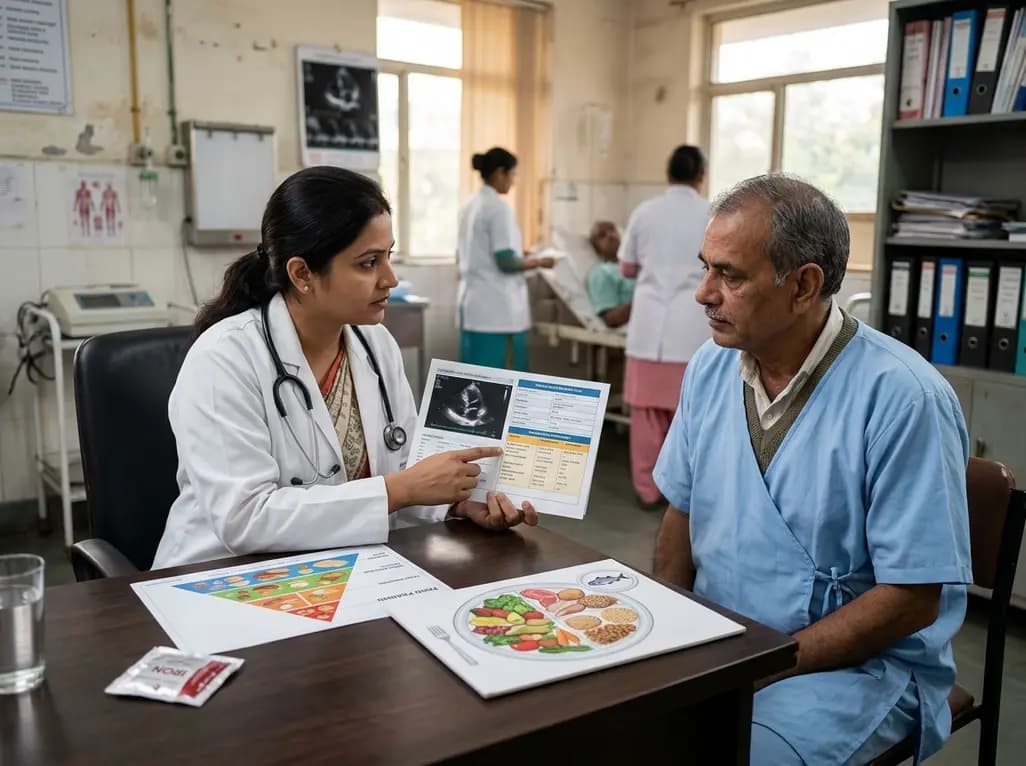
A scientific statement highlights the crucial role of nutrition in managing chronic heart failure. It emphasizes GLIM-based screening, individualized dietary patterns like the Mediterranean diet, appropriate protein and energy intake, avoiding unnecessary fluid restriction, and targeted iron supplementation.
Today

A new study evaluates the rheological stability of decellularized peripheral nerve matrix hydrogels under varied storage conditions. Findings show -80°C storage and freeze-drying preserve gelation kinetics and mechanical stiffness, offering key insights for shipping and translational clinical applications.
Today

A qualitative meta-synthesis highlights the complex interplay between gender dysphoria, minority stress, and eating disorders in transgender and gender-diverse individuals. Clinicians must recognize these distinct drivers to offer supportive, gender-affirming, and interdisciplinary eating disorder care.
Today
