.webp&w=384&q=75)

Loading, please wait...
Loading, please wait...

Isolated REM sleep behavior disorder represents one of the strongest clinical indicators of impending neurodegeneration. Patients regularly enact vivid, distressing dreams because they lose normal muscle atonia during rapid eye movement sleep. Pathologically, this condition marks the prodromal phase of alpha-synucleinopathies, notably Parkinson's disease, dementia with Lewy bodies, and multiple system atrophy. Recent clinical investigations demonstrate that autonomic reflex testing uncovers subclinical dysautonomia years before motor deficits or cognitive decline appear. Because alpha-synuclein pathology targets autonomic ganglia early, objective autonomic evaluations offer essential prognostic clarity. Therefore, clinicians must recognize the critical diagnostic and predictive value of these autonomic assessments.
Autonomic reflex testing provides an objective assessment of autonomic integrity across multiple physiological domains. Standard laboratory protocols evaluate sympathetic cholinergic function using quantitative sudomotor axon reflex testing. Additionally, testing measures cardiovagal activity through deep breathing and adrenergic responses during the Valsalva maneuver. In isolated REM sleep behavior disorder, pathological alpha-synuclein damages peripheral unmyelinated nerves and autonomic brainstem nuclei long before nigrostriatal dopaminergic pathways fail. Consequently, patients frequently manifest autonomic disturbances before displaying classical parkinsonian motor signs. Recent longitudinal findings reveal that autonomic reflex testing detects baseline abnormalities in eighty-seven percent of affected individuals. Moreover, during longitudinal follow-up, autonomic abnormalities progress to involve every physiological domain in all evaluated patients. Therefore, comprehensive autonomic testing serves as an invaluable window into early neurodegenerative changes. By measuring functional deficits directly, clinicians can track progressive autonomic failure far more accurately than subjective questionnaires permit. In addition, recognizing these early physiological deficits empowers physicians to implement proactive surveillance strategies.
Although alpha-synuclein pathology damages diverse autonomic circuits, cardiovagal impairment demonstrates the strongest correlation with clinical phenoconversion. Specifically, reduced heart rate variability during deep breathing reflects parasympathetic degeneration within the dorsal motor nucleus of the vagus nerve. Clinical investigators observed that individuals who eventually converted to overt synucleinopathies exhibited prominent cardiovagal deficits at study entry. Specifically, baseline heart rate variability during deep breathing demonstrated clear prognostic utility. Furthermore, multivariate statistical modeling confirms that cardiovagal impairment independently elevates conversion risk compared to isolated sudomotor or adrenergic failure. When clinicians combine heart rate variability metrics with standardized motor evaluations, predictive accuracy reaches an area under the curve of 0.77. In addition, integrating total disease duration increases this prognostic power to an impressive area under the curve of 0.89. Therefore, cardiovagal testing provides critical prognostic precision. Because parasympathetic decline signals expanding brainstem pathology, cardiac autonomic monitoring helps physicians anticipate disease acceleration. Consequently, early physiological evaluation offers essential guidance for clinical decision-making and patient counseling.
The longitudinal trajectory of autonomic failure in isolated sleep disturbance exhibits a relentless and progressive course. Over an average follow-up of nearly three years, cohorts demonstrate an annual phenoconversion rate of approximately 6.6 percent. Notably, while eighty-seven percent of patients show baseline dysautonomia, serial evaluations reveal that one hundred percent eventually develop abnormal reflex responses. Sympathetic adrenergic failure, manifesting as orthostatic hypotension or blunted Valsalva pressure recovery, often evolves alongside postganglionic sudomotor deficits. However, the combined presence of cardiovagal and adrenergic failure signals widespread neurodegeneration across both central and peripheral autonomic divisions. Clinicians must understand that autonomic dysfunction in these patients does not remain static; rather, it reflects a continuous neurodegenerative cascade. Furthermore, the rate of autonomic decline closely mirrors the accumulation of pathological dermal synuclein and subtle motor slowing. Consequently, serial autonomic evaluations allow physicians to map progressive neuroanatomical vulnerability over time. As pathological synuclein spreads through autonomic pathways, the risk of overt parkinsonism or cognitive impairment escalates significantly. Thus, structured annual testing delivers indispensable longitudinal intelligence for clinical teams.
Accurate risk stratification in prodromal synucleinopathy demands a multimodal framework rather than reliance on any single biomarker. While autonomic testing establishes physiological baseline impairment, combining it with complementary clinical tools substantially improves predictive accuracy. For example, clinicians routinely evaluate olfactory thresholds, cognitive performance via Montreal Cognitive Assessment, and subtle motor signs using standardized scales. In addition, minimally invasive skin biopsies that identify phosphorylated alpha-synuclein within autonomic nerve fibers provide direct histopathological confirmation. When practitioners evaluate these diverse modalities together, they construct a comprehensive multidimensional risk profile for each patient. For instance, a patient with cardiovagal blunting, hyposmia, and motor asymmetry faces an imminent risk of parkinsonian conversion. Conversely, isolated sleep disturbance without autonomic or motor involvement typically indicates a more indolent trajectory. Therefore, integrating autonomic testing into multimodal algorithms enables tailored prognostic counseling. Furthermore, this comprehensive approach establishes robust baseline metrics for patient selection in neuroprotective clinical trials, facilitating early disease intervention.
Applying autonomic reflex testing principles to everyday clinical practice requires structured screening and clear referral pathways. Neurologists and primary care physicians frequently evaluate dream-enactment behaviors, yet many patients remain unrecognized until physical injuries occur. Once polysomnography confirms isolated REM sleep behavior disorder without normal muscle atonia, physicians should initiate objective autonomic evaluations. In outpatient clinics, clinicians can screen for orthostatic hypotension using active standing vitals and assess resting heart rate variability. If resources permit, prompt referral to an autonomic laboratory provides comprehensive baseline risk profiling. In addition, identifying subclinical dysautonomia enables proactive management of orthostatic intolerance and gastrointestinal dysmotility before functional independence declines. Clinicians must also educate patients and caregivers regarding subtle motor slowing, gait instability, and cognitive fluctuations. Furthermore, proactive risk assessment allows medical teams to implement fall prevention measures and safety counseling early. Consequently, integrating autonomic diagnostics bridges sleep medicine with preventive neurology, ultimately improving clinical outcomes and patient quality of life.
The evolving landscape of neurodegenerative disease emphasizes therapeutic intervention during the prodromal phase, long before widespread neuronal death occurs. Because isolated REM sleep behavior disorder represents a critical window of opportunity, reliable prognostic biomarkers are vital for timely therapeutic intervention. Autonomic reflex testing provides a reproducible, non-invasive, and biologically grounded method to stratify risk and enrich trial cohorts. In coming years, wearable sensors and remote monitoring tools may facilitate continuous autonomic assessments in community settings. Moreover, combining autonomic reflex metrics with blood-based alpha-synuclein seed amplification assays will refine predictive models substantially. Meanwhile, researchers are investigating novel neuroprotective compounds designed to halt alpha-synuclein propagation before motor symptoms emerge. Therefore, systematic autonomic monitoring ensures that eligible patients can access disease-modifying trials at the optimal therapeutic time. Ultimately, integrating autonomic testing into standard neurological care transforms our approach to neurodegenerative prevention, paving the way for targeted clinical management.
Autonomic reflex testing provides an objective assessment of sympathetic and parasympathetic nervous system integrity. In isolated REM sleep behavior disorder, it identifies early subclinical dysautonomia across cardiovagal, sudomotor, and adrenergic domains. Consequently, these physiological measurements help clinicians detect underlying alpha-synuclein pathology and accurately stratify the risk of impending neurodegenerative phenoconversion.
Cardiovagal dysfunction, detected through abnormal heart rate variability during deep breathing, reflects early alpha-synuclein damage to the dorsal motor vagal nucleus. Clinicians find that blunted cardiovagal responses strongly correlate with disease progression. When combined with motor scores and disease duration, this metric achieves high predictive accuracy for conversion to overt neurodegenerative disorders.
Clinicians should combine autonomic reflex testing with standardized motor evaluations using the MDS-UPDRS Part III, cognitive screenings, and olfactory testing. Additionally, skin biopsies that identify dermal alpha-synuclein deposition offer valuable histological confirmation. Together, these multimodal assessments create a precise diagnostic framework that reliably predicts the timing and trajectory of clinical phenoconversion.
Disclaimer: This content is for informational and educational purposes only and is not intended as medical advice. It should not replace professional judgment or diagnostic guidelines. Consult relevant clinical protocols and specialists for individualized patient care. Refer to the latest local and national guidelines for clinical practice.
References

Read summarized clinical updates, watch expert medical content, and earn CME certifications right from your smartphone.
Open your smartphone camera to scan and install.





Autonomic reflex testing identifies widespread dysautonomia in isolated REM sleep behavior disorder. Cardiovagal impairment, combined with motor examination and disease duration, serves as a powerful biomarker predicting phenoconversion to overt alpha-synucleinopathies like Parkinson's disease and Lewy body dementia.
Today

A multicity study highlights that over 80% of acute respiratory infections remain outside hospitals. Patients frequently choose community pharmacies and digital platforms. Integrating digital health data and retail pharmacy sales can fill critical surveillance gaps and improve early outbreak detection.
Today

Scandinavian register evidence reveals that neonatal birth length strongly predicts adult health and mortality, whereas birth weight dictates cognitive capacity. Symmetric growth restriction causes far more severe long-term deficits than asymmetric restriction, underscoring the need for comprehensive anthropometry.
Today
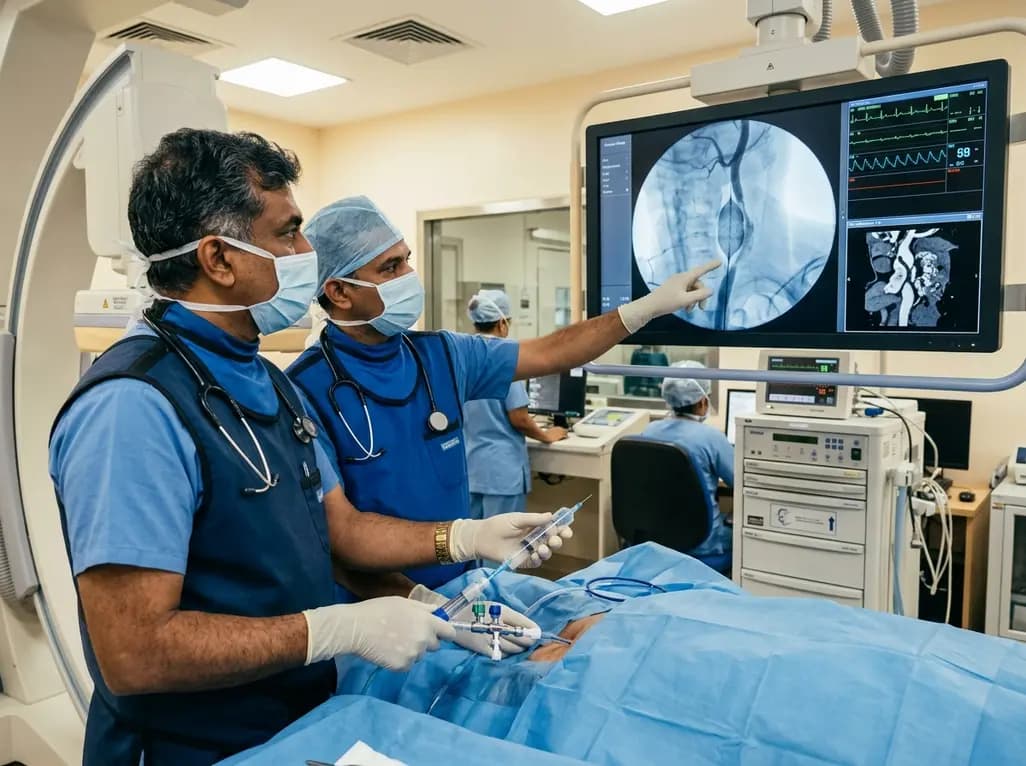
Discover how rescue cutting balloon angioplasty successfully modifies heavily calcified carotid stenosis, enabling stent delivery without baroreceptor instability and ensuring favorable long-term neurologic outcomes.
Today
A breakthrough study reveals that digoxin alleviates osteoarthritis by targeting LSP1 in synovial macrophages, preventing harmful extracellular trap formation and restoring SOD1 activity. This dual-action mechanism protects joint cartilage and offers a promising repurposing strategy for disease modification.
Today

Data from the 2026 Workforce Health Index reveals that 38.7% of urban employees and dependents exhibit abnormal glycemic control. Emerging at increasingly younger ages, this metabolic shift intersects with severe vitamin deficiencies, highlighting the urgent need for early workplace screenings and targeted clinical care.
Today
