.webp&w=384&q=75)

Loading, please wait...
Loading, please wait...
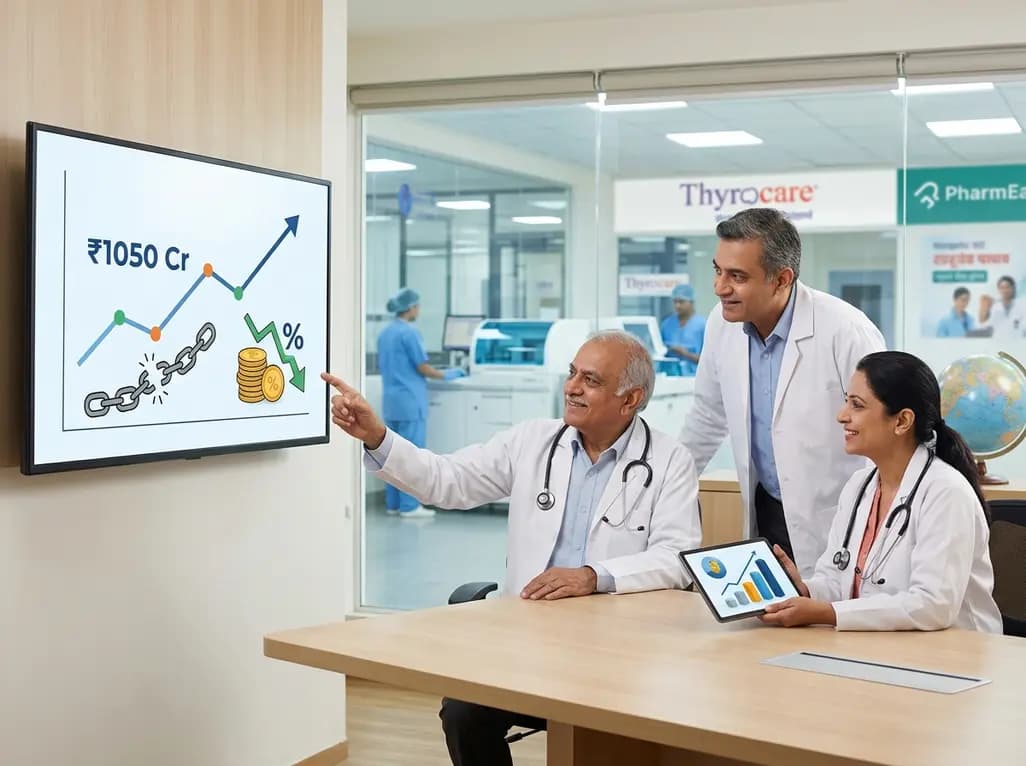
Digital healthcare giant API Holdings, the parent entity behind Thyrocare Technologies and PharmEasy, has announced a decisive corporate turnaround. The company revealed that API Holdings debt-free status is now accomplished following the complete repayment of ₹1,050 crore in outstanding term debt. Management funded this large-scale deleveraging process through a strategic minority stake sale in Thyrocare Technologies alongside internal operational accruals. Consequently, this financial restructuring eliminates significant balance sheet leverage that had accumulated over recent operating periods. Healthcare professionals, laboratory directors, and diagnostic industry stakeholders closely monitor these developments across India. Furthermore, corporate fiscal health directly influences supply chain consistency, diagnostic capacity investments, and enterprise service delivery. As health systems demand greater integration across clinical diagnostics and pharmacy networks, this resolution marks a pivotal milestone. Therefore, understanding the structural details of this transaction provides meaningful context regarding future diagnostic infrastructure stability nationwide.
To execute this comprehensive balance sheet deleveraging, API Holdings coordinated a structured equity transaction on public markets. Specifically, Thyrocare's direct holding company, Docon Technologies Private Limited, executed a block trade involving 1,57,69,696 equity shares. This block represented approximately 9.90 percent of the diagnostic firm’s total paid-up equity share capital. Furthermore, Docon deliberately calibrated the volume of shares sold to safeguard its majority governing position. Following the transaction, Docon maintains a commanding 51.02 percent controlling stake in Thyrocare Technologies. Consequently, the holding company retains unambiguous management control and board leadership over the diagnostics enterprise. Moreover, the capital realized from this open-market divestment directly funded the settlement of the ₹1,050 crore credit obligation. Internal cash reserves also contributed to clearing the remaining debt balances. Whole-Time Director and Group CFO Alok Kumar Jagnani stated that the group achieved this milestone without sacrificing control. In addition, this decisive action removes interest rate sensitivities and financial liabilities from the consolidated balance sheet. As a result, the enterprise establishes a stable capital foundation to support operational growth across diverse health services.
A critical benefit of the ₹1,050 crore loan settlement is the total release of encumbered equity. Previously, parent entities pledged substantial proportions of Thyrocare shares to collateralize the Non-Convertible Debentures and term debt. Consequently, these share pledges created operational overhang and market exposure during fluctuating economic cycles. However, the complete repayment of the underlying debt facility prompted lenders to release all existing share pledges. Therefore, Docon’s entire 51.02 percent controlling interest in Thyrocare is now fully unencumbered and risk-free. Moreover, eliminating equity encumbrances protects diagnostic operations from external financial market volatility. Healthcare administrators, clinical pathologists, and institutional clients gain renewed confidence from this strengthened ownership framework. Group leadership highlighted that maintaining equity unencumbrance was a fundamental strategic objective throughout the repayment process. Additionally, unencumbered equity provides maximum strategic flexibility for future capital allocation and clinical partnerships. Thus, the corporate group eliminated leverage risk while retaining full operational autonomy over core diagnostic laboratories. Ultimately, this structural stability protects laboratory operations from balance sheet distractions and secondary financial liabilities.
The modern Indian healthcare sector demands seamless synergy between preventive pathology testing and pharmaceutical fulfillment. Thyrocare operates one of India's largest automated centralized laboratory networks, processing millions of biochemical investigations annually. Meanwhile, parent entity API Holdings oversees comprehensive digital pharmacy and teleconsultation distribution channels across tier-one and rural markets. Furthermore, recent financial disclosures indicate that Thyrocare has sustained double-digit revenue expansion over eight consecutive quarters. For instance, the diagnostic subsidiary delivered twenty-six percent growth in recent quarters, outperforming broader industry averages. Consequently, robust operational earnings from diagnostic services provided the internal accruals necessary to support debt retirement. In addition, eliminating recurring loan payments frees up vital operating cash flow for cross-platform integration. Clinicians increasingly depend on integrated digital records where lab results instantly connect with outpatient pharmacy support. Therefore, enhanced liquidity allows management to invest in unified clinical software, cold-chain phlebotomy networks, and rapid digital reporting. As a result, primary care providers and medical specialists benefit from improved diagnostic precision and streamlined workflow integration.
Financial discipline plays an essential role in sustaining clinical quality standards across high-volume pathology networks. Previously, servicing large debt obligations created substantial cash outflows that limited strategic capital expenditures in lab infrastructure. However, operating without debt enables API Holdings to channel operational earnings directly into frontline diagnostic technologies. Management noted that every operating business within the healthcare group is progressing steadily toward net profitability. Consequently, the corporate entity no longer carries debt-servicing burdens on its profit and loss statements. In addition, this improved fiscal health allows Thyrocare to upgrade automated analyzers and expand specialized molecular diagnostics. Indian diagnostic markets face rising demand for advanced preventive panels, oncology markers, and endocrine profiles. Furthermore, maintaining high analytical accuracy requires continuous investment in quality control protocols and international laboratory accreditations. With an unburdened balance sheet, the organization can sustain competitive testing pricing while modernizing regional processing centers. Thus, practicing physicians across India receive dependable, cost-effective diagnostic support without concerns over corporate financial distress.
The stabilization of major healthcare platforms carries broad implications for medical practitioners and patient care delivery nationwide. Digital health aggregators and centralized pathology chains play a growing role in decentralized preventive screening programs. Furthermore, regulatory bodies and medical associations emphasize reliable testing standards, data security, and transparent diagnostic reporting. Because financial instability at the parent level can disrupt clinical supply chains, this balance sheet resolution restores ecosystem confidence. Hospital networks, standalone clinics, and freelance phlebotomists rely heavily on Thyrocare’s sample logistics and timely processing. Moreover, strong balance sheets empower healthcare enterprises to withstand macroeconomic headwinds and regulatory pricing adjustments. In particular, government discussions surrounding trade margin rationalization require diagnostic and distribution firms to operate efficiently. With zero debt overhang, API Holdings can navigate healthcare policy shifts without compromising diagnostic quality. Ultimately, a resilient diagnostic infrastructure supports early disease detection, chronic illness management, and enhanced patient outcomes across India.
Q1: Why did API Holdings sell a portion of its stake in Thyrocare?
API Holdings sold approximately 9.90 percent of its equity stake in Thyrocare through its promoter entity, Docon Technologies, to generate funds for debt clearance. The transaction proceeds, combined with internal accruals, allowed the parent company to repay its ₹1,050 crore outstanding debt in full. This strategic sale successfully eliminated debt obligations while preserving majority promoter ownership above 51 percent.
Q2: What is the status of pledged Thyrocare shares after the debt repayment?
Following the complete repayment of the ₹1,050 crore loan facility, lenders released all existing pledges on Thyrocare shares. Consequently, Docon Technologies now holds its entire 51.02 percent controlling stake in the diagnostics company in a fully unencumbered manner. This action removes equity encumbrance risks and significantly strengthens corporate stability across the organization.
Q3: How does this debt-free status benefit clinical diagnostic operations?
Becoming debt-free removes significant interest and debt servicing costs from the parent balance sheet. As a result, the organization can reinvest operational cash flows directly into advanced laboratory infrastructure, logistics optimization, and quality assurance. This financial flexibility supports faster turnaround times, wider diagnostic test menus, and reliable diagnostic reporting for clinicians and patients.
Disclaimer: This content is for informational and educational purposes only. It does not constitute medical advice or replace professional judgment. Refer to the latest local and national guidelines for clinical practice.
References

Read summarized clinical updates, watch expert medical content, and earn CME certifications right from your smartphone.
Open your smartphone camera to scan and install.





API Holdings, the parent entity of PharmEasy and Thyrocare, has officially eliminated its ₹1,050 crore debt burden. By divesting a 9.9% stake while retaining majority control, the healthcare conglomerate releases pledged assets and establishes an unencumbered foundation for diagnostic and digital pharmacy expansion.
last month
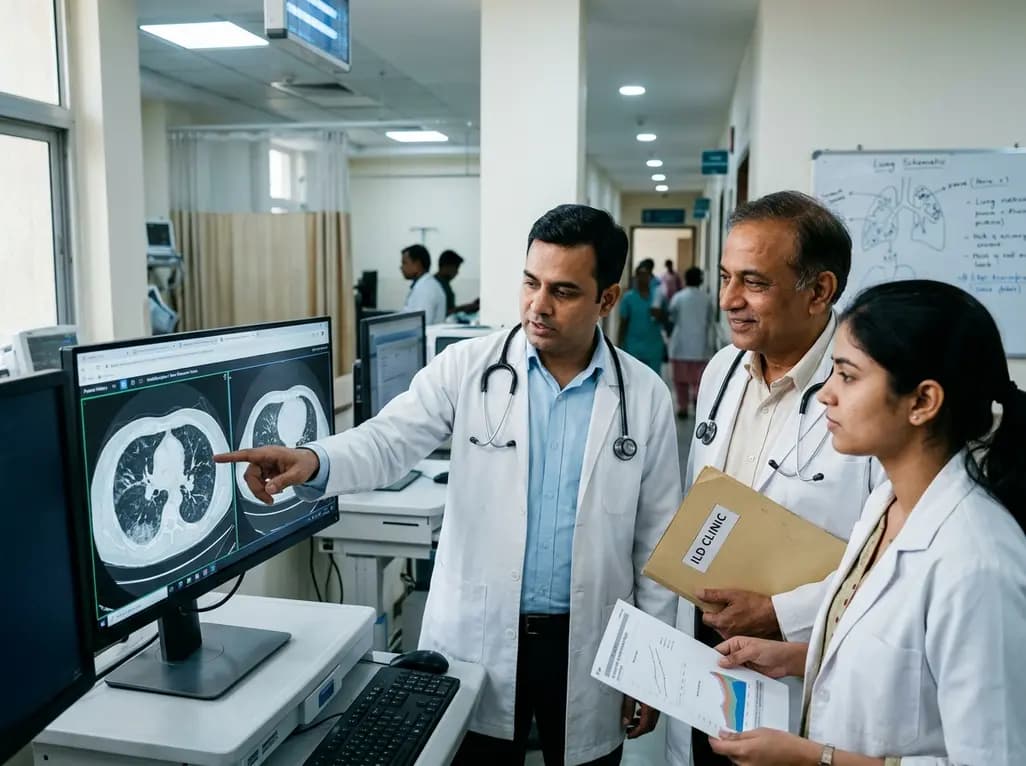
A nationwide English cohort study shows that interstitial lung diseases are no longer rare, with incidence jumping 30% and 200,000 active cases. This analysis highlights clinical implications for diagnosis, multi-disciplinary management, and global health priorities across respiratory and internal medicine.
Today
A nationwide South Korean study shows underreporting of smoking among women dropped from 57.4% to 36.4% between 2008 and 2021. However, over one-third of female smokers still conceal their habit, highlighting the critical role of cotinine verification in clinical risk assessment.
Today

PepsiCo and Monster Beverage have challenged the FSSAI ban on the energy drink label in Indian courts. While companies highlight supply disruptions, regulatory actions spotlight severe cardiovascular and metabolic risks associated with excessive caffeine, sugar, and taurine consumption, especially in adolescents.
Today
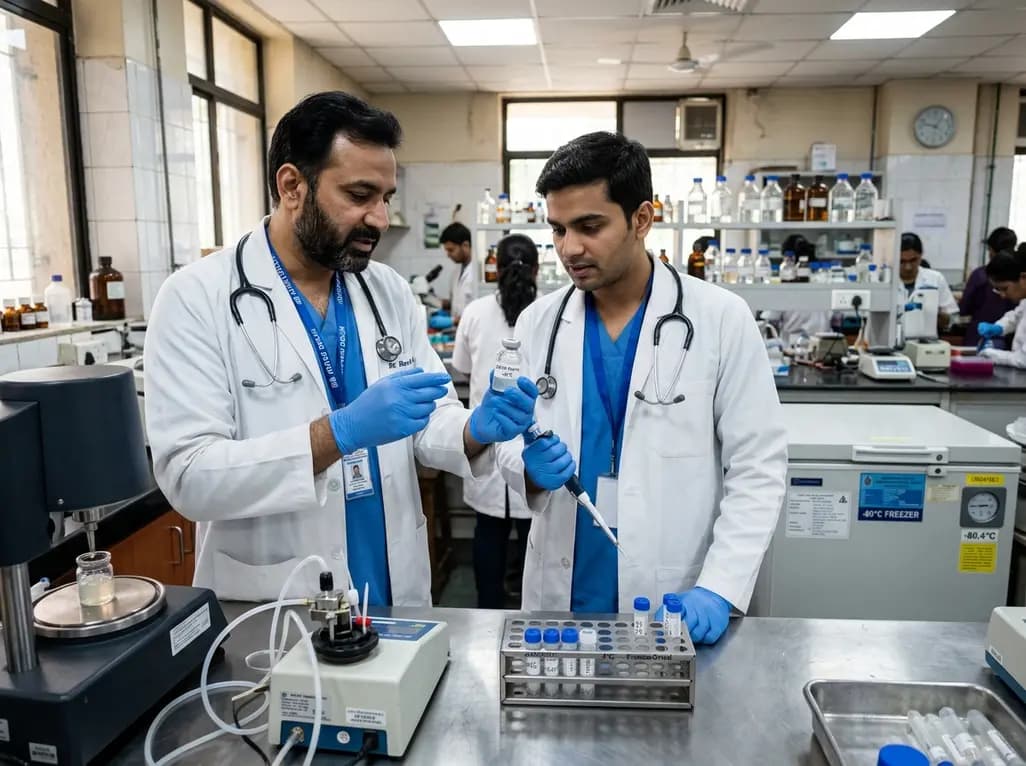
A new study evaluates the rheological stability of decellularized peripheral nerve matrix hydrogels under varied storage conditions. Findings show -80°C storage and freeze-drying preserve gelation kinetics and mechanical stiffness, offering key insights for shipping and translational clinical applications.
Today

A qualitative meta-synthesis highlights the complex interplay between gender dysphoria, minority stress, and eating disorders in transgender and gender-diverse individuals. Clinicians must recognize these distinct drivers to offer supportive, gender-affirming, and interdisciplinary eating disorder care.
Today
