.webp&w=384&q=75)

Loading, please wait...
Loading, please wait...

Parkinson disease presents complex motor challenges that severely impair patient mobility and quality of life. While subthalamic nucleus neurostimulation reliably suppresses tremor and rigidity, managing axial motor impairment remains difficult. Recent neurosurgical evidence suggests that anterior STN DBS provides superior relief for debilitating walking problems. Specifically, personalized electrical stimulation targeting the anterior territory of the subthalamic nucleus significantly improves gait metrics and diminishes freezing episodes. Traditional stimulation paradigms often rely on standard sensorimotor dorsolateral targets. However, uniform stimulation fields frequently yield inconsistent responses for locomotor dysfunction. Consequently, modern functional neurosurgeons utilize advanced computational modeling to guide individualized therapy. Understanding the precise anatomical targets within the subthalamic complex is therefore essential for optimizing clinical care.
Gait disturbances represent one of the most disabling features of advancing Parkinson disease. Patients frequently experience debilitating stride shortening, postural instability, and unpredictable freezing of gait episodes. Consequently, these mobility impairments dramatically elevate the risk of injurious falls and institutionalization. Standard pharmacological strategies, particularly levodopa therapy, initially relieve appendicular motor signs quite effectively. However, axial locomotor deficits often become refractory as neurodegeneration progresses into non-dopaminergic pathways. Furthermore, conventional deep brain stimulation historically targets the dorsolateral motor region of the subthalamic nucleus. This classical approach successfully controls tremor, bradykinesia, and muscular rigidity. Nevertheless, clinicians frequently observe variable or even adverse effects on gait execution following standard dorsolateral stimulation. In some instances, electrical current spread into adjacent corticospinal fibers can actively disrupt postural coordination. Therefore, neuromodulation teams urgently require refined targeting paradigms that specifically address locomotion. Clinicians must distinguish between axial gait networks and classic appendicular motor circuits to achieve holistic motor recovery. By understanding these functional divisions, multidisciplinary teams can better address persistent ambulatory disability in advanced disease.
Modern functional neurosurgery increasingly relies on patient-specific computational modeling rather than rigid stereotactic coordinates alone. In particular, volume of tissue activation modeling allows clinicians to visualize the exact spread of therapeutic electrical fields. Investigators retrospectively examined forty Parkinson disease patients who underwent bilateral surgery, analyzing seventy-two individual implant configurations. They meticulously calculated the therapeutic volume of tissue activation to quantify electrical engagement within the subthalamic nucleus and surrounding external structures. Additionally, the researchers performed stepwise multivariable regression to correlate precise stimulation coordinates with Movement Disorder Society rating scale improvements. Interestingly, raw anatomical electrode position within the nucleus failed to predict gait symptom changes. Instead, the computational functional activation volume correlated directly with actual clinical walking outcomes. This critical finding indicates that lead position alone does not dictate therapeutic efficacy. Rather, the selective direction of electrical fields through programmed active contacts determines clinical success. Consequently, volume of tissue activation modeling provides vital mechanistic insights that surpass conventional post-operative radiographic assessments.
The clinical data revealed striking distinctions between anatomical zones within the subthalamic nucleus. Specifically, significant positive associations emerged between anterior STN DBS and improvements in total gait scores. Stepwise regression demonstrated a robust relationship between anterior subthalamic activation and quantitative walking enhancements. Moreover, comparative analysis showed significant differences between patients with majority anterior activation and those with majority posterior activation. Patients receiving predominant anterior stimulation demonstrated markedly greater reductions in freezing of gait severity. Similarly, their overall composite gait scores showed statistically superior recovery compared to posterior cohorts. In contrast, stimulation concentrated within the posterior sensorimotor subthalamic region provided negligible benefit for locomotor freezing. Furthermore, the analysis evaluated external electrical spread into surrounding white matter pathways. Notably, therapeutic activation extending into the anterior external capsular and perireticulate areas also correlated positively with freezing alleviation. Thus, shifting stimulation fields forward yielded consistent axial functional gains without sacrificing appendicular symptom control. These findings strongly establish the clinical superiority of anterior subthalamic engagement for movement-associated freezing.
Understanding the neural architecture of the subthalamic region explains why anterior stimulation selectively improves locomotor function. Traditionally, neuroanatomists divide the subthalamic nucleus into sensorimotor, associative, and limbic functional territories. The posterior dorsolateral zone connects extensively with primary motor cortex, explaining its robust suppression of tremor. Conversely, the anterior subthalamic region maintains dense reciprocal connectivity with the supplementary motor area and prefrontal cortex. These anterior associative pathways actively regulate movement initiation, motor planning, and cognitive gait adaptation. Furthermore, anterior external stimulation likely modulates hyperdirect fibers and descending pallidofugal pathways traversing toward the mesencephalic locomotor region. When freezing of gait occurs, pathological synchronization across these frontal-subcortical loops disrupts rhythmic stepping patterns. Therefore, delivering electrical pulses into anterior targets normalizes aberrant burst firing within associative gait networks. Additionally, this localized modulation prevents detrimental current leakage into posterior pyramidal tracts. Consequently, anterior field shaping restores fluid locomotor dynamics by selectively recruiting dedicated pathways for movement execution.
These computational findings deliver immediate practical relevance for movement disorder specialists and surgical teams. Because anatomical lead placement varies across patients, clinicians should not rely solely on default cathodic settings. Instead, programming teams should utilize directional lead technology to steer current toward anterior subthalamic borders. When advanced Parkinson patients present with prominent gait impairment or freezing, clinicians can systematically activate anterior contact segments. Moreover, contemporary programming software enables direct visualization of predicted stimulation volumes against patient-specific magnetic resonance imaging. Clinicians can therefore tailor stimulation geometry in real time to encompass anterior associative networks while avoiding capsular side effects. Furthermore, this personalized approach minimizes unnecessary trial-and-error clinic visits, reducing overall patient fatigue. In centers where directional steering or imaging visualization is available, adopting anterior-focused stimulation paradigms provides a targeted therapy for axial disability. Ultimately, transitioning from generalized targeting to symptom-specific programming optimizes outcomes for individuals suffering from intractable mobility loss.
Future advancements in Parkinson disease neuromodulation will expand far beyond static anatomical boundaries. Modern connectomic analyses now trace whole-brain structural connectivity profiles that predict individual symptom relief. Consequently, neurosurgeons can preoperatively plan surgical trajectories to optimize access to anterior subthalamic hubs. In addition, adaptive closed-loop deep brain stimulation systems are currently entering clinical reality. These intelligent neurostimulators record real-time local field potentials, adjusting current output dynamically when pathological oscillations emerge. Because freezing episodes often occur transiently during walking turns or environmental doorways, adaptive delivery of anterior stimulation offers remarkable therapeutic potential. Moreover, combining directional current steering with responsive closed-loop algorithms will prevent chronic neurostimulation tolerance. Multicenter clinical registries will soon provide broader validation across diverse patient populations, establishing definitive standardized programming protocols. Therefore, integrating personalized computational modeling with intelligent adaptive hardware represents the future of movement disorder management.
Traditional subthalamic deep brain stimulation targets the posterior dorsolateral motor zone to alleviate tremor and rigidity. In contrast, anterior STN DBS directs electrical current into anterior associative subthalamic regions and adjacent pathways. This selective targeting specifically modulates frontal locomotor circuits, improving walking stability and reducing freezing episodes.
Yes, volume of tissue activation modeling helps clinicians overcome slight lead variations. By visualizing electrical current distribution relative to surrounding anatomy, programming teams can activate directional contacts to steer current toward target zones. Consequently, clinicians can engage anterior therapeutic areas effectively even if physical lead placement is slightly posterior.
Tremor arises primarily from hypersynchronous activity within posterior sensorimotor basal ganglia-thalamic loops. Conversely, axial gait control requires complex multisensory integration involving associative prefrontal networks and the mesencephalic locomotor region. Therefore, classical dorsolateral stimulation may fail to engage the distinct anterior neural pathways necessary to restore coordinated locomotion.
Disclaimer: This content is for informational and educational purposes only and should not be taken as professional medical advice. Always consult a qualified healthcare provider regarding medical conditions or before making decisions based on this information. The views expressed are those of the authors and do not necessarily reflect the official policy or position of any medical organization or institution. Refer to the latest local and national guidelines for clinical practice.
References

Read summarized clinical updates, watch expert medical content, and earn CME certifications right from your smartphone.
Open your smartphone camera to scan and install.





A retrospective study demonstrates that anterior subthalamic nucleus deep brain stimulation significantly enhances gait and alleviates freezing in Parkinson disease. Using volume of tissue activation modeling, findings highlight the necessity of symptom-specific targeting over generalized electrode placement.
Today
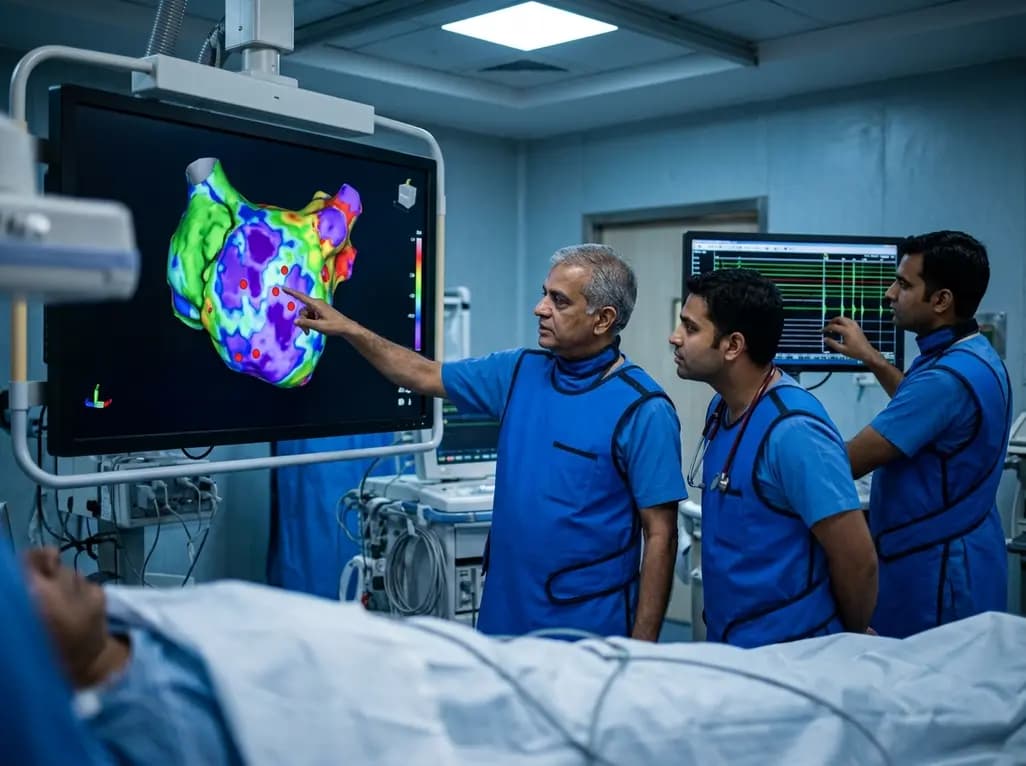
A study of 1,428 AF ablation patients reveals that over 60% of left atrial non-PV triggers arise within low-voltage areas, with anterior and roof triggers colocalizing entirely within fibrotic substrate. Identifying and ablating these sites is critical for long-term arrhythmia freedom.
Today

A comprehensive meta-analysis of over 278,000 women demonstrates that maternal atopic dermatitis significantly increases risks of premature rupture of membranes and low birth weight. Discover essential clinical insights on disease mechanisms, serial antenatal growth monitoring, and safe therapeutic interventions.
Today

A pioneering study highlights the first United States experience using the FARAPOINT focal pulsed-field ablation catheter for refractory ventricular tachycardia. The catheter achieved complete acute non-inducibility across tested patients without procedural complications, marking a milestone in ventricular ablation.
Today

A biomechanical study shows that augmenting thin fascia lata grafts with a reinforced polyester patch doubles ultimate tensile strength and stiffness, matching the performance of thick grafts for superior capsule reconstruction while reducing donor-site morbidity.
Today

A cross-sectional study reveals that elevated METS-IR is independently associated with higher myopia odds in adolescents, showing biological synergy with obesity and highlighting the need for metabolic screening in pediatric eye care.
Today
