.webp&w=384&q=75)

Loading, please wait...
Loading, please wait...
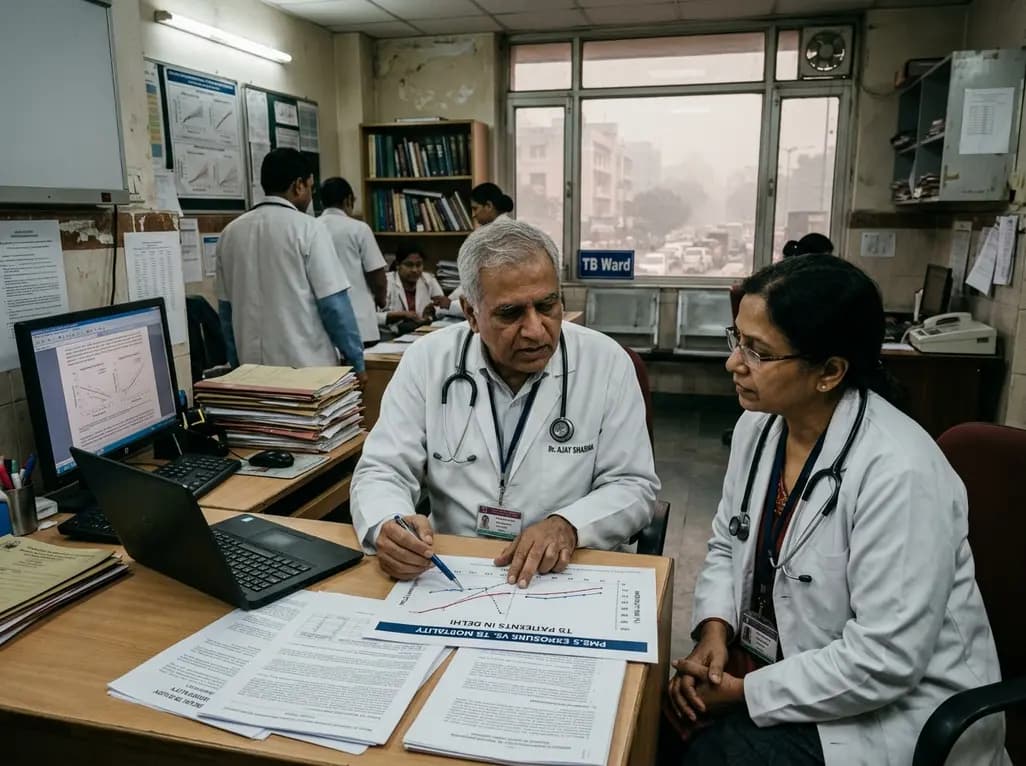
A landmark epidemiological study from Delhi has revealed a concerning connection between ambient fine particulate matter exposure and increased patient mortality during active tuberculosis treatment. Researchers investigated how airborne toxins impact vulnerable individuals during the critical early phase of therapeutic intervention. Consequently, the study emphasizes that ambient air pollution TB mortality represents a significant, underrecognized public health challenge in high-burden urban settings. By analyzing data from tens of thousands of adult patients, investigators observed a distinct dose-response relationship between pre-treatment air pollution levels and poor treatment outcomes. Therefore, understanding this environmental risk factor is critical for clinicians, public health officials, and policymakers working to eradicate tuberculosis in India.
To evaluate how fine particulate air pollution (PM2.5) affects therapeutic outcomes, researchers analyzed comprehensive records from 61,925 adult patients starting treatment in Delhi between September 2022 and August 2023. The collaborative investigation involved leading national and international institutions, including AIIMS New Delhi, the Central Tuberculosis Division, Boston University, Cornell University, and Maastricht University. Investigators utilized Nikshay, India’s national tuberculosis database, to track clinical demographics, therapeutic compliance, and patient survival. Subsequently, they mapped patient location data against high-resolution satellite estimates of ambient PM2.5 concentrations during the 30 days prior to treatment initiation.
The analytical team focused specifically on this pre-treatment window because the weeks preceding therapy represent the most fragile phase of active pulmonary disease. During this initial stage, mycobacterial load reaches its peak, while protective antimicrobial cover has not yet taken full effect. Consequently, ambient airborne pollutants hit vulnerable pulmonary tissues hardest during this sensitive window. The study findings demonstrated a striking gradient in mortality risk correlated directly with baseline pollution levels. Compared to patients exposed to ambient PM2.5 concentrations below 40 micrograms per cubic meter, individuals exposed to 40-80 micrograms exhibited 3 percent higher odds of death during therapy. Moreover, exposure to 80-120 micrograms elevated mortality odds by 22 percent, while exposure levels between 120 and 160 micrograms increased risk by 31 percent. Alarmingly, patients breathing ambient levels exceeding 160 micrograms per cubic meter faced a 66 percent higher risk of dying.
Although observational data cannot definitively prove direct causation, the biological plausibility underlying these findings remains extraordinarily strong. Fine particulate matter measures less than 2.5 micrometers in aerodynamic diameter, allowing particles to penetrate deep into alveoli and enter systemic circulation. Consequently, inhalation of concentrated PM2.5 triggers severe bronchial inflammation, oxidative stress, and structural airway damage. For individuals already suffering from tuberculosis, this localized environmental insult exacerbates existing tissue damage and severely compromises localized pulmonary immunity.
Furthermore, excessive pulmonary inflammation induced by airborne particulates alters cellular immune responses against Mycobacterium tuberculosis. While physiological inflammatory cascades represent essential host defense mechanisms, unchecked inflammation damages alveolar architecture and impairs gas exchange. As a result, patients experience progressive respiratory distress, reduced lung capacity, and increased susceptibility to secondary pulmonary complications. Additionally, systemic absorption of toxic air pollutants can provoke widespread vascular inflammation, elevating cardiovascular risks among vulnerable individuals. Because tuberculosis patients are already physically debilitated, acute exposure to toxic air pollutants can overwhelm physiological coping mechanisms. Therefore, environmental toxins act as a severe secondary stressor, compromising therapeutic recovery and increasing the likelihood of fatal complications during active treatment.
To ensure the statistical validity of the observed association, researchers conducted rigorous multivariate adjustments for established tuberculosis risk factors. Specifically, the analytical model controlled for patient age, sex, HIV status, diabetes, nutritional status, tobacco use, and heavy alcohol consumption. Additionally, investigators adjusted for clinical variables such as disease site—distinguishing pulmonary from extrapulmonary cases—and care setting, comparing public sector facilities against private healthcare providers. Significantly, the statistical association between ambient PM2.5 exposure and patient mortality persisted after accounting for all these complex clinical variables.
This persistent statistical signal indicates that air pollution operates as an independent risk factor rather than a simple proxy for socioeconomic deprivation or co-morbid disease burden. Nevertheless, lead researchers emphasize that observational methodologies carry inherent limitations and cannot establish direct causal relationships. Consequently, clinicians and public health experts must interpret these findings as an urgent warning signal rather than definitive clinical proof. Furthermore, these results underscore the vital necessity of incorporating environmental exposure assessments into routine epidemiological surveillance. By recognizing environmental pollution as an unmeasured clinical variable, healthcare programs can better evaluate patient risk profiles and design targeted supportive interventions for high-exposure urban communities.
The findings carry profound implications for public health strategy in India, which bears the highest global tuberculosis burden. Over recent decades, national tuberculosis programs have made extraordinary strides in improving case detection, streamlining diagnostic pathways, and providing free standardized treatment regimes. These massive health investments have successfully saved millions of lives across urban and rural populations. However, unmitigated air pollution may be quietly undermining these remarkable public health achievements by increasing patient mortality despite proper medication adherence.
Consequently, addressing ambient environmental hazards must become an integral component of national disease control initiatives. India’s massive commitment to ending tuberculosis requires multidisciplinary strategies that bridge clinical care and environmental protection. For instance, public health authorities could integrate real-time air quality forecasting into patient counseling protocols during peak pollution months. Additionally, healthcare infrastructure in highly polluted megacities may require enhanced respiratory support capabilities during winter pollution spikes. By expanding disease control frameworks to encompass environmental health determinants, health ministries can protect therapeutic gains and safeguard vulnerable patient cohorts.
While further clinical research is required to formulate formal clinical practice guidelines, expert researchers recommend several pragmatic precautions for tuberculosis management in highly polluted environments. Practitioners treating active tuberculosis should actively assess patient environmental exposure history, particularly during hazardous air quality episodes. Furthermore, clinicians can advise high-risk patients to minimize unnecessary outdoor activities during acute pollution surges. Promoting the indoor use of high-efficiency particulate air filters or well-fitted protective masks may also reduce personal particulate intake during severe smog events.
Additionally, healthcare providers must emphasize strict compliance with anti-tuberculosis medication regimens while offering aggressive nutritional support to bolster host immunity. Addressing co-morbid conditions such as diabetes and chronic lung disease becomes even more critical when environmental exposures exacerbate pulmonary inflammation. Moreover, clinical teams should closely monitor patients presenting with heightened respiratory distress or declining spirometric parameters during high-PM2.5 periods. Subsequently, early supportive interventions, including supplemental oxygen therapy and targeted anti-inflammatory management, may mitigate severe respiratory complications. Ultimately, combining robust clinical care with individual exposure reduction strategies offers the best path forward to protect vulnerable patients from environmental harm.
Q1: How does fine particulate matter affect active tuberculosis treatment outcomes?
Fine particulate matter (PM2.5) penetrates deep into human lungs, triggering intense bronchial inflammation and oxidative stress. Consequently, this ambient exposure damages alveolar tissue, impairs localized immune defenses, and worsens respiratory distress in active tuberculosis patients. Furthermore, clinical studies demonstrate that elevated pre-treatment PM2.5 exposure correlates directly with increased patient mortality, even among individuals receiving standard multi-drug anti-tuberculosis therapy.
Q2: Why is the pre-treatment period particularly dangerous for tuberculosis patients exposed to air pollution?
The 30-day period preceding treatment initiation represents the most vulnerable clinical phase for tuberculosis patients. During this critical window, bacterial burdens reach peak levels while patients lack therapeutic antimicrobial protection. Consequently, exposure to severe air pollution during this unmedicated state inflicts maximum physiological stress on already fragile lung tissues, significantly elevating the risk of early treatment failure and patient death.
Q3: What practical steps can clinicians recommend to reduce air pollution exposure for TB patients?
Clinicians should advise tuberculosis patients to minimize outdoor exertion during severe air pollution spikes, particularly during winter smog months. Additionally, recommending well-fitted N95 masks for necessary outdoor travel and using indoor air purifiers can lower personal PM2.5 exposure. Moreover, maintaining strict medication adherence, optimizing nutritional intake, and managing co-morbidities remain critical measures to build physiological resilience against environmental respiratory insults.
Disclaimer: This content is for informational and educational purposes only. It does not constitute medical advice or replace professional judgment. Refer to the latest local and national guidelines for clinical practice.
References

Read summarized clinical updates, watch expert medical content, and earn CME certifications right from your smartphone.
Open your smartphone camera to scan and install.





A major epidemiological study in Delhi reveals an alarming link between ambient fine particulate matter (PM2.5) exposure before treatment initiation and elevated mortality risk among tuberculosis patients. Learn about the study findings, potential biological mechanisms, and implications for clinical management.
last month

The Supreme Court rejected industry pleas for per-serve metrics, directing FSSAI to provide a firm timeline for mandatory front-of-pack food warning labels. Clinicians welcome this crucial regulatory intervention to curb rising rates of obesity, hypertension, and pediatric metabolic syndrome across India.
Today

India has achieved a historic public health milestone by administering over 80 lakh HPV vaccine doses to adolescent girls. Integrated into the U-WIN network and administered across government healthcare facilities, this nationwide campaign offers vital protection against cervical cancer and associated HPV infections.
Today

The Supreme Court dismissed packaged food industry pleas for per-serve metrics while directing the FSSAI to establish a definitive timeline for nutritional warning labels. This analysis examines the clinical impact of high fat, sugar, and salt regulation on non-communicable diseases and preventive healthcare in India.
Today

A retrospective cohort study demonstrates that patients with anorexia nervosa and bulimia nervosa face significantly higher risks of lower extremity soft tissue injuries, including ACL tears and ligament sprains, along with heightened rates of orthopedic revision surgery, highlighting the need for systemic screening.
Today

Groundbreaking multiomics research reveals that adipose-derived miR-30e-5p travels via exosomes to vascular endothelial cells, silencing SLC7A11 and accelerating atherosclerosis. This discovery highlights novel therapeutic avenues within cardiovascular-kidney-metabolic syndrome.
Today
