.webp&w=384&q=75)

Loading, please wait...
Loading, please wait...
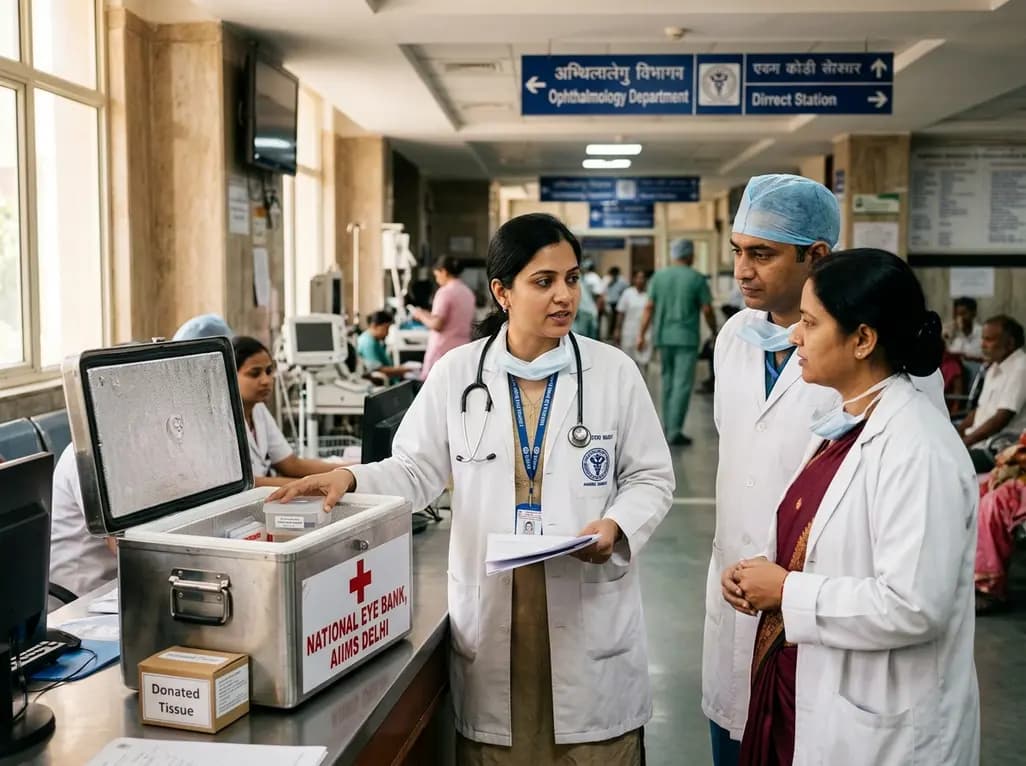
The National Eye Bank at the All India Institute of Medical Sciences (AIIMS), New Delhi, has expanded its institutional network by partnering with three major hospitals to enhance tissue procurement for corneal transplantation. Consequently, this strategic initiative addresses the persistent demand for optical-grade donor tissue across India. The apex institute signed formal Memoranda of Understanding (MoUs) with Atal Bihari Vajpayee Institute of Medical Sciences and Dr. Ram Manohar Lohia Hospital, Indira Gandhi Hospital in Dwarka, and Northern Railway Central Hospital. Therefore, these institutional alliances will significantly streamline tissue harvesting, ophthalmic research, and specialized clinical training under the established AIIMS-Delhi Hospital Corneal Retrieval Programme (HCRP).
Through the execution of these institutional partnerships, AIIMS aims to decentralize and accelerate donor screening workflows across the National Capital Region. Therefore, integrating high-volume public hospitals into the retrieval network ensures prompt identification of prospective donors following inpatient deaths. Eye donation counselors and trained eye banking technicians will maintain round-the-clock liaison with intensive care units and mortuaries. Consequently, this continuous coordination shortens the critical time interval between cardiac standstill and tissue excision, which directly preserves donor endothelial cell density. Furthermore, structured tissue procurement protocols reduce biological contamination risks, thereby yielding superior donor grafts for therapeutic interventions.
The institutional expansion arrives at a critical juncture when AIIMS continues to manage an exceptionally high surgical volume of graft procedures. Specifically, in 2025 alone, the facility collected 2,167 donor corneas and successfully performed graft surgeries on 1,775 corneal-blind individuals. For four consecutive years, the apex centre has completed more than 1,300 keratoplasties annually. Significantly, of the 2,167 corneas harvested in 2025, 1,775 tissues—representing 81.9%—were procured directly through the HCRP framework. Unlike passive voluntary calls, this active hospital-based model enables trained counselors to support grieving families with compassionate grief counseling, ensuring ethical consent and consistent tissue availability.
Over its 61-year history, the National Eye Bank has harvested more than 38,000 corneas and restored functional vision to over 28,000 individuals through corneal transplantation. Concurrently, the centre has trained over 500 ophthalmologists in sophisticated surgical methods. In 2025, the team performed 631 optical keratoplasties while advancing the shift toward modern lamellar procedures. Notably, the department has transitioned routinely toward sutureless Descemet Membrane Endothelial Keratoplasty (DMEK). This advanced microsurgical technique selectively replaces only the dysfunctional endothelial layer, reducing immunological graft rejection rates, minimizing induced astigmatism, and providing significantly faster visual recovery compared to full-thickness penetrating keratoplasty.
Beyond local procurement, the centre presented several operational milestones during the 41st National Eye Donation Fortnight celebrations at AIIMS. The facility deployed a centralized, fully digital death-notification system that alerts counselors immediately after a death, while simultaneously operating an online pledge registry. Moreover, AIIMS distributed more than 4,652 vials of its proprietary, indigenously developed preservation medium, ExStorSol, to 130 eye banks spanning 24 Indian states. Additionally, through a specialized RayMed-supported collaboration, the institute procures dedicated tissues for pediatric keratoplasties. AIIMS also established a five-year agreement with Vision-Aid to build ten Integrated Vision Centres and a specialized Cerebral Visual Impairment Resource Centre.
For corneal surgeons and general ophthalmologists, these systemic upgrades offer distinct clinical advantages. Reliable access to pre-screened, high-quality lamellar tissue minimizes unexpected surgical cancellations and improves long-term graft survival. Furthermore, widespread distribution of standardized intermediate-term preservation media ensures consistent endothelial viability across secondary healthcare centers. Active expansion of hospital retrieval models provides a reproducible template for state health departments aiming to eliminate preventable corneal blindness. Therefore, clinician participation in early death notification, tissue quality assurance, and community sensitization remains essential to maintaining these high donor conversion rates across public healthcare systems.
Q1: What is the Hospital Corneal Retrieval Programme (HCRP)?
The HCRP is an active, hospital-based eye retrieval strategy where trained counselors and technicians identify potential deceased donors in healthcare facilities. They provide compassionate counseling to bereaved family members to obtain informed consent. Consequently, this model significantly shortens the death-to-preservation time window, dramatically improves tissue viability, and yields substantially higher rates of optical-grade corneas compared to traditional home-based voluntary donation methods.
Q2: Why is DMEK preferred over penetrating keratoplasty for endothelial diseases?
Descemet Membrane Endothelial Keratoplasty (DMEK) selectively replaces only the damaged endothelial monolayer and Descemet membrane rather than the entire corneal thickness. Because the structural stroma remains untouched without extensive corneal sutures, the procedure causes minimal irregular astigmatism, preserves greater globe tectonic stability, lowers the incidence of immune-mediated graft rejection, and facilitates markedly faster visual rehabilitation for patients with endothelial dystrophies.
Q3: How does ExStorSol medium improve corneal preservation?
ExStorSol is an indigenously developed intermediate-term corneal storage solution engineered to maintain endothelial cell integrity and corneal deturgescence at refrigerated temperatures (2°C to 8°C) for several days. By stabilizing cell metabolism and preventing stromal edema, this indigenous medium provides reliable tissue preservation across transit networks, enabling effective inter-state tissue sharing between apex eye banks and peripheral corneal surgical units.
Disclaimer: This content is for informational and educational purposes only. It does not constitute medical advice or replace professional judgment. Refer to the latest local and national guidelines for clinical practice.
References

Read summarized clinical updates, watch expert medical content, and earn CME certifications right from your smartphone.
Open your smartphone camera to scan and install.





The National Eye Bank at AIIMS Delhi has partnered with three major hospitals to expand its Hospital Corneal Retrieval Programme, boosting donor tissue collection and advancing modern keratoplasty.
4 weeks back
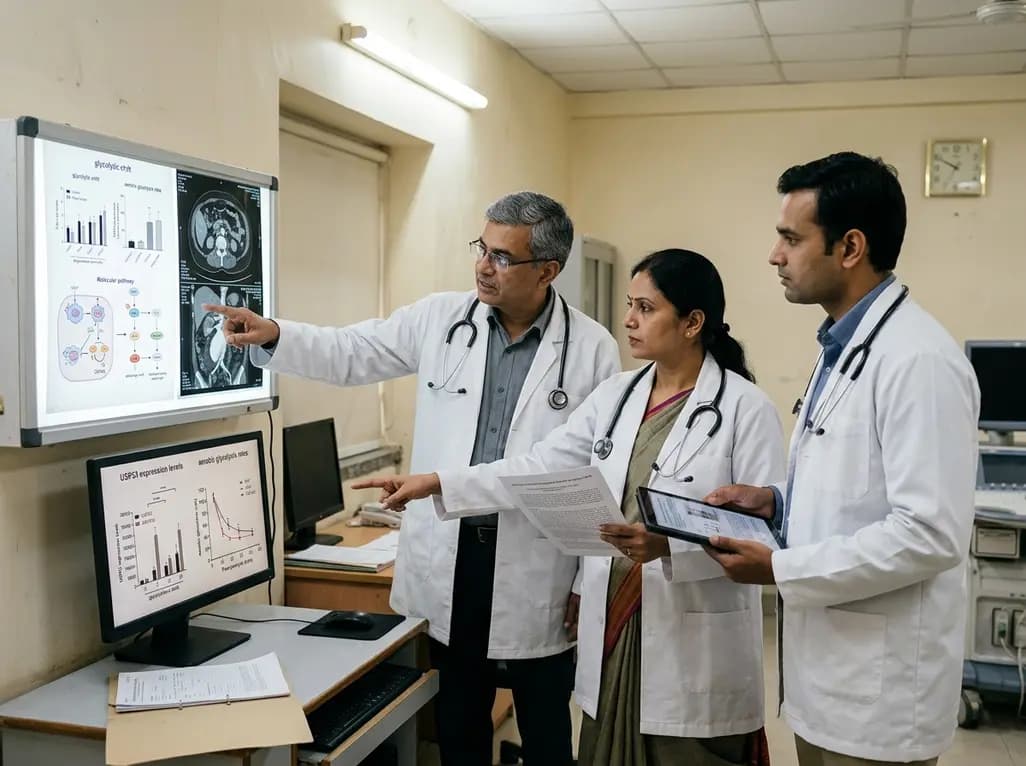
Abdominal aortic aneurysm rupture remains a catastrophic vascular emergency. Groundbreaking research reveals that USP53 accelerates aneurysm progression by reprogramming smooth muscle cell metabolism toward aerobic glycolysis, highlighting a promising target beyond conventional diameter-based surveillance.
Today
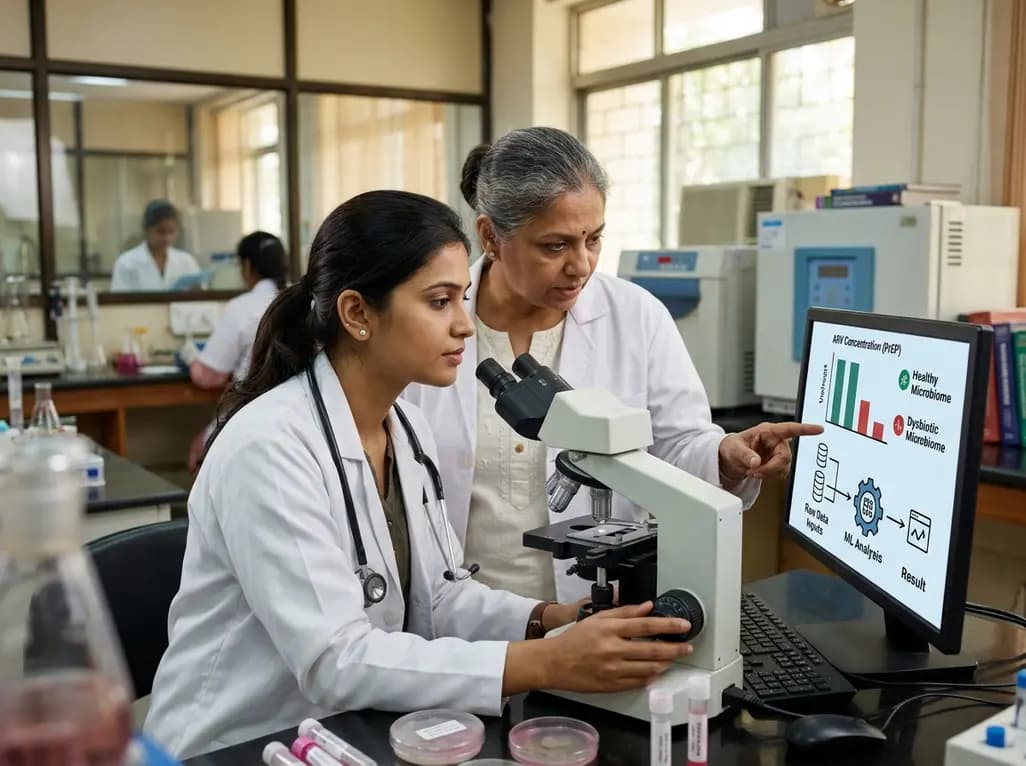
A pharmacometric and machine learning study reveals that specific vaginal bacteria alter cervical antiretroviral exposure, highlighting the need for precision HIV PrEP strategies.
Today
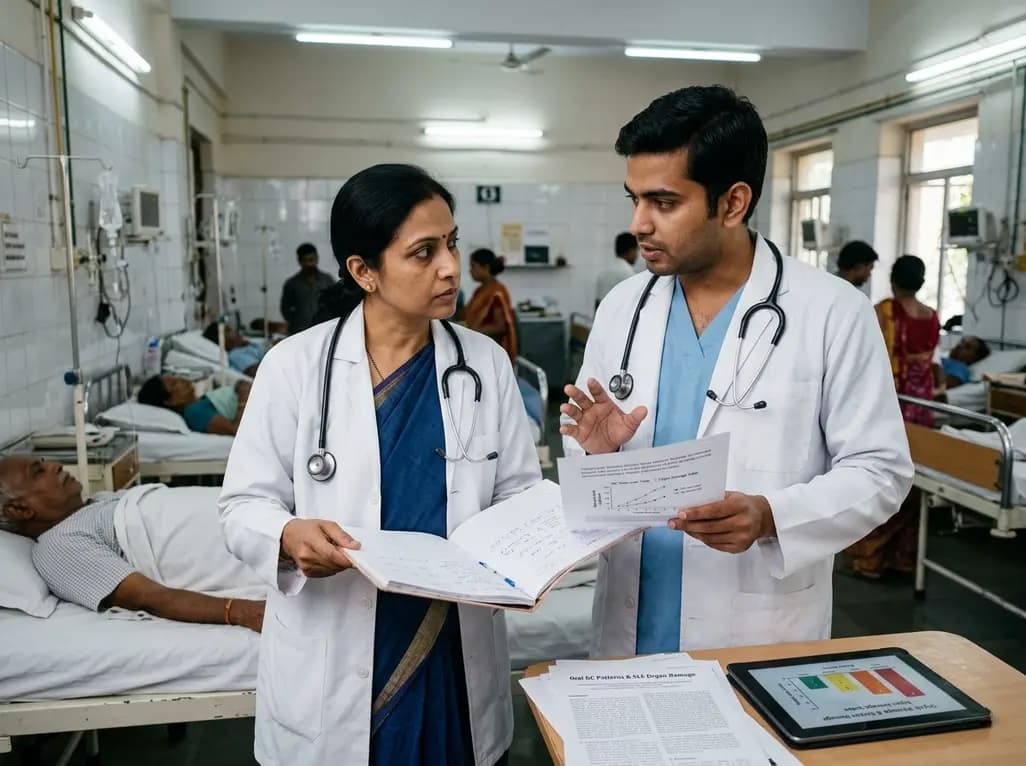
A nationwide Swedish cohort study shows oral glucocorticoid exposure over 1-2 years strongly predicts overall organ damage in SLE, while cardiovascular risk reflects cumulative doses across 3 years. These findings reinforce early steroid minimization and cautious long-term maintenance.
Today
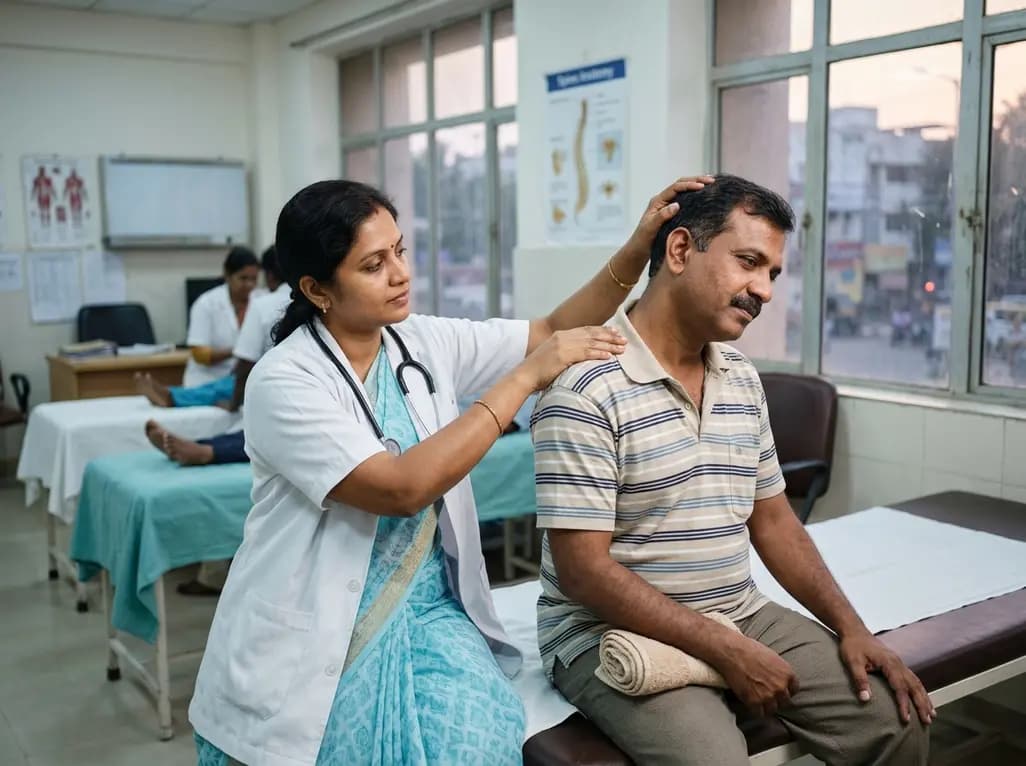
A scoping review highlights neural mobilization as a promising adjunct in managing cervicogenic headache. Integrating neurodynamics into multimodal physical therapy improves pain, range of motion, and posture, though standardized protocols and larger clinical trials are still needed.
Today
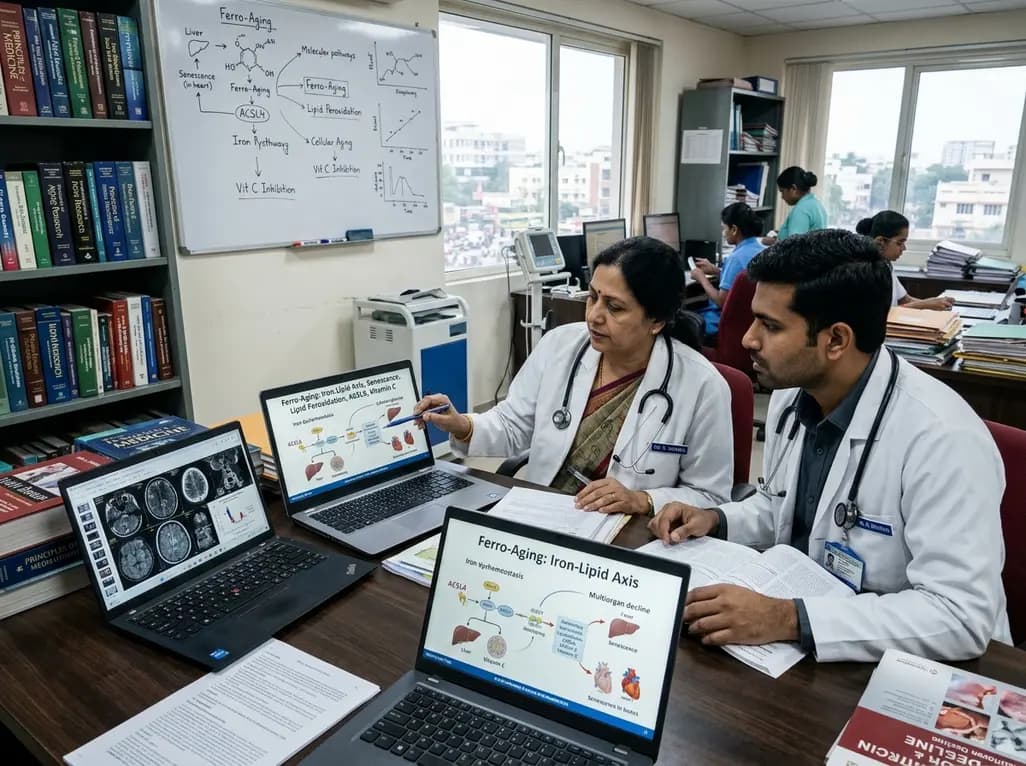
Recent research defines ferro-aging as a conserved iron-lipid axis driving organ decline across primates. Age-related iron dyshomeostasis stimulates ACSL4-mediated lipid peroxidation, promoting cellular senescence. Notably, vitamin C directly inhibits ACSL4, suppressing phospholipid oxidation and multi-organ decay.
Today
