.webp&w=384&q=75)

Loading, please wait...
Loading, please wait...
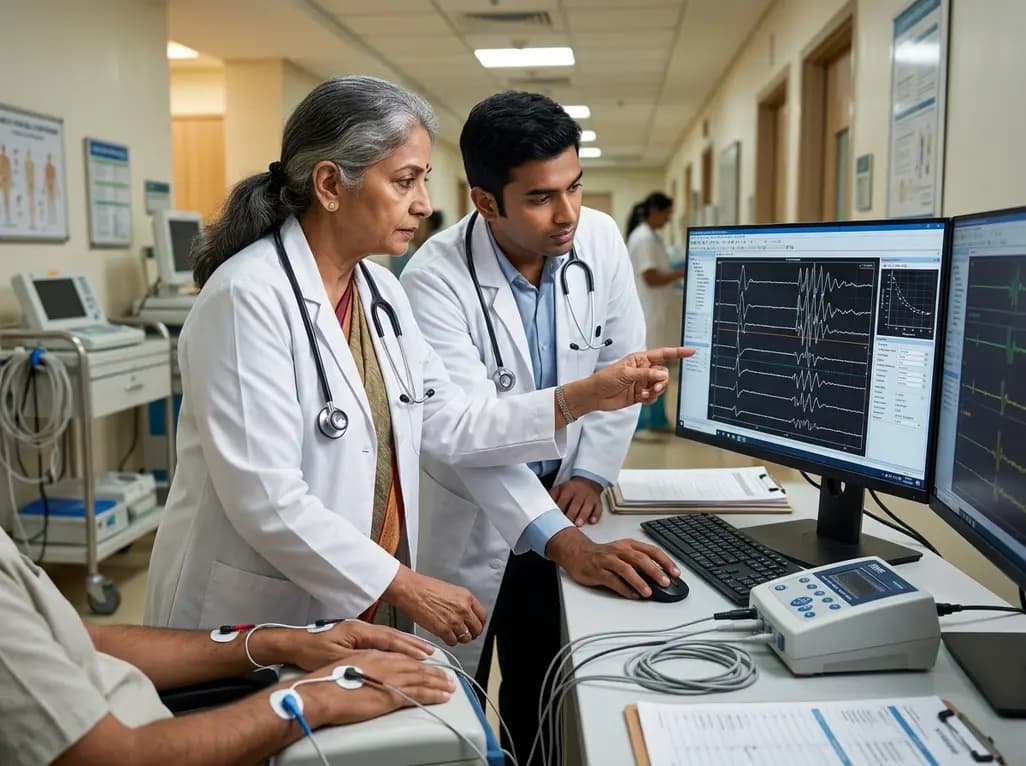
Amyotrophic lateral sclerosis presents a profound diagnostic challenge due to insidious onset and phenotypic heterogeneity. Clinicians frequently encounter diagnostic delays exceeding twelve months, which delays disease-modifying therapies and supportive multidisciplinary interventions. Conventional electrodiagnostic tests detect lower motor neuron loss, but subtle subclinical physiological changes often remain hidden within standard waveform evaluations. Consequently, investigators have turned toward machine learning algorithms to examine F-wave responses in ALS to capture subtle pathological shifts. F-waves reflect antidromic activation of spinal alpha motor neurons, offering a unique window into proximal motoneuronal excitability and axonal integrity. However, standard manual interpretation of these responses suffers from substantial morphological variability between individual motor unit potentials. Advanced artificial intelligence algorithms overcome these diagnostic bottlenecks by transforming complex neurophysiological signals into reproducible quantitative metrics. By utilizing time-frequency domain analyses, machine learning tools can uncover latent patterns that differentiate early motor neuron degeneration from benign conditions. Therefore, incorporating automated signal processing into regular electrodiagnostic testing may shorten diagnostic timelines significantly. This computational approach empowers neurologists to establish timely diagnoses, initiate disease-modifying therapies earlier, and provide patients with clearer prognostic expectations during initial clinical evaluations.
Standard nerve conduction studies primarily assess distal nerve segments, but motor neuron disease pathology originates centrally within spinal anterior horn cells. Because F-waves travel antidromically to the spinal cord before returning orthodromically, they directly interrogate the physiology of proximal motor units. In healthy individuals, consecutive F-wave responses show consistent physiological variability reflecting different motoneuronal firing thresholds. Conversely, in patients with motor neuron disease, spinal motoneuron loss and compensatory collateral reinnervation induce distinctive waveform alterations. These electrophysiological changes include prolonged latencies, reduced persistence, and abnormal waveform dispersion across sequential stimulations. Unfortunately, traditional visual inspection often fails to recognize these subtle shifts during the earliest stages of disease. Machine learning models extract subtle features across the full time-frequency spectrum of nerve conduction waveforms, identifying hidden signatures of degeneration. Furthermore, examining multiple motor nerves, including ulnar, median, fibular, and tibial nerves, provides an extensive evaluation across both cervical and lumbosacral spinal segments. Consequently, evaluating comprehensive multi-nerve waveform recordings enhances diagnostic sensitivity without requiring additional invasive needle electromyography examinations. Thus, computational waveform analysis turns standard electrophysiological assessments into objective markers of widespread motoneuronal dysfunction.
To handle the complex morphology of nerve conduction signals, researchers employ mathematical signal decomposition known as the discrete wavelet transform. This mathematical framework decomposes non-stationary time-series electrophysiological waveforms into distinct time-frequency sub-bands. Consequently, the algorithm isolates transient amplitude variations and high-frequency spectral deviations that human eyes cannot reliably discern. In a landmark retrospective investigation encompassing over forty-six thousand patients, investigators extracted statistical wavelet coefficients across thousands of waveform recordings. These extracted signal features were paired with key demographic and anthropometric parameters, such as onset age, sex, and body mass index. Subsequently, researchers trained a Gradient Boosting Machine model on a vast cohort comprising over forty thousand patients, including thousands diagnosed with motor neuron disease. Gradient boosting algorithms iteratively construct decision trees to optimize diagnostic classification while minimizing loss functions effectively. As a result, the model learns intricate non-linear relationships between multi-nerve wavelet features and motor unit loss. Moreover, the computational architecture maintains exceptional robustness against physiological noise and baseline electrode artifacts. This advanced mathematical processing ensures that extracted electrodiagnostic parameters reliably reflect true spinal motoneuron pathology rather than procedural variability.
A major clinical obstacle in neuromuscular medicine involves distinguishing early motor neuron disease from mimic disorders that present with progressive weakness. Conditions such as inclusion body myositis, cervical radiculopathy, lumbar radiculopathy, and inflammatory peripheral neuropathies often display overlapping clinical features. When researchers evaluated the machine learning model against validated cohorts meeting formal Gold Coast diagnostic criteria, the algorithm demonstrated exceptional classification metrics. Specifically, the trained model achieved ninety percent recall, eighty-seven percent precision, and eighty-eight percent overall accuracy in distinguishing motor neuron disease from matched controls. Furthermore, exploratory analyses demonstrated that the model generated classification probabilities that clearly differentiated confirmed cases from common clinical mimics. Statistical evaluations confirmed highly significant differences in classification scores between motor neuron disease and confounding neuromuscular disorders. Notably, the model maintained high diagnostic accuracy whether analyzing the complete signal, isolated M-waves, or isolated F-waves. This remarkable consistency indicates that both proximal motoneuronal and distal axonal compartments harbor distinct electrophysiological disease signatures. Therefore, automated waveform analysis provides objective discriminatory power, assisting clinicians when clinical and electrodiagnostic presentations appear ambiguous.
Beyond improving initial diagnostic accuracy, artificial intelligence models leveraging nerve conduction data yield vital prognostic insights into disease progression. Cox proportional hazards regression analyses demonstrate that higher model classification probabilities correlate strongly with shorter patient survival times. Conversely, patients with lower model output scores exhibited significantly longer overall survival, gaining several additional months compared to higher-risk cohorts. Additionally, multivariable analyses confirmed that established clinical factors, such as older age at onset and familial disease history, independently accelerated disease progression. In contrast, clinical characteristics like upper limb onset and prolonged diagnostic delays were associated with extended survival durations. Because the machine learning model quantifies the global burden of motoneuronal dysfunction, its numerical output serves as a continuous biomarker of disease aggressiveness. Consequently, these risk scores help clinicians anticipate clinical trajectories more accurately during the early stages of disease management. Furthermore, stratifying patients based on objective electrophysiological risk profiles can enhance clinical trial design by ensuring balanced cohorts across treatment arms. Ultimately, integrating predictive modeling into routine neurological workflows empowers personalized care planning and timely therapeutic interventions.
The integration of automated waveform analytics into routine neurophysiology laboratories holds significant potential for transforming clinical neuromuscular practice globally. Rather than replacing clinical judgment, artificial intelligence functions as an objective clinical decision support system that refines diagnostic probabilities. Clinicians can interpret model risk scores alongside detailed clinical histories, physical examinations, and conventional electromyographic findings. Moreover, because F-wave recordings are routinely acquired during standard nerve conduction studies, implementing these algorithms requires no specialized equipment or uncomfortable supplementary testing for patients. This seamless integration facilitates rapid clinical adoption across both academic medical centers and community hospital settings. Early identification of motor neuron disease enables prompt initiation of neuroprotective medications, timely non-invasive ventilation, and proactive nutritional support. Furthermore, early diagnostic confirmation spares patients from undergoing redundant diagnostic investigations, unnecessary spinal surgeries, or inappropriate immunosuppressive therapies. As computational tools become increasingly validated across diverse patient populations, they will establish standardized electrodiagnostic benchmarks worldwide. Therefore, adopting artificial intelligence in neurophysiology marks an essential evolution toward precise, efficient, and compassionate neurological care.
AI models apply discrete wavelet transforms to decompose nerve conduction time-series waveforms into specific time-frequency components. By extracting statistical wavelet features across multiple motor nerves and combining them with clinical variables like age and sex, machine learning algorithms detect subtle lower motor neuron abnormalities indicative of early disease.
Yes, exploratory analyses show the model generates statistically distinct classification probabilities for motor neuron disease compared to common mimics like cervical radiculopathy, lumbar radiculopathy, inclusion body myositis, and peripheral neuropathy. This capability helps clinicians resolve diagnostic uncertainty when symptoms and standard electrodiagnostic findings overlap.
Model classification probabilities strongly correlate with clinical survival outcomes. Higher output scores predict faster disease progression and shorter survival, whereas lower scores correlate with longer survival. Neurologists can utilize these automated scores alongside established clinical parameters to stratify patient risk and personalize long-term care plans.
Disclaimer: This content is for informational and educational purposes only. It is not intended to be a substitute for professional medical advice, diagnosis, or treatment. Always seek the advice of your physician or another qualified health provider with any questions you may have regarding a medical condition or clinical interpretation. Never disregard professional medical advice or delay in seeking it because of something you have read here. Refer to the latest local and national guidelines for clinical practice.
References

Read summarized clinical updates, watch expert medical content, and earn CME certifications right from your smartphone.
Open your smartphone camera to scan and install.





Mayo Clinic researchers have developed an AI model that evaluates F-wave responses to diagnose amyotrophic lateral sclerosis with 88% accuracy and stratify patient survival, outperforming traditional visual electrodiagnostic interpretation and differentiating ALS from mimic syndromes.
last month
A nationwide English cohort study shows that interstitial lung diseases are no longer rare, with incidence jumping 30% and 200,000 active cases. This analysis highlights clinical implications for diagnosis, multi-disciplinary management, and global health priorities across respiratory and internal medicine.
Today

A nationwide South Korean study shows underreporting of smoking among women dropped from 57.4% to 36.4% between 2008 and 2021. However, over one-third of female smokers still conceal their habit, highlighting the critical role of cotinine verification in clinical risk assessment.
Today

PepsiCo and Monster Beverage have challenged the FSSAI ban on the energy drink label in Indian courts. While companies highlight supply disruptions, regulatory actions spotlight severe cardiovascular and metabolic risks associated with excessive caffeine, sugar, and taurine consumption, especially in adolescents.
Today

A new study evaluates the rheological stability of decellularized peripheral nerve matrix hydrogels under varied storage conditions. Findings show -80°C storage and freeze-drying preserve gelation kinetics and mechanical stiffness, offering key insights for shipping and translational clinical applications.
Today

A qualitative meta-synthesis highlights the complex interplay between gender dysphoria, minority stress, and eating disorders in transgender and gender-diverse individuals. Clinicians must recognize these distinct drivers to offer supportive, gender-affirming, and interdisciplinary eating disorder care.
Today
