.webp&w=384&q=75)

Loading, please wait...
Loading, please wait...

Sudden cardiac death (SCD) remains one of the most daunting challenges in modern medicine, often striking without warning in individuals who appear otherwise healthy. Historically, clinical medicine has struggled to provide a precise risk stratification tool that can accurately identify those at imminent risk. While the introduction of implantable cardioverter-defibrillators (ICDs) has provided a theoretical means of prevention, the actual application of these devices is hampered by poor prediction metrics. Consequently, many patients who would benefit from a defibrillator never receive one, while others undergo unnecessary procedures. However, a groundbreaking study published in Nature has introduced a novel ECG biomarker for sudden cardiac death discovered through advanced deep learning. This discovery potentially shifts the paradigm of cardiac care from reactive treatment to proactive prevention. By analyzing massive datasets of electrocardiograms (ECGs), researchers have identified subtle waveform patterns that human eyes simply cannot detect. This technological leap addresses a critical gap in cardiology, offering a more nuanced understanding of electrical instability within the heart. Furthermore, the implications for global health are profound, as this tool could be deployed at scale to identify high-risk individuals before a fatal event occurs. As we move into an era of AI-enhanced diagnostics, the ability to decode the complex language of the heart's electrical activity represents a significant milestone in saving lives.
For decades, the primary metric used to determine a patient’s risk for sudden cardiac death has been the left ventricular ejection fraction (LVEF). While LVEF measures the mechanical pumping efficiency of the heart, it is notoriously limited as a predictor of electrical failure. Clinical data consistently shows that LVEF misses the vast majority of sudden cardiac deaths, as many fatal arrhythmias occur in patients with preserved or only mildly reduced ejection fractions. Moreover, many patients flagged as high-risk by low LVEF scores receive ICDs that never actually fire, leading to unnecessary medical costs and potential surgical complications. This disconnect highlights the urgent need for a more specific ECG biomarker for sudden cardiac death that focuses on electrical rather than just mechanical properties. Current guidelines rely heavily on a threshold of LVEF ≤ 35%, yet this single-parameter approach fails to capture the multi-factorial nature of cardiac arrest. Additionally, the reliance on LVEF often excludes younger patients or those with primary electrical disorders who may have a normal-looking heart on an echocardiogram. Therefore, the search for superior biomarkers has become a priority for electrophysiologists worldwide. The emergence of deep learning allows us to look past these blunt clinical tools, uncovering complex associations between the ECG waveform and the risk of lethal arrhythmias that were previously hidden from medical science.
To overcome the limitations of traditional metrics, researchers utilized a massive dataset from a Swedish region, linking hundreds of thousands of ECGs directly to official death certificates. This allowed the deep learning model to learn specifically from the waveforms of individuals who eventually succumbed to sudden cardiac death. Unlike traditional statistical models that require researchers to pre-select certain features, like the QT interval or QRS duration, deep learning explores the raw electrical signal in its entirety. Consequently, the model can identify high-dimensional patterns and non-linear relationships across different leads and time intervals. The resulting algorithm isolated a high-risk group comprising only 2.2% of the total sample. Remarkably, this group exhibited a 7.0% annual rate of sudden cardiac death, which is significantly higher than the 4.6% rate seen in patients with reduced LVEF. This suggests that the AI-discovered ECG biomarker for sudden cardiac death is a much more potent indicator of risk than our current gold standard. Furthermore, the study revealed that 86.1% of the patients identified as high-risk by the model were not flagged by LVEF measurements. This finding underscores the potential of AI to capture a hidden population of at-risk patients who are currently invisible to standard clinical workflows. By training on hard outcomes like death certificates, the model ensures that the discovered patterns are clinically relevant rather than mere statistical noise.
A critical step in any medical discovery is external validation, ensuring that a model developed in one population remains accurate in others. The researchers rigorously tested their deep learning model in two distinct international settings: a major United States health system and a hospital registry in Taiwan. In the US cohort, the model successfully predicted ventricular arrhythmias, which are the primary drivers of sudden death. Meanwhile, in the Taiwanese registry, it specifically identified future arrhythmic cardiac arrests with high precision. This cross-continental success demonstrates that the ECG biomarker for sudden cardiac death is robust across different ethnicities and healthcare environments. Furthermore, the study examined the real-world impact of interventions. High-risk patients identified by the model who already had defibrillators implanted were 54.4% less likely to die than expected. This suggests that the biomarker not only identifies risk but also points toward a group that derives a clear mortality benefit from existing treatments. Additionally, the consistency of the results across Sweden, the US, and Taiwan provides a strong foundation for the global implementation of this technology. By proving that the model's 'learned' features are universal physiological markers rather than population-specific artifacts, the researchers have paved the way for a standardized AI-ECG screening tool. Such a tool could be integrated into existing electronic health records, providing automated risk alerts to clinicians during routine patient visits.
One common criticism of deep learning in medicine is the "black box" nature of the algorithms, where it is unclear what the model is actually seeing. To address this, the researchers paired their predictive model with a generative model of the ECG waveform. This allowed them to visualize the specific morphology of the discovered ECG biomarker for sudden cardiac death. The generative process revealed a distinct, easily visible waveform pattern that had never been formally described in medical literature. By tying this shape back to electrophysiological first principles, the team formed a new hypothesis regarding the mechanical-electrical feedback loops that precede cardiac arrest. Specifically, the biomarker appears to reflect subtle changes in ventricular repolarization and depolarization synchronization. Moreover, this visualization bridges the gap between machine learning and traditional clinical intuition, allowing cardiologists to understand the biological basis of the AI's predictions. Consequently, this discovery is not just a triumph of data science but also a significant contribution to cardiac physiology. It suggests that there are still fundamental aspects of heart rhythm that we have yet to fully comprehend. As we begin to preliminarily test these new hypotheses, we may uncover even more targeted ways to treat the underlying causes of SCD. This synergy between generative AI and predictive modeling represents the future of medical research, where technology helps humans discover new biological truths.
The potential impact of an AI-based ECG biomarker for sudden cardiac death in the Indian context cannot be overstated. Cardiovascular disease is a leading cause of mortality in India, and SCD often affects younger, productive members of society. In a resource-constrained environment, the ability to use a simple, inexpensive tool like a 12-lead ECG to perform high-level risk stratification is revolutionary. Furthermore, because ECG machines are widely available even in smaller clinics, this AI model could be deployed via cloud-based platforms to provide expert-level screening in rural areas. This would help prioritize the distribution of expensive interventions like ICDs to those who need them most. Moreover, the integration of such biomarkers into public health screenings could significantly reduce the burden of sudden death across the country. As digital health infrastructure grows in India, adopting validated AI tools will be essential for improving patient outcomes at scale. Ultimately, the discovery of this biomarker offers a beacon of hope for thousands of families who might otherwise lose loved ones to an invisible cardiac threat. By embracing these technological advancements, the Indian medical community can lead the way in proactive cardiac prevention.
Traditional ECG analysis relies on human-defined measurements like the PR interval or ST-segment changes. In contrast, this deep learning model analyzes the entire raw electrical waveform simultaneously. It identifies complex, non-linear patterns that are invisible to the human eye. By training on a massive dataset linked to actual death certificates, the AI discovered a novel biomarker that more accurately reflects the risk of sudden cardiac death than any previously known metric.
Left ventricular ejection fraction (LVEF) measures how much blood the heart pumps, but sudden cardiac death is primarily an electrical failure rather than a mechanical one. Many patients with a normal LVEF still suffer from fatal arrhythmias, while many with low LVEF never experience an event. This study found that LVEF misses over 86% of high-risk patients, highlighting the need for biomarkers that specifically target the heart's electrical stability.
While the study demonstrates remarkable accuracy and has been validated in three different countries, the tool is currently in the research and regulatory approval phase. However, because it only requires a standard 12-lead ECG, it is designed for easy integration into existing digital health systems. Once cleared by regulatory bodies, clinicians could potentially receive automated risk scores directly on their ECG reports, allowing for much earlier intervention and better patient counseling.
Disclaimer: This content is for informational and educational purposes only and does not constitute medical advice. It is not intended to be a substitute for professional medical advice, diagnosis, or treatment. Always seek the advice of your physician or other qualified health provider with any questions you may have regarding a medical condition. Refer to the latest local and national guidelines for clinical practice.
References
Obermeyer Z et al. An ECG biomarker for sudden cardiac death discovered with deep learning. Nature. 2026 Jun 24. doi: 10.1038/s41586-026-10674-6. PMID: 42343137.
Benjamin EJ et al. Heart Disease and Stroke Statistics—2023 Update: A Report From the American Heart Association. Circulation. 2023;147(8):e93-e621.
Huikuri HV, Stein PK. Clinical application of HRV and ventricular repolarization dynamics in risk stratification for sudden cardiac death. Frontiers in Physiology. 2022;13:916021.
"
Read summarized clinical updates, watch expert medical content, and earn CME certifications right from your smartphone.
Open your smartphone camera to scan and install.





Researchers using deep learning have discovered a novel ECG biomarker that predicts sudden cardiac death more accurately than traditional methods like LVEF. Validated globally, this AI model identifies high-risk individuals previously missed, offering a new path for life-saving defibrillator interventions.
3 months ago

Explore why official drug package inserts fail to reflect modern evidence for clozapine prescribing. Learn how legal standards of care, case law, slow titration, and vital adverse event monitoring empower clinicians to prioritize evidence-based medical practice over outdated manufacturer labeling.
Today
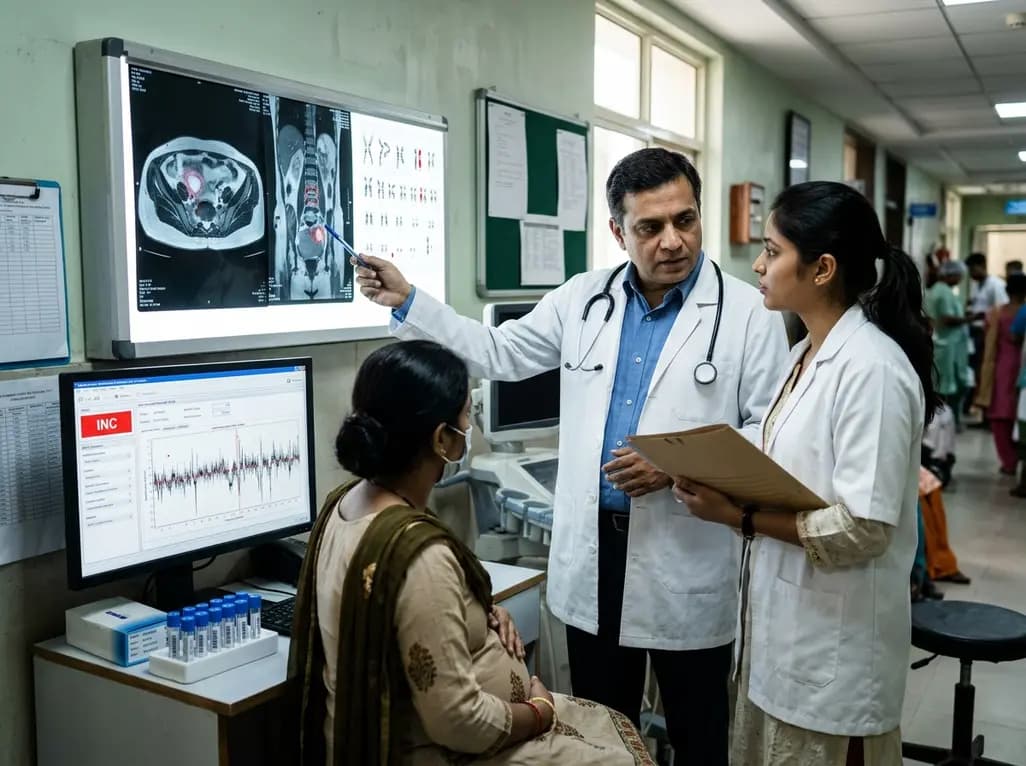
Occult maternal malignancy accounts for 3.82% of persistent unreportable NIPT results with genomic noise. Multiple chromosomal aberrations, notably on chromosome 18, warrant thorough oncological evaluation and whole-body MRI to ensure timely maternal diagnosis while preserving fetal care.
Today

This article reviews the forensic and clinical complexities of acute myocarditis arising on left ventricular hypertrophy in children, highlighting early diagnostic red flags and multidisciplinary postmortem autopsy protocols.
Today
A randomized controlled trial demonstrates that an eight-week dual-task training intervention significantly improves static and dynamic postural control over standard balance exercises in individuals with chronic ankle instability, addressing critical neurocognitive deficits during athletic and daily activities.
Today

A retrospective cohort study of 7,716 ICU patients from the MIMIC-IV database demonstrates that Gradient Boosting Decision Trees significantly outperform traditional SOFA scores in predicting in-hospital mortality among patients with sepsis and diabetes, with SHAP analysis providing clinical interpretability.
Today
