.webp&w=384&q=75)

Loading, please wait...
Loading, please wait...
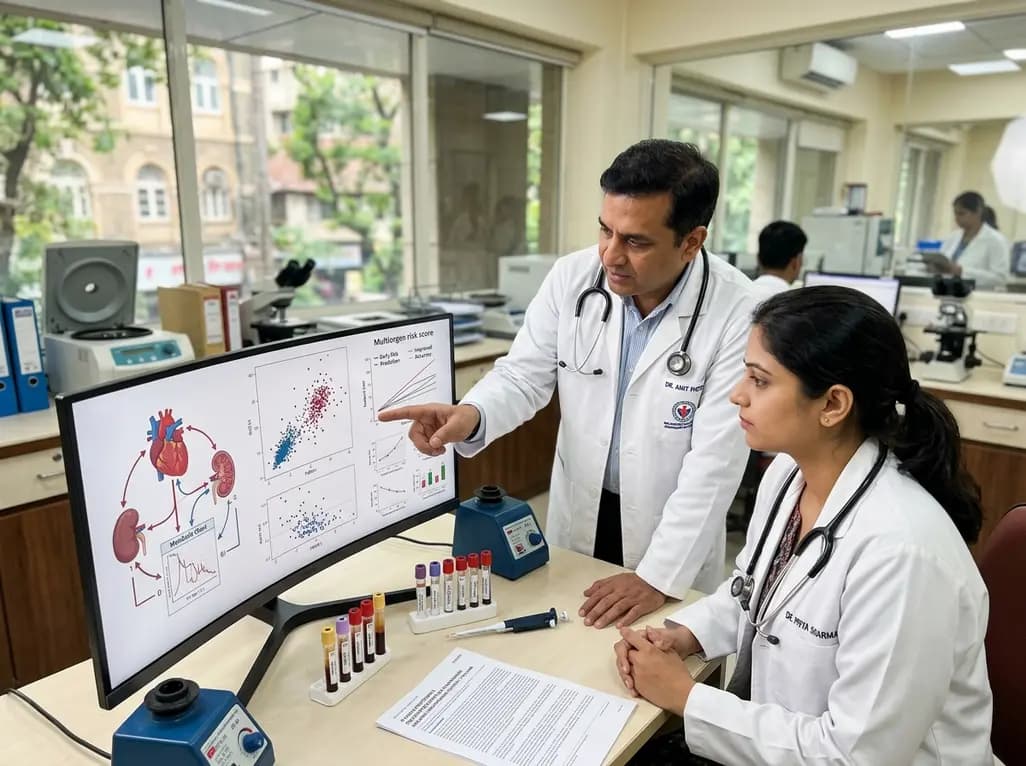
Cardiovascular-kidney-metabolic syndrome represents an interconnected continuum of metabolic dysfunction, renal impairment, and subclinical vascular damage. Traditionally, clinical management focuses on secondary prevention after end-organ events occur. However, stages 0 through 2 offer a critical, highly modifiable therapeutic window before irreversible cardiovascular injury develops. Recent breakthroughs demonstrate that circulating plasma proteomic signatures capture subclinical pathobiology with remarkable fidelity. Consequently, these molecular profiles allow clinicians to stratify patient risk far earlier than standard physiological metrics. By mapping systemic inflammatory, fibrotic, and hemodynamic derangements, proteomic profiling promises to revolutionize preventive cardiorenal care.
Cardiovascular-kidney-metabolic syndrome begins decades before catastrophic vascular events emerge. Stage 0 denotes individuals without clinical risk factors, whereas stage 1 encompasses excess adiposity or impaired glucose tolerance. Subsequently, stage 2 introduces established metabolic risk factors, such as hypertension, diabetes, hypertriglyceridemia, or moderate chronic kidney disease. Although these early stages seem clinically stable, silent microscopic injury progressively damages delicate vascular beds.
Chronic low-grade inflammation promotes vascular endothelial dysfunction across multiple vascular territories. Simultaneously, insulin resistance and renal hemodynamic alterations accelerate microvascular remodeling and interstitial fibrosis. Unfortunately, standard diagnostic measures often fail to detect these silent transitions. Routine blood pressure cuffs and basic biochemical panels only identify damage after substantial functional decline occurs.
Therefore, researchers require sensitive tools to detect insidious organ stress during early disease stages. Circulating proteins directly reflect dynamic cellular processes and extracellular matrix remodeling. Consequently, systemic proteomic surveillance provides an unprecedented window into the molecular changes occurring before symptomatic manifestation. Recognizing these occult pathophysiological changes allows clinicians to intervene aggressively during reversible stages.
In a landmark investigation, investigators evaluated 43,709 participants from the UK Biobank across stages 0 to 2. Researchers quantified 2,920 plasma proteins to establish whether plasma proteomic signatures could forecast long-term clinical trajectories. Strikingly, multivariable models identified 157 proteins with concordant associations across 11 distinct incident cardiovascular, renal, and mortality outcomes.
Among these candidates, 155 proteins exhibited positive associations with adverse outcomes, while two showed inverse relationships. Furthermore, 11 specific proteins displayed progressive elevations across baseline stages 0, 1, and 2. Notably, population-level trajectory models highlighted GDF15, TNFRSF10B, WFDC2, and NT-proBNP as primary drivers of divergent clinical trajectories.
These individual proteins reflect distinct yet overlapping pathological pathways. For example, growth differentiation factor 15 serves as a master integrator of systemic cellular stress, senescence, and chronic inflammation. Similarly, elevated natriuretic peptides reveal persistent subclinical myocardial strain long before overt congestive symptoms appear. Meanwhile, markers like WFDC2 highlight accelerated tubulointerstitial fibrosis within the kidneys. Together, these markers define multi-organ vulnerability.
Contemporary preventive cardiology relies heavily on validated risk tools such as the American Heart Association PREVENT equations. These clinical equations incorporate standard covariates, including age, systolic blood pressure, cholesterol ratios, estimated glomerular filtration rate, and diabetes status. However, conventional algorithms can underestimate residual cardiovascular and microvascular susceptibility.
To address this limitation, researchers compared the predictive accuracy of clinical models with models augmented by proteomic profiles. In repeated internal validation cohorts, outcome-specific proteomic signatures demonstrated substantial incremental prognostic performance. Specifically, incorporating these proteomic signatures yielded improvements in the C-index ranging from 0.024 to 0.070 across all 11 evaluated clinical outcomes.
Moreover, these gains remained statistically robust even after complete adjustment for all PREVENT-aligned clinical covariates. Consequently, circulating protein profiling captures occult biological variation that conventional clinical variables miss entirely. For instance, two patients sharing identical blood pressure and glucose readings may harbor drastically different proteomic stress signals. Thus, integrating molecular risk markers resolves clinical ambiguity, allowing physicians to separate stable individuals from those on rapid trajectories toward cardiorenal decline.
While comprehensive proteomic profiling involving thousands of proteins accelerates discovery, practical healthcare implementation demands concise and cost-effective assays. Therefore, the study team derived an exploratory recurrent 12-protein panel that retained high diagnostic precision across multiple end-organ endpoints. This parsimonious panel successfully maintained prognostic discrimination in internal evaluation, achieving significant C-index improvements ranging from 0.018 to 0.052 beyond clinical models.
Importantly, this targeted panel unifies core mechanistic axes governing metabolic, renal, and cardiac homeostasis. By measuring a limited subset of circulating proteins, clinical laboratories could feasibly implement high-throughput immunoassays during routine outpatient evaluations. Furthermore, multiplex targeted assays could fit seamlessly into commercial pathology laboratories, offering actionable risk scores without exorbitant sequencing or mass spectrometry costs.
Additionally, serial measurements of this 12-protein panel could monitor real-time biological responses to intensive preventive therapies. When high-risk patients adopt intensive lifestyle changes or initiate pharmacotherapy, resolving proteomic abnormalities could verify therapeutic efficacy. Hence, targeted proteomic panels bridge the chasm between high-dimensional discovery science and routine outpatient clinical practice, empowering clinicians to deliver truly personalized cardiometabolic care.
The clinical implications of molecular risk stratification are profound, particularly in regions facing severe burdens of premature cardiometabolic disease. In countries like India, South Asian populations experience an early onset of coronary artery disease, high diabetic prevalence, and accelerated renal dysfunction. Traditional risk scoring systems often fail to capture this elevated susceptibility in younger demographics.
Consequently, identifying high-risk individuals during stage 1 or stage 2 CKM syndrome allows for timely, aggressive therapeutic intensification. Clinicians can introduce evidence-based cardiorenal protective therapies, such as sodium-glucose cotransporter-2 inhibitors and glucagon-like peptide-1 receptor agonists, long before irreversible organ damage occurs. Furthermore, non-steroidal mineralocorticoid receptor antagonists and intensive lipid-lowering therapies can prevent microvascular and macrovascular complications.
Moreover, providing patients with tangible molecular evidence of preclinical organ stress enhances patient engagement and treatment adherence. When asymptomatic individuals understand that circulating inflammatory and myocardial stress markers are elevated, they adhere more consistently to medical therapy and lifestyle interventions. Ultimately, transitioning from reactive symptom management to proactive molecular interception represents the future of preventive cardiovascular-kidney-metabolic medicine.
Cardiovascular-kidney-metabolic staging defines a progressive pathophysiological continuum across life. Specifically, stage 0 indicates individuals with normal weight, optimal glucose tolerance, and intact cardiorenal function. Stage 1 encompasses excess body weight, central adiposity, or impaired fasting glucose without overt metabolic syndrome. Furthermore, stage 2 introduces established clinical risk factors, including diagnosed hypertension, type 2 diabetes mellitus, elevated triglycerides, or moderate chronic kidney disease. Importantly, all these stages precede overt structural cardiovascular complications.
Standard risk engines like the PREVENT equations rely primarily on physiological parameters, including blood pressure, age, lipid panels, and kidney filtration rates. However, plasma proteomic signatures directly quantify circulating molecular markers of subclinical cellular stress, microvascular injury, and extracellular fibrosis. Consequently, adding proteomic data to traditional clinical calculators significantly improves discrimination metrics. This integration yields C-index increases up to 0.070, enabling precise detection of occult multi-organ disease trajectories in asymptomatic patients.
Large-scale population modeling identified several key circulating proteins with powerful prognostic utility across multi-organ endpoints. Specifically, growth differentiation factor 15, tumor necrosis factor receptor superfamily member 10B, WFDC2, and NT-proBNP demonstrated significant divergence between incident cases and reference controls. Furthermore, researchers identified an exploratory 12-protein recurrent panel that maintained robust predictive accuracy across 11 cardiovascular, kidney, and mortality endpoints. This concise panel provides practical, high-value clinical discrimination.
Disclaimer: This content is for informational and educational purposes only and is not intended as medical advice. Healthcare professionals should exercise their clinical judgment when applying this information. Refer to the latest local and national guidelines for clinical practice.
References

Read summarized clinical updates, watch expert medical content, and earn CME certifications right from your smartphone.
Open your smartphone camera to scan and install.





A large UK Biobank study reveals that plasma proteomic signatures capture preclinical organ damage and improve multiorgan risk prediction across early CKM syndrome stages 0 to 2 beyond traditional PREVENT clinical models.
Today

This clinical review examines the dangerous intersection of climate change and antimicrobial resistance (AMR). It highlights thermal selection, altered transmission pathways, and the imperative for One Health and Planetary Health adaptation frameworks to preserve therapeutic efficacy.
Today
Discover the crucial distinctions between mesonephric and mesonephric-like proliferations of the female genital tract. Learn the key histomorphologic, immunohistochemical, and molecular differences essential for accurate diagnosis and clinical management.
Today

A narrative review investigates whether the articularis genus muscle functions as an independent anatomical entity or blends with the vastus intermedius. We evaluate its morphology, role in retracting the suprapatellar bursa, and direct clinical significance in anterior knee pain and arthroplasty.
Today

A Bayesian multilevel meta-analysis reveals that aerobic training combined with moderate carbohydrate restriction modestly lowers HbA1c in type 2 diabetes. However, sparse data and very low certainty leave incremental benefits over exercise or diet alone unproven, highlighting the need for individualized care.
Today
