.webp&w=384&q=75)

Loading, please wait...
Loading, please wait...

Cardiometabolic health in women often hinges on critical physiological adaptations during reproductive life. Consequently, clinicians recognize pregnancy as a natural stress test that unmasks latent vascular vulnerabilities. The persistence of postpartum weight retention represents a critical yet underappreciated determinant of chronic cardiovascular pathology. Although obstetric care traditionally prioritizes fetal outcomes, maternal weight trajectories following childbirth carry enduring clinical implications. Women frequently retain substantial body mass following parturition due to altered sleep architecture, infant care demands, and lifestyle shifts. Therefore, failure to return to baseline adiposity within the first postpartum years may perpetuate systemic inflammation and neurohormonal activation. Furthermore, these maternal metabolic shifts accelerate subclinical atherosclerosis across subsequent decades. When women maintain excess weight into their middle years, their vascular endothelial reserve deteriorates steadily. In contrast to temporary antepartum weight gain, persistent adiposity sustains adverse glycemic and lipid pathways over decades. Understanding this distinction allows physicians, cardiologists, and obstetricians to intervene before irreversible vascular remodeling occurs. Thus, monitoring weight retention beyond the six-week puerperium provides essential clinical insights for lifelong maternal cardiovascular prevention.
To investigate these prolonged cardiometabolic trajectories, researchers evaluated 838 participants enrolled between 1999 and 2002 within Project Viva. At enrollment, participants demonstrated a mean age of 32.6 years. The study classified gestational weight gain as inadequate, adequate, or excessive according to 2009 Institute of Medicine guidelines. Subsequently, investigators calculated maternal postpartum weight retention at six months, one year, and two years after childbirth. Decades later, at the Mid-Life Visit between 2017 and 2021, participants underwent cardiovascular assessment at a mean age of 51.0 years. Researchers quantified cardiovascular health utilizing the American Heart Association Life's Essential 8 framework, which scales cardiovascular metrics from 0 to 100. Additionally, multivariable linear regression models adjusted for pre-pregnancy body mass index, enrollment age, pregnancy smoking status, household income, and educational attainment. Consequently, this rigorous methodological design isolated the independent biological contributions of gestational gain from persistent postpartum adiposity over two decades of follow-up. Therefore, the cohort provides remarkable empirical clarity regarding long-term cardiovascular degradation in women.
The statistical findings from Project Viva demonstrate a striking divergence between antepartum and postpartum weight changes. Specifically, excessive gestational weight gain significantly predicted worse mid-life weight status, showing an adjusted beta coefficient of -8.99. However, excessive gestational gain did not associate with overall Life's Essential 8 scores or biomedical domain scores. In contrast, postpartum weight retention emerged as a robust predictor of cardiovascular decline. Each 1-kg increase in one-year weight retention predicted worse biomedical domain scores, with an adjusted beta of -0.49. Furthermore, every retained kilogram at one year significantly reduced mid-life weight status scores by -1.54 points and blood pressure scores by -0.62 points. Notably, weight retention measured at six months and two years also independently correlated with degraded glycemic trait scores. Consequently, these data indicate that post-delivery weight retention drives systemic hemodynamic and metabolic decline across mid-life. Thus, prolonged weight retention represents a far more critical determinant of maternal cardiovascular health than transient pregnancy weight gain.
Several interconnected pathophysiological mechanisms explain why sustained weight retention uniquely accelerates mid-life cardiovascular disease. First, central adipose expansion following pregnancy fosters persistent macrophage infiltration and oversecretion of inflammatory adipokines. Consequently, these circulating cytokines induce endothelial dysfunction and impair vascular nitric oxide synthesis. Second, retained central adiposity promotes chronic hyperinsulinemia and peripheral insulin resistance. As a result, hepatic lipogenesis escalates, yielding elevated triglycerides and denser atherogenic lipoprotein particles. Furthermore, persistent sympathetic activation and altered renal sodium handling directly increase systemic arterial resistance. Over time, these combined insults stimulate arterial stiffening and concentric myocardial remodeling. Although excessive pregnancy weight gain supplies temporary substrates for fetal nutrition, persistent postpartum retention solidifies ectopic lipid deposition in visceral tissues. Therefore, maternal vascular beds endure relentless hemodynamic strain instead of recovering. Ultimately, this sustained metabolic burden accelerates subclinical atherosclerosis, converting postpartum adiposity into chronic hypertension and dysglycemia during mid-life. Thus, preventing sustained retention preserves maternal vascular reserve.
These findings carry vital clinical relevance for healthcare practitioners across India, where cardiometabolic diseases manifest prematurely. Notably, South Asian women display elevated visceral adiposity and marked insulin resistance at lower body mass index levels. Traditional puerperal customs in India often encourage prolonged immobility and high-calorie diets, compounding post-delivery weight gain. Therefore, obstetricians and primary care clinicians must dispel the belief that postpartum weight retention is harmless. Instead, physicians should integrate longitudinal cardiovascular surveillance into maternal follow-up schedules. Evaluating blood pressure, fasting glucose, and lipid profiles must extend well beyond the traditional six-week checkup. Furthermore, healthcare teams should initiate structured dietary guidance and physical activity regimens within three to six months postpartum. Establishing collaborative care between obstetricians, endocrinologists, and preventive cardiologists will enhance early risk stratification. Consequently, proactive postpartum weight management offers a crucial opportunity to curb premature coronary heart disease in Indian women. Early clinical intervention will protect maternal cardiovascular health for future decades.
Excessive gestational weight gain reflects maternal and fetal physiological tissue accretion during pregnancy, which primarily predisposes women to future obesity. In contrast, postpartum weight retention indicates the failure to shed excess metabolic tissue after delivery. Sustained postpartum adiposity perpetuates systemic inflammation, insulin resistance, and sympathetic nervous activation. As demonstrated by recent research, this ongoing metabolic burden directly impairs long-term blood pressure control and glycemic regulation, driving mid-life cardiovascular disease much more aggressively than temporary pregnancy gain.
Clinicians should evaluate cardiometabolic health well beyond the traditional six-week postpartum visit. Key surveillance intervals include six months, one year, and two years after childbirth. During these touchpoints, practitioners should assess body mass index, blood pressure, fasting lipid panels, and glycemic traits such as glycated hemoglobin. Identifying sustained weight retention early allows physicians to implement targeted dietary interventions, behavioral lifestyle coaching, and exercise programs before chronic vascular remodeling and hypertension become permanent systemic conditions.
Effective postpartum interventions in Indian settings combine balanced caloric intake, gradual resumption of aerobic physical activity, and sustained breastfeeding. Dietitians should guide mothers away from excessive high-calorie postpartum traditions, emphasizing nutrient-dense whole grains, lean proteins, vegetables, and healthy fats instead. Furthermore, engaging in brisk walking for thirty minutes daily helps reduce central adiposity. Clinicians must also provide actionable guidance on sleep hygiene and stress management, as chronic sleep deprivation elevates cortisol and promotes visceral fat deposition.
Disclaimer: This content is for informational and educational purposes only. It should not be used as a substitute for professional medical advice, diagnosis, or treatment. Always consult a qualified healthcare provider for specific medical guidance. Refer to the latest local and national guidelines for clinical practice.
References

Read summarized clinical updates, watch expert medical content, and earn CME certifications right from your smartphone.
Open your smartphone camera to scan and install.





Findings from Project Viva indicate that sustained postpartum weight retention, rather than excessive gestational weight gain alone, directly worsens women's mid-life cardiovascular health, degrading blood pressure and glycemic parameters decades after delivery.
Today

This clinical review examines the dangerous intersection of climate change and antimicrobial resistance (AMR). It highlights thermal selection, altered transmission pathways, and the imperative for One Health and Planetary Health adaptation frameworks to preserve therapeutic efficacy.
Today
Discover the crucial distinctions between mesonephric and mesonephric-like proliferations of the female genital tract. Learn the key histomorphologic, immunohistochemical, and molecular differences essential for accurate diagnosis and clinical management.
Today
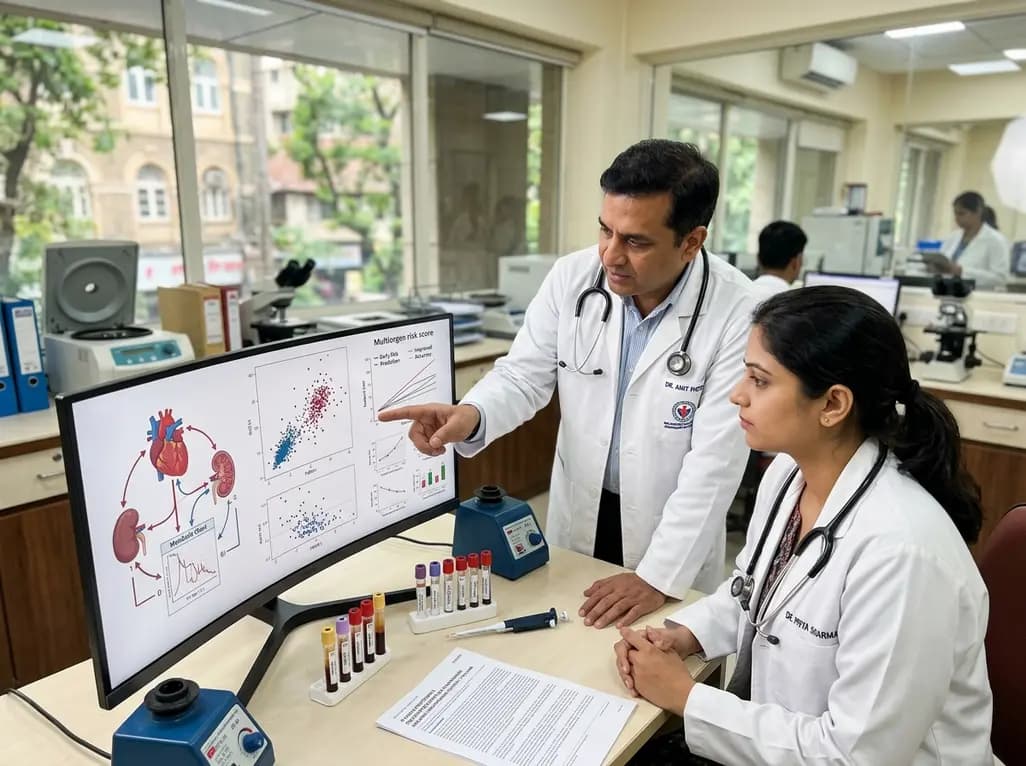
A large UK Biobank study reveals that plasma proteomic signatures capture preclinical organ damage and improve multiorgan risk prediction across early CKM syndrome stages 0 to 2 beyond traditional PREVENT clinical models.
Today
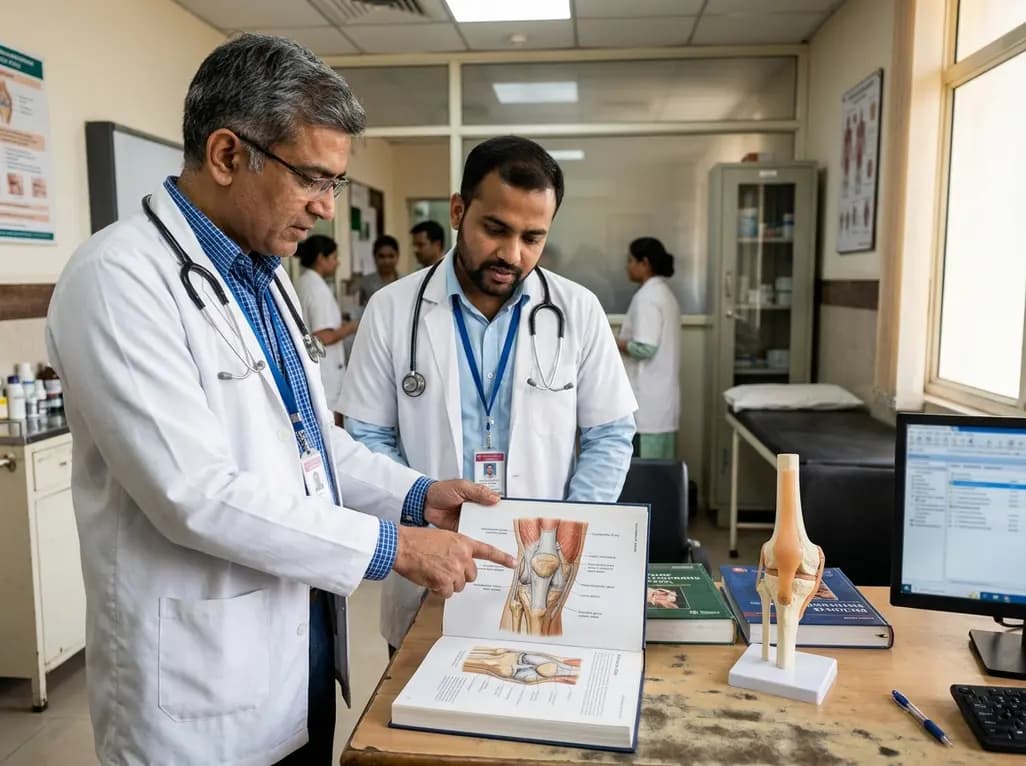
A narrative review investigates whether the articularis genus muscle functions as an independent anatomical entity or blends with the vastus intermedius. We evaluate its morphology, role in retracting the suprapatellar bursa, and direct clinical significance in anterior knee pain and arthroplasty.
Today

A Bayesian multilevel meta-analysis reveals that aerobic training combined with moderate carbohydrate restriction modestly lowers HbA1c in type 2 diabetes. However, sparse data and very low certainty leave incremental benefits over exercise or diet alone unproven, highlighting the need for individualized care.
Today
