.webp&w=384&q=75)

Loading, please wait...
Loading, please wait...

Cardiovascular complications remain the primary cause of premature mortality among patients with renal impairment. Clinicians frequently encounter progressive arterial stiffness, media calcification, and accelerated atherosclerosis in this vulnerable population. Recent clinical insights emphasize that vascular damage in CKD stems from a multifaceted pathophysiological cascade involving mineral metabolism disturbances, endocrine dysregulation, and cellular senescence. Specifically, investigators have identified circulating soluble Klotho and serum aldosterone as critical drivers of cardiorenal injury.
The kidneys serve as the primary source of circulating soluble Klotho, a pleiotropic protein with potent anti-aging and vasculoprotective properties. Consequently, declining functional nephron mass triggers a marked reduction in systemic Klotho levels early in disease progression. This state of Klotho deficiency directly impairs vascular endothelial function by decreasing nitric oxide bioavailability and promoting reactive oxygen species generation. Furthermore, Klotho loss impairs renal phosphate excretion, which indirectly promotes vascular smooth muscle cell osteogenic transdifferentiation. At the same time, loss of renal Klotho removes a physiological brake on adrenal steroidogenesis. Consequently, renal disease triggers an autonomous activation of the renin-angiotensin-aldosterone system. Elevated aldosterone concentrations subsequently activate mineralocorticoid receptors in endothelial and vascular smooth muscle cells. This non-classical mineralocorticoid activation induces profound vascular remodeling, elastin degradation, and collagen deposition. Therefore, the twin insults of endocrine deficiency and hormonal excess accelerate arterial stiffening and vascular calcification.
Evaluating arterial health non-invasively allows clinicians to stratify cardiovascular risk effectively before overt clinical events occur. Researchers in the cross-sectional study utilized three distinct modalities: the cardio-ankle vascular index, the ankle-brachial index, and carotid intima-media thickness. The cardio-ankle vascular index provides an exceptional advantage because it reflects arterial stiffness independent of blood pressure at the measurement moment. Interestingly, investigators observed pathological stiffness values in patients across all stages of renal disease. These vascular stiffness abnormalities were comparable to those observed in matched hypertensive controls without kidney impairment. Moreover, carotid intima-media thickness measurements demonstrated progressive subclinical structural remodeling. Meanwhile, ankle-brachial index determinations effectively screened for concurrent peripheral arterial obstruction. Therefore, incorporating these functional and anatomical vascular metrics provides comprehensive insight into subclinical vascular injury. Routine functional monitoring enables nephrologists and cardiologists to detect severe subclinical vasculopathy long before symptomatic coronary or cerebrovascular disease manifests.
The cross-sectional analysis confirmed that serum Klotho levels exhibit a progressive and significant decline as glomerular filtration rates drop. Notably, patients in advanced stages displayed profound Klotho depletion compared to early-stage cohorts. In contrast, circulating aldosterone concentrations remained persistently elevated across all chronic kidney disease stages. This sustained elevation demonstrates the well-recognized phenomenon of secondary hyperaldosteronism, which often escapes standard upstream renin-angiotensin inhibition. Furthermore, statistical evaluations revealed significant associations between lower Klotho levels, elevated aldosterone, and heightened arterial stiffness. Soluble Klotho normally suppresses the expression of aldosterone synthase within adrenal cortical tissues. Hence, the progressive loss of renal Klotho directly fosters pathological aldosterone production. Additionally, aldosterone itself downregulates renal Klotho expression, establishing a deleterious bidirectional feedback loop. Ultimately, this biological crosstalk amplifies systemic inflammatory signaling, stimulates vascular remodeling, and worsens renal fibrosis.
Understanding this endocrine-vascular interplay carries substantial therapeutic ramifications for modern clinical nephrology. Traditional management protocols heavily prioritize strict blood pressure control and renin-angiotensin system blockade using standard agents. However, conventional angiotensin-converting enzyme inhibitors or angiotensin receptor blockers frequently lead to aldosterone breakthrough over prolonged usage. Consequently, persistent mineralocorticoid receptor stimulation continues to drive arterial stiffening and renal fibrosis unabated. Modern clinicians must therefore consider targeted mineralocorticoid receptor antagonism to mitigate ongoing vascular injury. Novel non-steroidal mineralocorticoid receptor antagonists provide potent cardiorenal protection by directly suppressing vascular inflammation and endothelial fibrosis. Additionally, innovative therapies aimed at preserving or restoring circulating Klotho represent a promising frontier in nephrology. Lifestyle modifications, strict phosphorus management, and modern nephroprotective drugs indirectly preserve endogenous Klotho expression. Therefore, comprehensive therapeutic regimens targeting both Klotho preservation and aldosterone suppression offer superior vascular outcomes for chronic kidney disease patients.
Circulating biomarkers offer valuable assistance in personalizing clinical care for complex kidney patients. Routinely measuring serum Klotho could identify individuals at high risk for accelerated vascular aging before extensive calcification occurs. Similarly, tracking aldosterone levels provides clinicians with critical insight into residual mineralocorticoid risk despite baseline therapeutic regimens. When practitioners pair these biochemical measurements with arterial stiffness indices, they gain a powerful risk-stratification toolkit. Furthermore, future clinical trials should examine whether therapeutically raising soluble Klotho slows arterial stiffening in human subjects. Current preclinical interventions, including recombinant Klotho administration and epigenetic upregulators, show remarkable promise in reversing medial calcification. Likewise, selective aldosterone synthase inhibitors represent an exciting upstream pharmacologic strategy to suppress aldosterone overproduction entirely. Thus, bridging biochemical assessment with physiological stiffness markers will reshape future preventive cardiovascular care in nephrology.
Klotho deficiency accelerates arterial stiffness through multiple direct and indirect cellular mechanisms. Soluble Klotho directly maintains endothelial integrity and stimulates vascular nitric oxide production. When circulating Klotho levels decline, endothelial cells experience increased oxidative stress and uncoupled nitric oxide synthase. Furthermore, Klotho loss promotes hyperphosphatemia, which stimulates vascular smooth muscle cells to transdifferentiate into osteoblast-like cells, leading directly to extensive medial calcification and arterial wall rigidity.
Aldosterone often remains elevated despite conventional renin-angiotensin blockade due to the phenomenon called aldosterone breakthrough. While standard angiotensin-converting enzyme inhibitors initially suppress aldosterone production, alternative non-renin pathways eventually restore adrenal steroidogenesis. Potassium fluctuations, corticotropin signaling, and local adrenal factors drive this hormone synthesis. Moreover, severe Klotho deficiency removes a critical inhibitory signal on adrenal aldosterone synthase, allowing sustained mineralocorticoid release that drives continued vascular damage.
The cardio-ankle vascular index, carotid intima-media thickness, and ankle-brachial index represent the most practical non-invasive tools for detecting vascular remodeling. The cardio-ankle vascular index evaluates systemic arterial stiffness independently of instantaneous blood pressure readings, offering reliable functional monitoring. Simultaneously, high-resolution carotid ultrasound quantifies intima-media thickness to identify early structural atherosclerotic changes. Combined, these non-invasive metrics accurately identify subclinical vascular damage across various stages of chronic kidney disease.
Disclaimer: This content is for informational and educational purposes only. It is not intended to be a substitute for professional medical advice, diagnosis, or treatment. Always seek the advice of your physician or other qualified health provider with any questions you may have regarding a medical condition. Refer to the latest local and national guidelines for clinical practice.
References
Tartaglione L et al. The Interplay Between Klotho, Aldosterone, and Vascular Damage in Chronic Kidney Disease: Insights from a Cross-Sectional Study. J Nephrol. 2026 Oct 01. doi: undefined. PMID: 42816442.
Hu MC, Shi M, Zhang J, et al. Klotho: a novel player in the kidney-cardiovascular axis. Curr Opin Nephrol Hypertens. 2022;31(4):356-364.
Verma A, Patel RK, Tuttle KR. Mineralocorticoid receptor activation and non-steroidal antagonists in cardiorenal disease. Eur Heart J. 2023;44(30):2812-2824.

Read summarized clinical updates, watch expert medical content, and earn CME certifications right from your smartphone.
Open your smartphone camera to scan and install.





A cross-sectional investigation highlights the complex pathophysiological links between serum Klotho deficiency, secondary hyperaldosteronism, and vascular damage in CKD. Discover key insights into non-invasive vascular stiffness markers and targeted therapeutic pathways for cardiorenal protection.
Today

This clinical review examines the dangerous intersection of climate change and antimicrobial resistance (AMR). It highlights thermal selection, altered transmission pathways, and the imperative for One Health and Planetary Health adaptation frameworks to preserve therapeutic efficacy.
Today
Discover the crucial distinctions between mesonephric and mesonephric-like proliferations of the female genital tract. Learn the key histomorphologic, immunohistochemical, and molecular differences essential for accurate diagnosis and clinical management.
Today
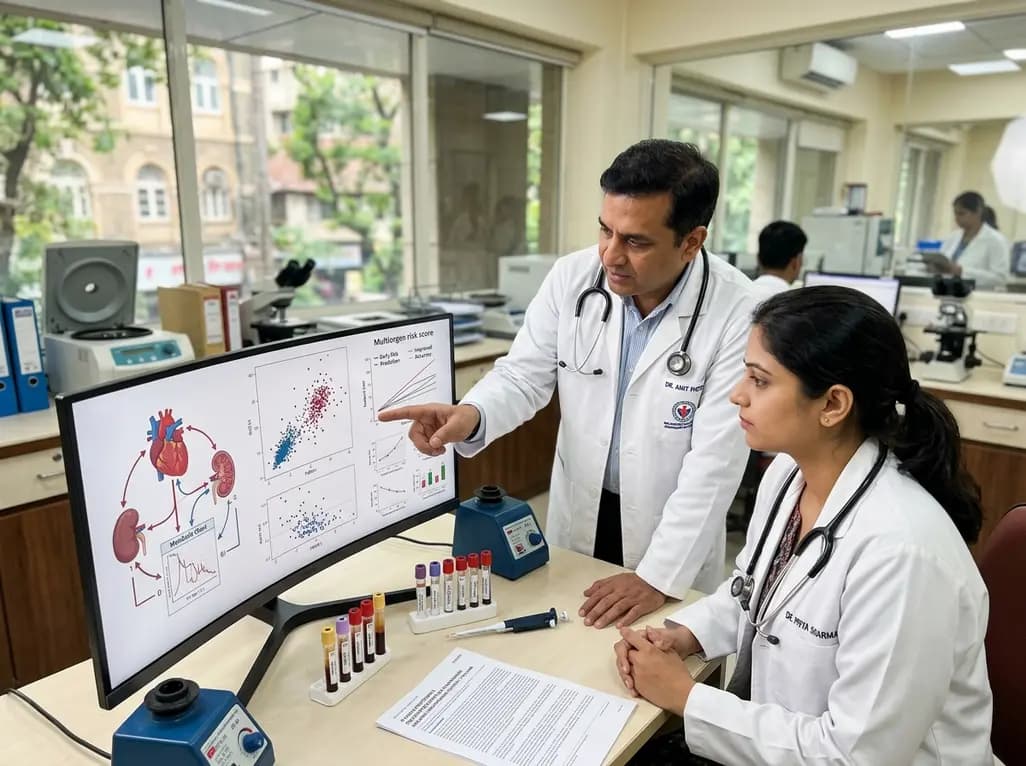
A large UK Biobank study reveals that plasma proteomic signatures capture preclinical organ damage and improve multiorgan risk prediction across early CKM syndrome stages 0 to 2 beyond traditional PREVENT clinical models.
Today

A narrative review investigates whether the articularis genus muscle functions as an independent anatomical entity or blends with the vastus intermedius. We evaluate its morphology, role in retracting the suprapatellar bursa, and direct clinical significance in anterior knee pain and arthroplasty.
Today

A Bayesian multilevel meta-analysis reveals that aerobic training combined with moderate carbohydrate restriction modestly lowers HbA1c in type 2 diabetes. However, sparse data and very low certainty leave incremental benefits over exercise or diet alone unproven, highlighting the need for individualized care.
Today
