.webp&w=384&q=75)

Loading, please wait...
Loading, please wait...

Recent clinical research highlights that wheelchair handle orientation significantly impacts the physical health of healthcare workers and caregivers. A randomized crossover study evaluated the physiological demand and functional performance of three different handle designs: parallel, vertical, and lateral. The findings suggest that standard handle configurations may not always provide the best ergonomic support during daily caregiving tasks.
The study found that wheelchair handle orientation significantly affects electromyographic (EMG) activity in the forearm and upper arm muscles. Specifically, parallel handles resulted in higher muscle activation in the extensor carpi radialis (ECR) and flexor carpi ulnaris (FCU). Furthermore, participants reported increased discomfort when using parallel handles, particularly while navigating ramps. Consequently, these results challenge the efficacy of traditional parallel handle designs for long-term caregiver health.
In contrast, vertical handles effectively reduced forearm muscle load but compromised overall usability scores. Many participants found that vertical grips made steering and turning more difficult on complex paths. However, lateral handles emerged as a balanced alternative. They provided moderate muscle activation while significantly improving turning control. Moreover, the type of ground surface, such as ramps or twisting paths, played a critical role in determining the total physical exertion required.
Healthcare professionals should consider ergonomic adaptations to prevent repetitive strain injuries among attendants. While vertical handles may protect the forearms, lateral handles might be preferable for environments requiring frequent maneuvering. Therefore, selecting equipment based on specific environmental demands can improve both safety and efficiency. Additionally, providing training on proper pushing techniques remains essential for reducing occupational musculoskeletal disorders.
Vertical handles generally reduce forearm muscle load. However, lateral handles offer a better balance of moderate muscle activation and superior turning control for the attendant.
Parallel handles often lead to higher electromyographic activity in the wrist and arm muscles. This increased activation typically results in higher perceived discomfort and a greater risk of fatigue during inclined pushing.
Yes, ground type significantly influences physical demand. Ramps increase the need for forearm strength, while twisting paths require better steering control, which is often superior with lateral handle orientations.
Disclaimer: This content is for informational and educational purposes only. It is not intended to provide medical advice or to be a substitute for professional medical advice, diagnosis, or treatment. Refer to the latest local and national guidelines for clinical practice.
References
Lin YH et al. Comparison of Muscle Load, Comfort, Usability, and Time-On-Task Across 3 Wheelchair Handle Orientations and Ground Types: A Randomized Crossover Study. Med Sci Monit. 2026 Mar 08. doi: 10.12659/MSM.951420. PMID: 41795171.
Kirby RL, et al. Wheelchair skills training program for caregivers: a randomized controlled trial. Arch Phys Med Rehabil. 2016;97(11):1833-1842. doi: 10.1016/j.apmr.2016.05.019.
Moon IH, Kim JH. A study on factors affecting the satisfaction of life of the elderly people with disabilities. J Kor Soc Phys Ther. 2017;29:19-35.

Read summarized clinical updates, watch expert medical content, and earn CME certifications right from your smartphone.
Open your smartphone camera to scan and install.





A randomized crossover study examines how parallel, vertical, and lateral wheelchair handles affect muscle load, comfort, and usability for caregivers....
7 months ago
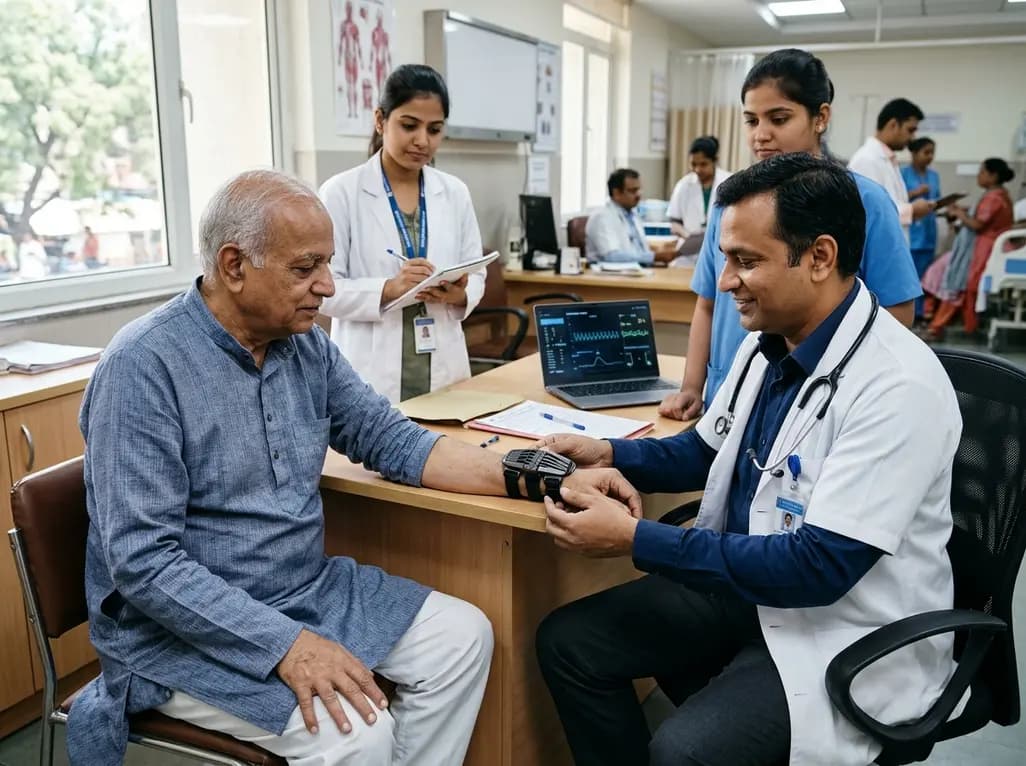
The TREM-AB open-label pilot study evaluated a wearable passive nonlinear vibration absorber for essential tremor. The Nonlinear Energy Sink bracelet reduced clinical Fahn-Tolosa-Marin tremor scores by 32.1% and electrophysiological tremor power by 49.2% with no adverse effects reported.
Today

A study in JAMIA Open shows lightweight open-source reasoning LLMs achieve up to 95% sensitivity and accelerate evidence synthesis screening by nearly twentyfold, presenting a cost-effective, scalable AI solution for biomedical research and systematic reviews.
Today
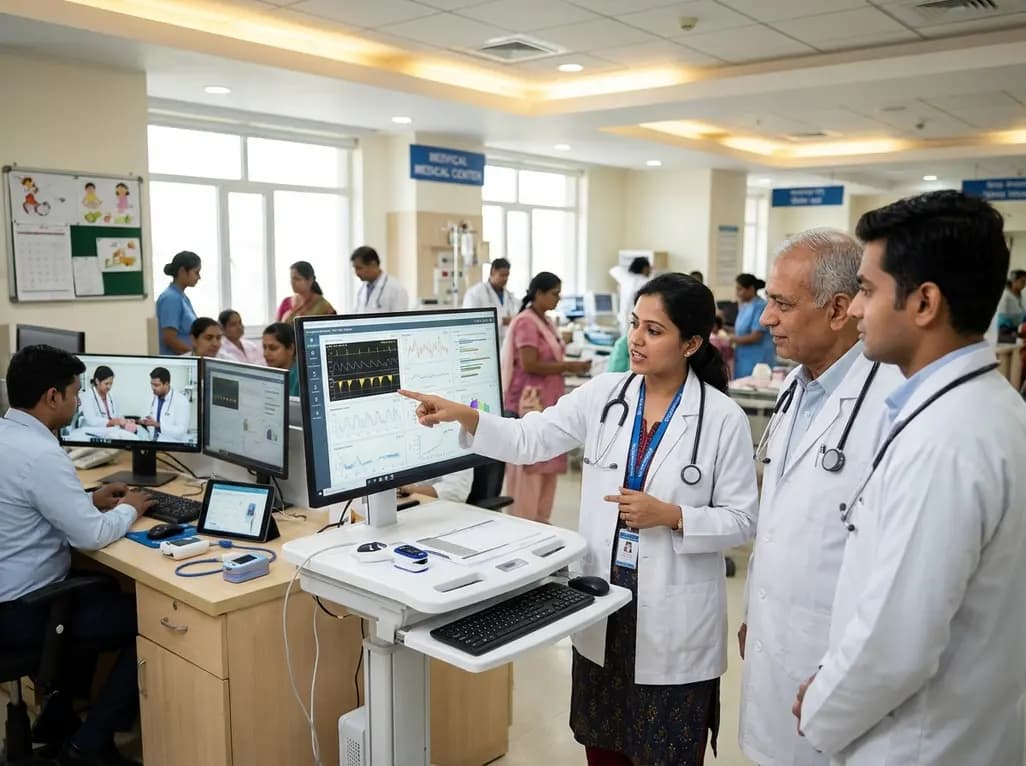
A landmark study details how an enterprise pediatric remote patient management model expanded from a single cardiology pilot to 16 diverse specialty programs by combining centralized digital operations with specialty clinical leadership.
Today
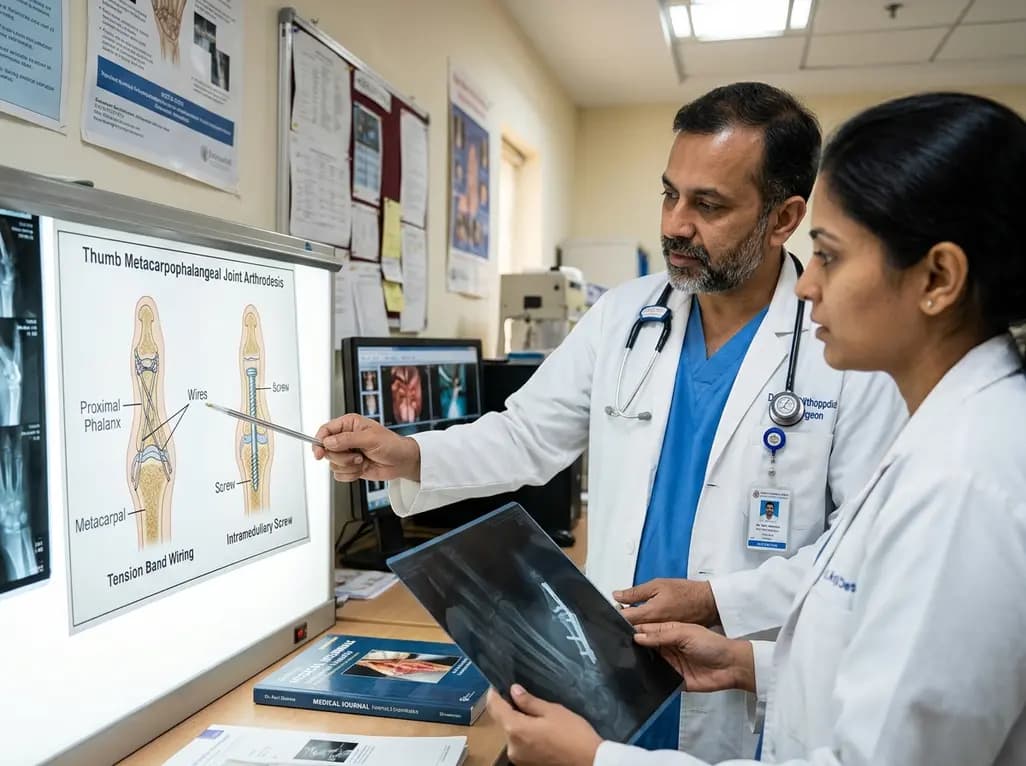
A comparative review of tension band wiring and intramedullary screw fixation in thumb metacarpophalangeal arthrodesis, evaluating union rates, hardware complications, and clinical outcomes.
Today
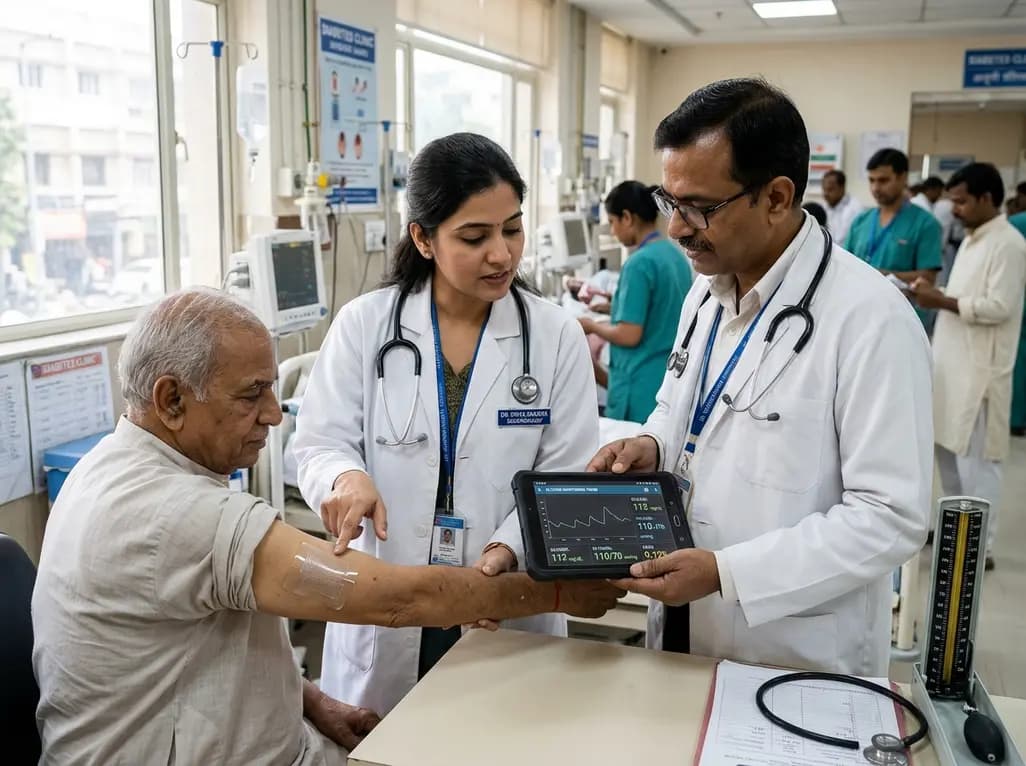
A breakthrough ultrathin multimodal sensor decouples physical hemodynamic monitoring from disposable electrochemical calibration, achieving long-term wearable glucose prediction with 81.36% accuracy and a 9.12% MARD. This offers a robust, drift-free solution for outpatient metabolic surveillance.
Today
