.webp&w=384&q=75)

Loading, please wait...
Loading, please wait...

Recent research indicates that vitamin D levels and weight status are critical markers for pediatric neurodevelopmental outcomes. A large-scale study analyzing nearly 20,000 children found that both vitamin D deficiency and abnormal weight status independently increase the risk of developmental delays. These factors do not operate in isolation but interact in complex, sex-specific ways to influence cognitive and motor growth.
Vitamin D serves as a vital neurosteroid that supports brain maturation. Consequently, children with insufficiency or deficiency often face higher risks of neurodevelopmental delay in early childhood and behavioral challenges as they age. Furthermore, the study revealed that both underweight and overweight/obesity are significantly linked to gross and fine motor delays. Therefore, clinicians must address both nutritional status and physical growth to optimize developmental progress.
The interactive effects of these variables suggest that a \"one-size-fits-all\" approach may be insufficient. Specifically, vitamin D insufficiency was found to impact normal-weight girls under six years old more severely than their peers. Moreover, in boys aged six and older, low vitamin D levels significantly correlated with behavioral risks. Because these outcomes vary by age and sex, health providers should prioritize personalized screenings and interventions.
Additionally, metabolic health plays a dual role in supporting the developing brain. Managing weight status is essential because both ends of the BMI spectrum correlate with impaired motor skills. By integrating vitamin D monitoring with weight management, practitioners can better protect pediatric neurodevelopmental outcomes. This holistic strategy ensures that children reach their full cognitive and physical potential.
In older children, particularly those aged six and above, vitamin D deficiency is more closely associated with behavioral risks and emotional problems rather than pure motor delays.
Yes, research shows a sex-specific interplay. For instance, low vitamin D levels may pose higher neurodevelopmental risks for normal-weight girls in early childhood, whereas boys may experience different impacts as they mature.
Yes, the study found that underweight status, much like overweight and obesity, is significantly associated with delays in both gross and fine motor skills in pediatric populations.
Disclaimer: This content is for informational and educational purposes only. It is not intended as a substitute for professional medical advice, diagnosis, or treatment. Always seek the advice of your physician or other qualified health provider with any questions you may have regarding a medical condition. Refer to the latest local and national guidelines for clinical practice.
References

Read summarized clinical updates, watch expert medical content, and earn CME certifications right from your smartphone.
Open your smartphone camera to scan and install.





A large-scale study examines the independent and interactive roles of vitamin D and weight status in determining pediatric neurodevelopmental outcomes....
7 months ago

A retrospective cohort study reveals that frailty quadruples the odds of pressure injuries in hospitalized older adults. Integrating the Clinical Frailty Scale with comprehensive geriatric care is crucial for identifying vulnerability early and implementing targeted multidisciplinary prevention.
Today

Occult maternal malignancy accounts for 3.82% of persistent unreportable NIPT results with genomic noise. Multiple chromosomal aberrations, notably on chromosome 18, warrant thorough oncological evaluation and whole-body MRI to ensure timely maternal diagnosis while preserving fetal care.
Today

This article reviews the forensic and clinical complexities of acute myocarditis arising on left ventricular hypertrophy in children, highlighting early diagnostic red flags and multidisciplinary postmortem autopsy protocols.
Today
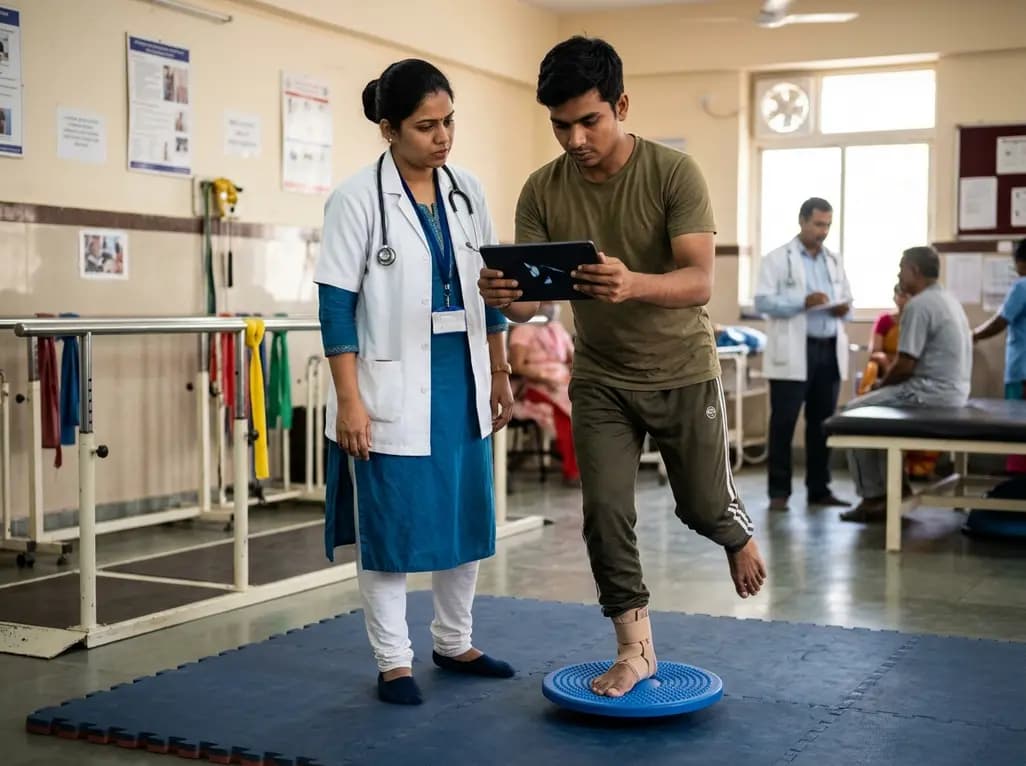
A randomized controlled trial demonstrates that an eight-week dual-task training intervention significantly improves static and dynamic postural control over standard balance exercises in individuals with chronic ankle instability, addressing critical neurocognitive deficits during athletic and daily activities.
Today

A retrospective cohort study of 7,716 ICU patients from the MIMIC-IV database demonstrates that Gradient Boosting Decision Trees significantly outperform traditional SOFA scores in predicting in-hospital mortality among patients with sepsis and diabetes, with SHAP analysis providing clinical interpretability.
Today
