.webp&w=384&q=75)

Loading, please wait...
Loading, please wait...

Goiter, characterized by the abnormal enlargement of the thyroid gland, remains a significant focus of endocrine health despite the widespread implementation of salt iodization programs. A recent landmark study titled "Prevalence and Distribution of Goiter Among Commercially Insured, Working-Age Adults in the United States" provides a modern benchmark for understanding this condition. Using the 2022-2023 Merative MarketScan database, researchers analyzed over 15.2 million individuals to determine the actual prevalence of goiter in a contemporary setting. The findings indicate that the overall prevalence ranges between 12.7 and 24.6 per 1000 persons, which translates to approximately 1.3% to 2.5% of the working-age population. This data is crucial because it highlights that thyroid enlargement is far from being a historical footnote. Instead, it continues to affect millions of adults, necessitating a refined clinical approach to screening and management. Consequently, healthcare providers must remain vigilant, as the clinical presentation of goiter often mirrors other more complex endocrine disorders. Furthermore, understanding these epidemiological shifts allows for better resource allocation and patient education, particularly in regions where environmental factors may still influence thyroid health. By examining these large-scale datasets, clinicians can better appreciate the subtle nuances of thyroid disease distribution across diverse demographic and geographic groups.
Demographic analysis within the study reveals a striking disparity in how goiter affects different populations. Specifically, the data confirms that the condition is substantially more common among women than men. This gender-based prevalence is not entirely unexpected, as hormonal fluctuations throughout a woman's life—including puberty, pregnancy, and menopause—are known to influence thyroid morphology. Estrogen, in particular, has been identified as a potential modulator of thyroid cell growth, which may explain why women are disproportionately represented in clinical databases. Moreover, the study demonstrates that the prevalence of goiter increases steadily with age. As individuals grow older, the thyroid gland is exposed to cumulative stressors, including minor iodine fluctuations, environmental goitrogens, and autoimmune triggers. Therefore, what might start as a small, undetectable nodule in early adulthood can evolve into a clinically significant goiter over several decades. This age-related trend underscores the importance of longitudinal monitoring for patients who exhibit minor thyroid abnormalities in their thirties or forties. Additionally, because the working-age population is the primary focus of this research, it highlights the potential impact of thyroid health on overall productivity and healthcare utilization. In summary, age and sex remain the most potent predictors of thyroid enlargement in the modern era.
One of the most critical insights from the recent cross-sectional analysis is the identification of goiter subtypes. The results indicate that non-toxic multinodular goiter accounts for the vast majority of cases identified via ICD-10 diagnosis codes. Unlike toxic goiters, which are associated with hyperthyroidism, non-toxic varieties involve an enlarged gland that typically produces normal levels of thyroid hormones. However, the term "non-toxic" can be misleading for patients, as it does not imply that the condition is entirely benign or symptomatic-free. Large multinodular goiters can cause significant local symptoms, such as a sensation of pressure in the neck, difficulty swallowing, or even respiratory distress if the enlargement extends substernally. Furthermore, the presence of multiple nodules requires careful diagnostic evaluation to rule out malignancy, even when thyroid function tests appear normal. The dominance of the multinodular subtype suggests that most modern goiter cases are likely the result of complex interactions between genetic predispositions and environmental factors rather than simple iodine deficiency. Consequently, the management of these patients often involves a multidisciplinary approach, combining endocrinology, radiology, and sometimes surgery. Understanding that the majority of goiters are multinodular helps clinicians set realistic expectations for patients regarding the necessity of long-term ultrasound monitoring and potential fine-needle aspiration.
Even after adjusting for variables such as age, sex, and diagnostic intensity, the study found that goiter prevalence varies significantly by geographic region. In the United States, variations across Census regions suggest that environmental or social drivers may still be at play. While the classical "goiter belt" of the early 20th century was largely resolved by iodine fortification, modern regional differences might stem from diverse sources. These could include variations in local water quality, the presence of specific industrial goitrogens, or differences in regional dietary habits. Furthermore, social drivers, such as access to healthcare and the intensity of diagnostic screening, also contribute to the observed regional patterns. For instance, areas with a higher density of endocrinology specialists may report a higher prevalence simply due to increased detection rates. However, the persistence of geographic variation after statistical adjustment points toward an underlying biological or environmental cause that warrants further investigation. Similarly, in a global context, regions with varying soil compositions and industrial footprints continue to show diverse thyroid health profiles. This geographic nuance serves as a reminder that clinical practice guidelines may need to consider local environmental risks. Thus, a patient’s residential history could be a relevant factor in their clinical assessment for thyroid enlargement.
The estimated prevalence of 1.3% to 2.5% among working-age adults has profound implications for primary care and specialized medical practice. Because a significant portion of these cases are asymptomatic, the burden of detection often falls on routine physical examinations or incidental findings during imaging for unrelated issues. The high prevalence of non-toxic multinodular goiter suggests that clinicians will frequently encounter patients who are euthyroid but possess an enlarged gland. In these scenarios, the primary goal shifts from managing hormonal imbalances to ensuring the stability of the gland and ruling out obstructive or malignant changes. Modern diagnostic intensity, particularly the frequent use of high-resolution ultrasound and CT scans, has likely contributed to the rising identification of goiter. Consequently, medical educators must emphasize the judicious use of these tools to avoid over-diagnosis while ensuring that high-risk nodules are not missed. Furthermore, the study highlights that multivariable regression models help in identifying the most relevant demographic associations, allowing for more targeted screening. Transitioning from a "wait and see" approach to a structured monitoring protocol is essential for managing the long-term health of this patient population. Ultimately, a thorough understanding of the distribution patterns helps in refining the clinical pathway from initial palpation to definitive diagnosis.
While the Tobias J et al. study focuses on a specific US population, its conclusions offer valuable parallels for global healthcare, particularly in countries like India. In many parts of the world, goiter remains a complex public health challenge that bridges the gap between nutrition and clinical endocrinology. The US findings regarding age and sex are mirrored in international studies, suggesting a universal biological susceptibility to thyroid enlargement. However, the causes may differ; while the US population is generally iodine-sufficient, other regions may still struggle with localized iodine deficiency or excessive consumption of goitrogenic foods. Moreover, the study’s focus on commercially insured, working-age adults provides a specific view of the burden in an economically active population. This contrast is important for clinicians when treating expatriate or immigrant populations who may have different environmental backgrounds. By comparing these datasets, healthcare providers can develop a more comprehensive worldview of thyroid epidemiology. Additionally, the need for further research into environmental and social drivers mentioned in the study's conclusion is a call to action for researchers globally. As we move forward, integrating large-scale database analysis with clinical observation will be the key to managing the goiter burden effectively. Consequently, the collaboration between epidemiologists and clinicians remains essential for improving patient outcomes across all borders.
The primary risk factors for goiter development include female gender, advancing age, and a family history of thyroid disorders. Women are significantly more likely to develop thyroid enlargement due to hormonal influences, particularly during stages of high estrogen activity. Additionally, the cumulative effect of environmental exposures and minor iodine imbalances over time leads to a higher prevalence in older adults. Genetic predisposition also plays a vital role in determining individual susceptibility to multinodular changes.
Management for a non-toxic multinodular goiter in a euthyroid patient usually focuses on monitoring rather than immediate intervention. Clinicians typically perform regular physical examinations and serial thyroid ultrasounds to check for changes in gland size or nodule characteristics. If the goiter remains asymptomatic and biopsy results are benign, observation is sufficient. However, if the goiter grows large enough to cause compressive symptoms, such as difficulty breathing or swallowing, surgical options or radioiodine therapy may be considered.
Geographic variation in goiter prevalence is often attributed to a combination of environmental and healthcare factors. Environmental drivers include variations in iodine levels in the local diet, soil, and water, as well as exposure to specific goitrogens found in certain climates or industrial areas. Furthermore, "diagnostic intensity"—the frequency with which doctors perform screenings and use advanced imaging—varies by region. This means some areas may report higher rates simply because they have better access to diagnostic technology and specialists.
Disclaimer: This content is for informational and educational purposes only and does not constitute medical advice or a professional physician-patient relationship. Always seek the advice of your physician or other qualified health provider with any questions you may have regarding a medical condition. Refer to the latest local and national guidelines for clinical practice.
References
Tobias J et al. Prevalence and Distribution of Goiter Among Commercially Insured, Working-Age Adults in the United States. Thyroid. 2026 Jul 20. doi: 10.1177/10507256261470301. PMID: 42473852.
Unnikrishnan AG, et al. Prevalence of thyroid disorders in India: An epidemiological study. Indian Journal of Endocrinology and Metabolism. 2013;17(4):603-609.
Vander JB, Gaston EA, Dawber TR. The significance of solitary nontoxic thyroid nodules; preliminary report. New England Journal of Medicine. 1954;251(24):970-973.

Read summarized clinical updates, watch expert medical content, and earn CME certifications right from your smartphone.
Open your smartphone camera to scan and install.





A recent cross-sectional study of 15.2 million adults reveals a goiter prevalence of 1.3-2.5%. This detailed analysis explores why women and older adults are at higher risk, the dominance of non-toxic multinodular subtypes, and the clinical implications for primary care and endocrinology.
Today
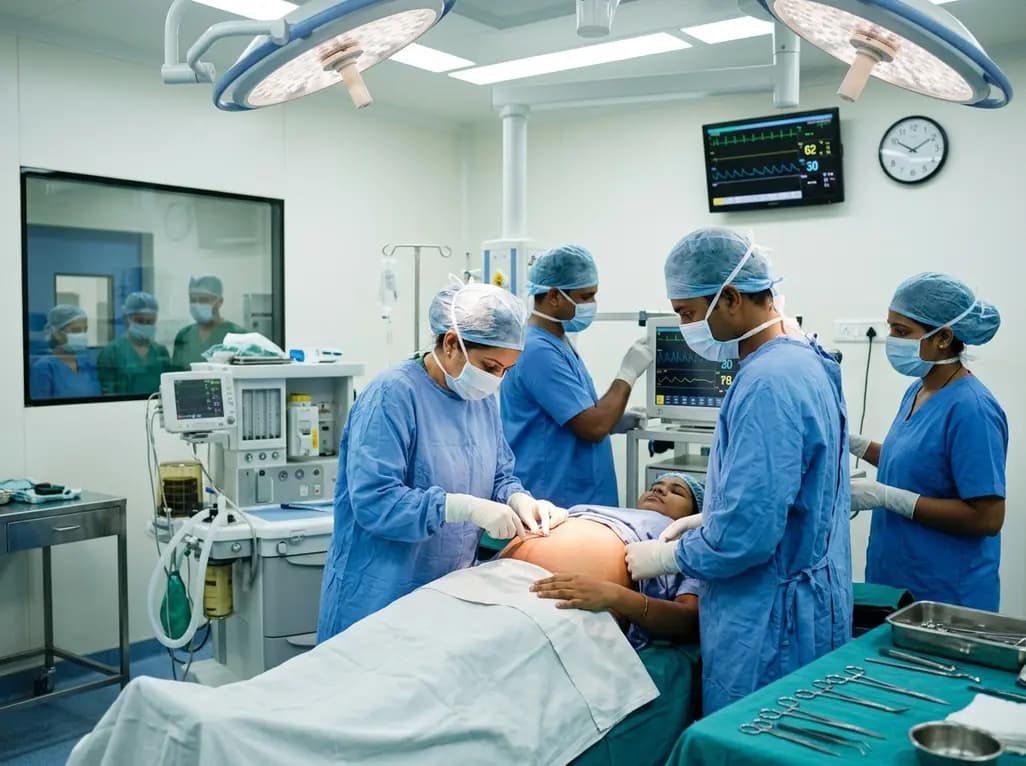
A deep dive into the National Family Health Survey (NFHS-6) data showing a sharp rise in surgical deliveries in Karnataka, the public-private healthcare divide, clinical risks of elective surgeries, and the urgent need for standardized medical guidelines to safeguard maternal and newborn health.
Today

A breakthrough study has utilized computational fluid dynamics to develop an optimized multi-stage drainage cannula for VA ECMO. By refining side-hole placement and angles, the new design significantly reduces stagnant blood volumes and increases flow efficiency, potentially lowering the risk of thrombosis.
Today

Perilunate dislocations are challenging orthopedic emergencies. This article explores a novel 4-anchor suture tape internal bracing technique that eliminates the need for K-wire retention, facilitating earlier recovery and excellent long-term functional outcomes as demonstrated in a recent clinical case.
Today

An international panel of experts has officially recognized fatty pancreas disorder as a distinct disease in the Melbourne Consensus. Learn about its diagnostic criteria using MRI, its pathophysiological association with type 2 diabetes and cancer, and evidence-based lifestyle and pharmacological interventions.
Today
