.webp&w=384&q=75)

Loading, please wait...
Loading, please wait...

The recent surge in oncology research highlights the necessity for tumor microbiome study standards to ensure data integrity. While scientists have identified diverse microbial species in human tumors using bioinformatic analyses, validating these findings remains a significant hurdle. Many reported microbial signals in atypical anatomical sites may actually stem from external sources rather than the tumor environment itself. Consequently, the medical community must demand higher rigor to distinguish between genuine biological signatures and procedural noise.
Tumor tissues typically represent low-biomass environments, meaning they contain very little microbial DNA relative to human DNA. This imbalance makes samples highly susceptible to contamination during collection, storage, and processing. Furthermore, researchers have noted that microbial reference genomes themselves can contain human sequences. This database contamination often leads to the misclassification of human reads as microbial signals. Therefore, without stringent controls, the results of these studies can lead to misleading clinical conclusions.
To improve the reliability of these findings, experts recommend a multifaceted validation approach. This includes the use of negative "blank" controls at every stage of the laboratory workflow to track potential contaminants. Additionally, advanced bioinformatic tools now help researchers decontaminate datasets by filtering out known laboratory artifacts and mislabeled database sequences. Moreover, cross-validating sequencing results with spatial imaging or culturing techniques adds a necessary layer of biological confirmation. Adhering to these tumor microbiome study standards ensures that the field moves toward reproducible and clinically relevant insights.
Standardized reporting is not just a technical requirement; it is a clinical necessity. By adopting established checklists, such as the STORMS (STrengthening the Reporting of Microbiome Studies) guidelines, researchers provide the transparency needed for peer review and clinical translation. These efforts help clinicians determine which microbial associations are truly actionable in cancer diagnostics and personalized therapy. Ultimately, raising the bar for evidence will protect the integrity of oncology research and improve patient outcomes.
Contamination from reagents, handling, or even human DNA in microbial databases can create false-positive results. This causes researchers to identify microbes that were never actually present in the tumor tissue.
Rigorous standards ensure that the microbial signatures reported in literature are accurate. This accuracy is vital when developing new diagnostic biomarkers or microbiome-based cancer therapies.
Researchers can use bioinformatic frameworks like PRISM or Conterminator to identify and remove contaminants from low-biomass sequencing data, leading to more reliable host-microbe signatures.
Disclaimer: This content is for informational and educational purposes only. It is not intended as medical advice or a substitute for professional clinical judgment. Refer to the latest local and national guidelines for clinical practice.
References
Salzberg SL et al. Setting higher standards for reports of microbial species in human cancers. Nat Cancer. 2026 Feb 19. doi: 10.1038/s43018-026-01121-6. PMID: 41714823.
Ghaddar B et al. Reliable detection of Host-Microbe Signatures in cancer using PRISM. Cancer Cell. 2026 Feb 5. doi: 10.1016/j.ccell.2026.01.007.
Mirzayi C et al. Reporting guidelines for human microbiome research: the STORMS checklist. Nat Med. 2021 Nov;27(11):1885-1892. doi: 10.1038/s41591-021-01552-x.

Read summarized clinical updates, watch expert medical content, and earn CME certifications right from your smartphone.
Open your smartphone camera to scan and install.





Experts call for higher rigor in tumor microbiome studies to address data contamination and improve clinical relevance in oncology....
8 months ago

India is advancing preventive healthcare by integrating genomics, artificial intelligence, and quantum technologies. With the SANGAM programme sequencing one million Indian genomes, clinicians can unlock personalized therapies, detect cardiometabolic risks early, and curb the burden of diabetes and heart disease.
Today
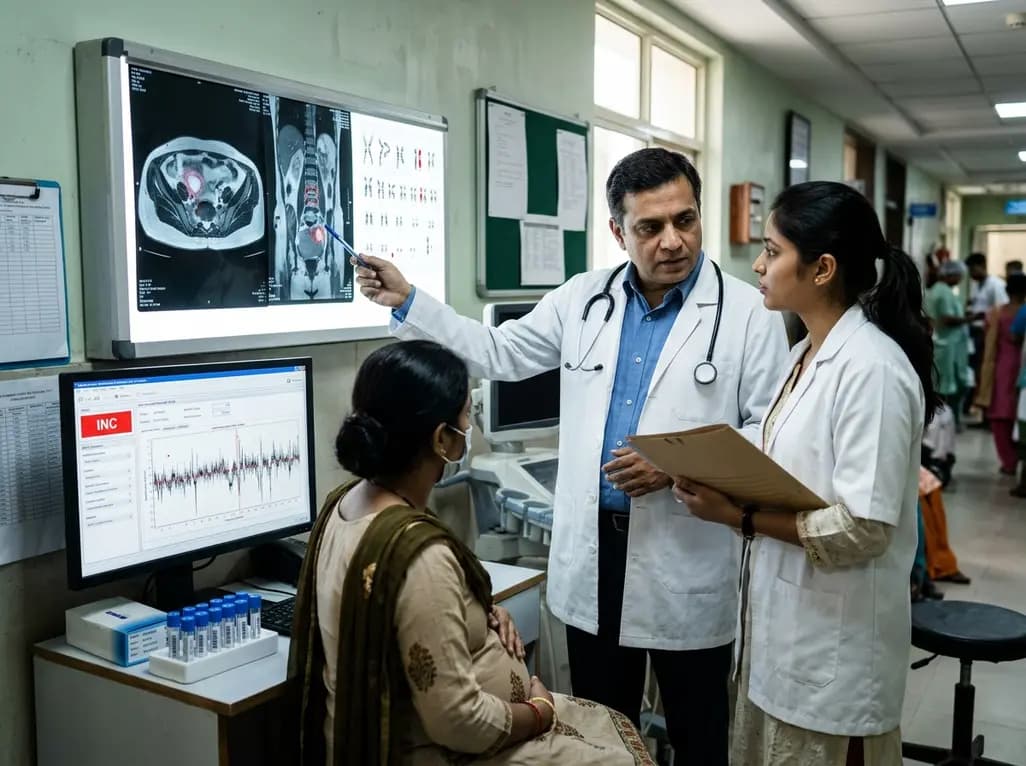
Occult maternal malignancy accounts for 3.82% of persistent unreportable NIPT results with genomic noise. Multiple chromosomal aberrations, notably on chromosome 18, warrant thorough oncological evaluation and whole-body MRI to ensure timely maternal diagnosis while preserving fetal care.
Today
This article reviews the forensic and clinical complexities of acute myocarditis arising on left ventricular hypertrophy in children, highlighting early diagnostic red flags and multidisciplinary postmortem autopsy protocols.
Today

A randomized controlled trial demonstrates that an eight-week dual-task training intervention significantly improves static and dynamic postural control over standard balance exercises in individuals with chronic ankle instability, addressing critical neurocognitive deficits during athletic and daily activities.
Today

A retrospective cohort study of 7,716 ICU patients from the MIMIC-IV database demonstrates that Gradient Boosting Decision Trees significantly outperform traditional SOFA scores in predicting in-hospital mortality among patients with sepsis and diabetes, with SHAP analysis providing clinical interpretability.
Today
