.webp&w=384&q=75)

Loading, please wait...
Loading, please wait...

Scientists from Japan have pioneered a new Tooth regeneration therapy that could change the future of dental care. This breakthrough targets the USAG-1 protein using a drug called TRG-035. Researchers at Kyoto University Hospital are currently conducting human clinical trials to verify the drug's safety and efficacy. Consequently, patients might eventually replace dentures with their own natural, biological teeth.
The medication works by inhibiting the USAG-1 protein in the jaw. Normally, this protein acts as a biological \"stop sign\" that prevents the body from growing extra teeth. However, blocking this signal reactivates dormant tooth buds. These buds are the embryonic structures responsible for tooth formation. Therefore, the treatment effectively tells the body to restart its natural growth process. Doctors administer TRG-035 via an intravenous injection to ensure systemic delivery.
Earlier tests on animals showed remarkable success across different species. Specifically, mice, ferrets, and dogs all successfully regrew missing teeth after receiving the treatment. Furthermore, researchers noted no serious adverse effects during these animal experiments. These consistent results provided a strong foundation for the current human trials. Currently, the Phase 1 study involves 30 healthy adults who are missing at least one tooth. Researchers are monitoring how the body metabolizes the drug to establish the most effective dosage.
While the initial results look promising, several challenges remain. For instance, regulators like the FDA require extensive proof of long-term safety before approving the drug. Additionally, scientists must ensure that new teeth grow in the correct position within the jaw. Nevertheless, experts believe this innovation could reach the general public by 2030. This shift marks a move away from artificial substitutes toward biological restoration.
Q1: Who can benefit from this tooth regeneration drug?
Initial trials focus on adults with missing teeth and children with congenital tooth agenesis. Future applications may expand to geriatric patients and those with dental injuries.
Q2: When will the TRG-035 treatment be available for the public?
Scientists project that the drug could become commercially available by 2030, provided future clinical trials confirm its safety and efficacy.
Q3: Is the procedure invasive?
No, the treatment involves a simple intravenous injection rather than complex oral surgery required for traditional implants.
Disclaimer: This content is for informational and educational purposes only. It does not constitute medical advice or replace professional judgment. Refer to the latest local and national guidelines for clinical practice.
References

Read summarized clinical updates, watch expert medical content, and earn CME certifications right from your smartphone.
Open your smartphone camera to scan and install.





Scientists develop TRG-035, a new drug targeting the USAG-1 protein to enable natural tooth regeneration, currently in human clinical trials at Kyoto Univer...
5 months ago
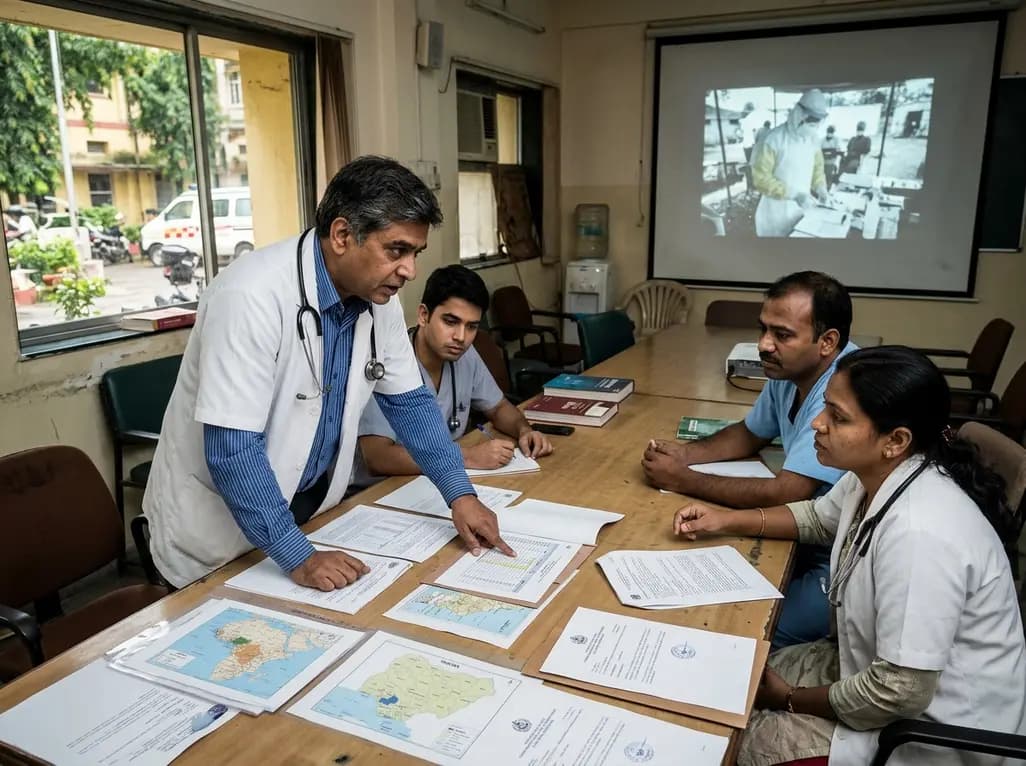
Following Nigeria's first recorded Ebola case linked to regional travel, the Africa CDC has convened an emergency ministerial summit. This alert underscores critical clinical priorities for healthcare professionals, including differentiating early viral infection from malaria, implementing barrier nursing, and triage.
Today

Leucine Rich Bio has introduced South Asia's first comprehensive vaginal microbiome test, BugSpeaks. By profiling microbial dysbiosis, pathogens, and antimicrobial resistance, this next-generation diagnostic platform provides clinicians with deeper insights into recurrent infections, fertility, and reproductive health.
Today

Review how tailored exercise programs benefit frail older patients with heart failure. Explore pathophysiological mechanisms, individualized training prescriptions, and strategies to overcome adherence barriers in clinical practice.
Today

This comparative study evaluates posterior labral tears with and without glenohumeral instability, highlighting distinct demographic patterns, MRI underestimation in stable shoulders, and successful arthroscopic repair outcomes.
Today

A clinical study demonstrates that early intervention with tocilizumab, either as monotherapy or bridged with corticosteroids, achieves significant proptosis reduction and resolves active inflammation in treatment-naive thyroid eye disease.
Today
