.webp&w=384&q=75)

Loading, please wait...
Loading, please wait...

Achieving a pathological complete response (pCR) significantly improves the prognosis for patients with triple-negative breast cancer (TNBC). Clinicians are increasingly interested in the TNBC neoadjuvant chemotherapy response because it often varies between the primary tumor and the lymph nodes. A recent systematic review highlights these differences, offering insights that could eventually change surgical management for this aggressive subtype. Specifically, the researchers compared how the breast and axillary lymph nodes react to treatment before surgery.
The systematic review found that nodal pathological complete response (NpCR) occurs more frequently than breast pathological complete response (BpCR) in TNBC patients. For instance, the mean prevalence of BpCR was 32%, while NpCR reached 38.3%. Interestingly, no study reported higher breast response compared with nodal response. This consistent trend suggests that the axilla might be more sensitive to chemotherapy than the primary breast tumor in TNBC cases. Therefore, evaluating these specific response patterns is essential for personalizing patient care.
Currently, surgical evaluation of the axilla remains a mandatory part of breast cancer staging and treatment. However, the higher NpCR rates observed in the TNBC neoadjuvant chemotherapy response data suggest a potential path toward omitting axillary surgery in the future. If clinicians can reliably predict which patients have cleared nodal disease, they might reduce surgical morbidity. Furthermore, identifying predictive biomarkers will be vital to ensure that omitting surgical evaluation does not compromise patient safety or long-term outcomes.
In conclusion, the discrepancy between breast and nodal responses provides a foundation for future clinical trials. Although tumor subtype is a major driver, other biological factors likely influence these patterns. Consequently, ongoing research continues to refine how we manage TNBC to maximize survival while minimizing invasive procedures.
Yes, research indicates that lymph nodes often show a higher rate of pathological complete response than the primary breast tumor after neoadjuvant chemotherapy.
Because the nodal response is often more favorable, researchers are exploring whether certain patients can safely avoid invasive axillary surgery after chemotherapy.
Disclaimer: This content is for informational and educational purposes only and does not constitute medical advice or a professional relationship. Refer to the latest local and national guidelines for clinical practice.
References
1. Cristófalo MM et al. Neoadjuvant Chemotherapy in Triple Negative Breast Cancer: A Systematic Review of Breast and Node Pathologic Response. J Surg Oncol. 2026 Feb 15. doi: 10.1002/jso.70213. PMID: 41691697.
2. Kim J et al. Assessing Axillary Pathologic Complete Response in Triple-Negative Breast Cancer. 2024 San Antonio Breast Cancer Symposium. Abstract #SESS-1044.
3. De Graaf M et al. Pathological complete response and survival after neoadjuvant chemotherapy in patients with stage I TNBC: a registry-based study. ESMO Open. 2025 Dec 5;10(12):105923. doi: 10.1016/j.esmoop.2025.105923.

Read summarized clinical updates, watch expert medical content, and earn CME certifications right from your smartphone.
Open your smartphone camera to scan and install.





A systematic review reveals that nodal pathologic response is more frequent than breast response in TNBC patients following neoadjuvant chemotherapy....
8 months ago

Explore vital recurrent stroke predictors in lacunar stroke patients managed with intensive blood pressure lowering. This analysis examines trial findings from SPS3 to uncover residual vascular risks, metabolic factors, and targeted secondary prevention strategies for high-risk neurological patients.
Today
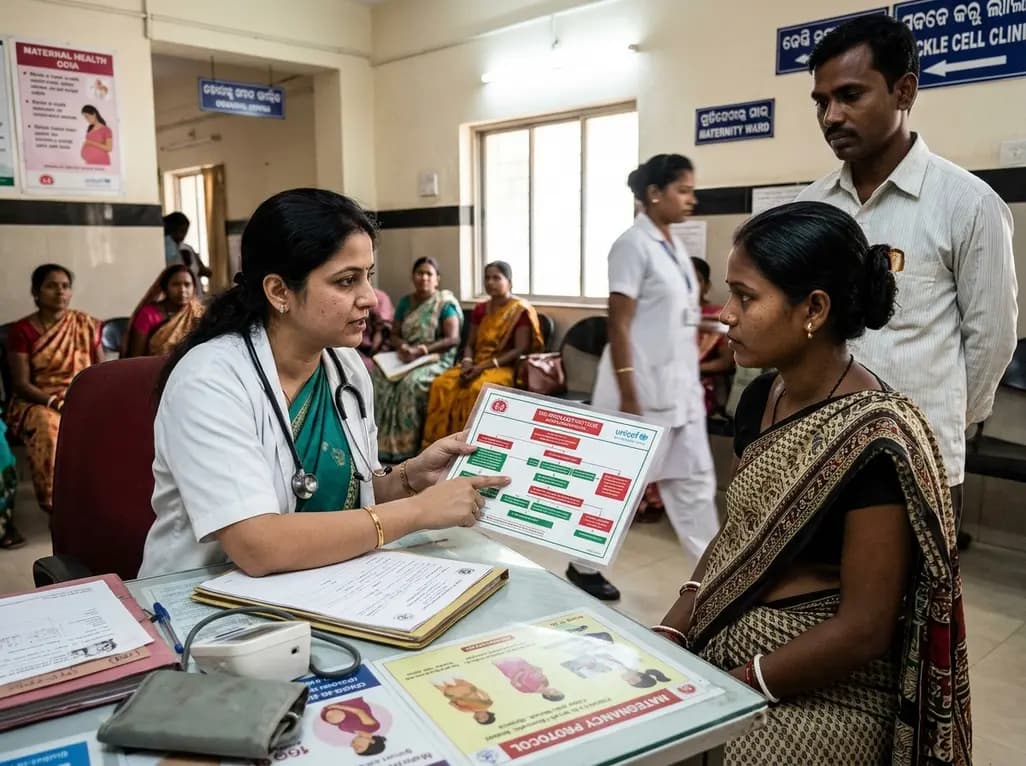
Odisha has established India's first state-level clinical protocol specifically tailored for pregnant women with sickle cell disease. Developed with NHM and UNICEF, the framework provides structured antenatal screening, crisis mitigation, standardized referral pathways, and specialized interdisciplinary care.
Today

The Directorate General of Health Services directs Indian states to halt the hazardous reuse and reprocessing of single-use medical devices. Discover regulatory implications under the Drugs and Cosmetics Act, critical infection risks, legal liabilities, and operational changes required across clinical specialties.
Today

Mitochondria-targeted nanoparticles self-assembled from EGCG and L-glutamic acid effectively restore mitochondrial homeostasis, suppress synovial inflammation, and attenuate chondrocyte senescence in osteoarthritis, offering a promising disease-modifying nanotherapy.
Today

India is advancing preventive healthcare by integrating genomics, artificial intelligence, and quantum technologies. With the SANGAM programme sequencing one million Indian genomes, clinicians can unlock personalized therapies, detect cardiometabolic risks early, and curb the burden of diabetes and heart disease.
Today
