.webp&w=384&q=75)

Loading, please wait...
Loading, please wait...

Recent clinical evidence highlights the practical application of Teplizumab for Type 1 Diabetes in adult patients. A recent study detailed the first Italian experience using this immunotherapy under a compassionate use program. Specifically, researchers focused on three women with Stage 2 disease to evaluate safety and early outcomes outside formal clinical trials.
The 14-day treatment course proved overall well-tolerated. Interestingly, although some patients developed transient lymphopenia and mild liver enzyme elevations, these issues resolved without intervention. One patient experienced a mild cytokine-release syndrome but required only supportive care. Furthermore, all participants maintained stable glycemic control and preserved beta-cell function during the 3-month follow-up. These results mirror findings from pivotal trials while confirming feasibility in an academic hospital setting.
Successful administration of this immunotherapy requires a structured team. This multidisciplinary group should include endocrinologists, anesthesiologists, and psychologists. Consequently, this approach optimizes patient engagement and manages psychological stress during the 14-day infusion period. Moreover, proper pre-medication and monitoring ensure that clinicians can address side effects immediately. Therefore, integrating diverse specialties remains crucial for the success of disease-modifying therapies in presymptomatic diabetes.
Clinicians typically recommend Teplizumab for adults and children aged 8 years and older with Stage 2 Type 1 Diabetes. This stage involves the presence of two or more islet autoantibodies and abnormal blood sugar levels without clinical symptoms.
Patients often experience a temporary drop in white blood cell counts, mild skin rashes, or cytokine-release syndrome. However, these side effects are usually manageable with standard medical care and resolve shortly after treatment.
Teplizumab acts as an anti-CD3 monoclonal antibody. Specifically, it modulates the T-cells responsible for destroying insulin-producing beta cells. By doing so, it buys patients significant time before they require daily insulin therapy.
Disclaimer: This content is for informational and educational purposes only. It does not constitute medical advice or substitute professional consultation. Refer to the latest local and national guidelines for clinical practice.
References

Read summarized clinical updates, watch expert medical content, and earn CME certifications right from your smartphone.
Open your smartphone camera to scan and install.





A clinical study explores the real-world application of Teplizumab for Stage 2 Type 1 Diabetes, emphasizing a multidisciplinary approach for patient safety....
7 months ago

An observational study from the NIH All of Us Research Program reveals that adding a multi-ancestry polygenic risk score to machine learning models provides only modest improvements in predicting adult weight gain, underscoring the enduring significance of routine clinical and lifestyle factors.
Today

A study in JAMIA Open shows lightweight open-source reasoning LLMs achieve up to 95% sensitivity and accelerate evidence synthesis screening by nearly twentyfold, presenting a cost-effective, scalable AI solution for biomedical research and systematic reviews.
Today
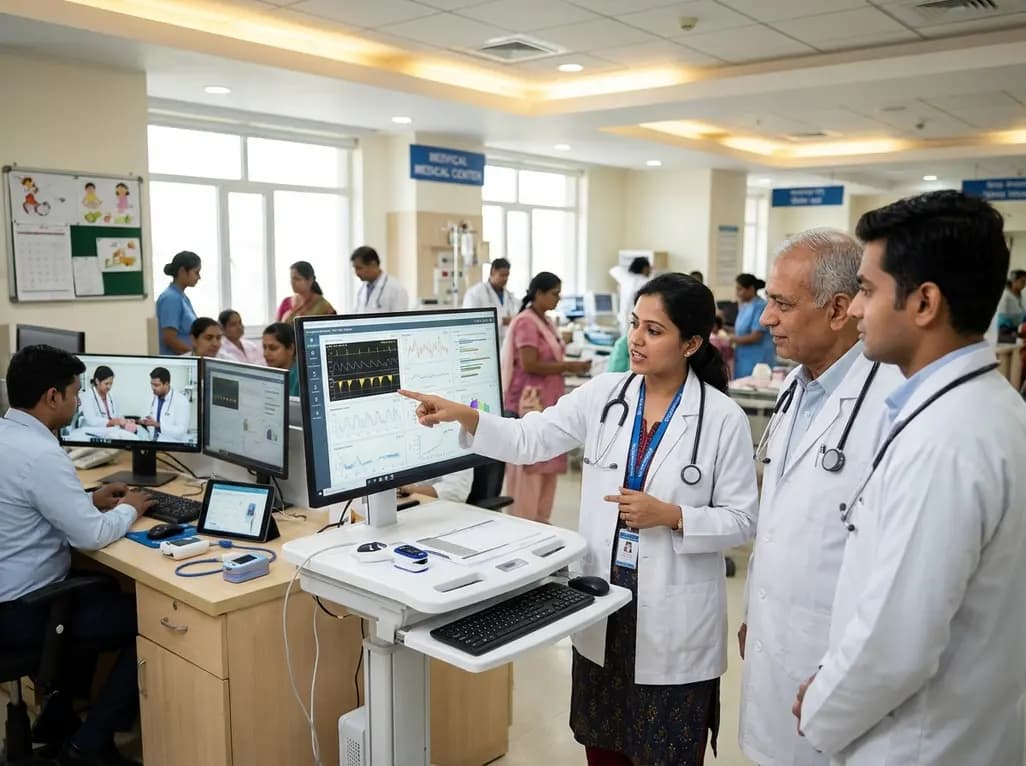
A landmark study details how an enterprise pediatric remote patient management model expanded from a single cardiology pilot to 16 diverse specialty programs by combining centralized digital operations with specialty clinical leadership.
Yesterday

A comparative review of tension band wiring and intramedullary screw fixation in thumb metacarpophalangeal arthrodesis, evaluating union rates, hardware complications, and clinical outcomes.
Yesterday
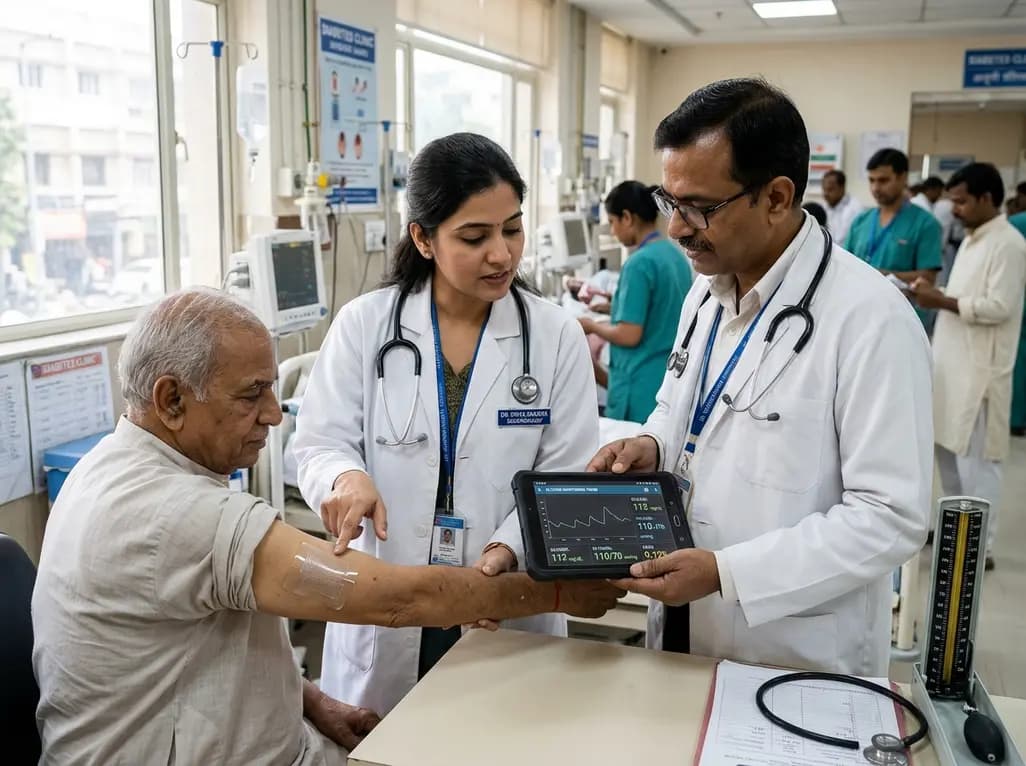
A breakthrough ultrathin multimodal sensor decouples physical hemodynamic monitoring from disposable electrochemical calibration, achieving long-term wearable glucose prediction with 81.36% accuracy and a 9.12% MARD. This offers a robust, drift-free solution for outpatient metabolic surveillance.
Yesterday
