.webp&w=384&q=75)

Loading, please wait...
Loading, please wait...
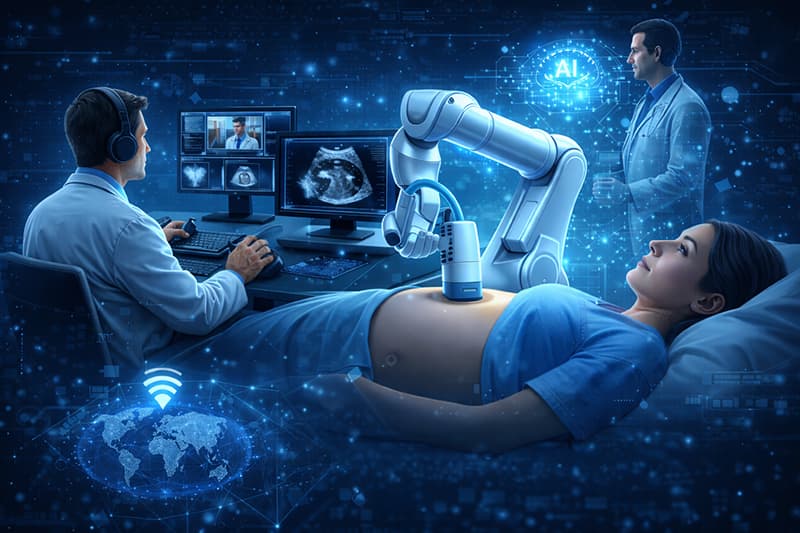
India's healthcare landscape recently witnessed a historic breakthrough in remote diagnostics. Union Minister Jitendra Singh showcased a Tele-Robotic Ultrasound system. This system successfully connected AIIMS New Delhi to the Maitri Research Station in Antarctica. Consequently, this 12,000-kilometer link proves that geographical barriers no longer limit specialist care.
IIT Delhi and AIIMS New Delhi developed this indigenous technology in collaboration with polar research centers. The system uses a robotic arm with six degrees of freedom. This specific design replicates the precise hand movements of an expert sonographer. Furthermore, the hardware includes force-sensing safety features to protect patients during examinations. Because the system has less than a one-second delay, it provides real-time and reliable imaging. Therefore, clinicians can perform emergency assessments with confidence.
The system supports critical diagnostic tasks such as FAST scans and cardiac assessments. It also allows for detailed abdominal organ evaluation and trauma screening. Moreover, this technology is essential for extreme environments where medical evacuation is costly. Experts can now determine if a patient requires immediate transfer or local care. Additionally, the system is robust enough for deployment in disaster zones and rural health centers. This scalability helps bridge the divide between urban and rural specialist care.
Q1: What is the maximum distance covered by this tele-robotic system?
The system successfully linked Delhi to Antarctica, covering over 12,000 kilometers with minimal latency.
Q2: What types of medical scans can be performed using this technology?
Clinicians can perform FAST scans, abdominal organ evaluations, cardiac assessments, and trauma screenings.
Q3: How does the system ensure patient safety during remote use?
The robotic arm features force-sensing safety tools that replicate the operator's touch while preventing excessive pressure.
Disclaimer: This content is for informational and educational purposes only. It does not constitute medical advice or replace professional judgment. Refer to the latest local and national guidelines for clinical practice.
References

Read summarized clinical updates, watch expert medical content, and earn CME certifications right from your smartphone.
Open your smartphone camera to scan and install.





India launches a tele-robotic ultrasound system linking Delhi to Antarctica, enabling real-time remote diagnostics for trauma, cardiac, and abdominal scans....
8 months ago
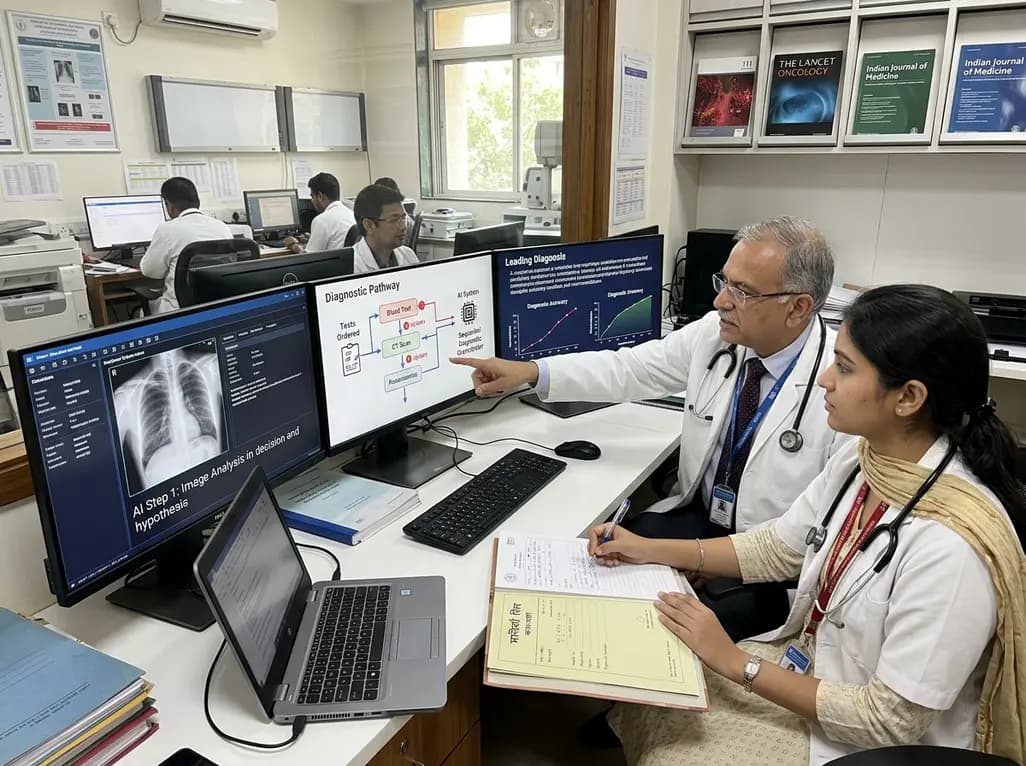
A breakthrough peer-reviewed study demonstrates that a sequential AI diagnosis system can mirror real-world clinical reasoning. By ordering stepwise tests and updating hypotheses dynamically, this multi-agent orchestrator achieved superior diagnostic accuracy while reducing investigative costs.
Today

A prenatal case highlights severe glutaric acidemia type II presenting as bilateral hyperechoic cystic kidneys at 18 weeks. Whole-exome sequencing revealed a novel homozygous ETFDH frameshift variant, demonstrating the power of rapid genetic testing in fetal renal anomalies.
Today

Review how tailored exercise programs benefit frail older patients with heart failure. Explore pathophysiological mechanisms, individualized training prescriptions, and strategies to overcome adherence barriers in clinical practice.
Yesterday

This comparative study evaluates posterior labral tears with and without glenohumeral instability, highlighting distinct demographic patterns, MRI underestimation in stable shoulders, and successful arthroscopic repair outcomes.
Yesterday

A clinical study demonstrates that early intervention with tocilizumab, either as monotherapy or bridged with corticosteroids, achieves significant proptosis reduction and resolves active inflammation in treatment-naive thyroid eye disease.
Yesterday
