.webp&w=384&q=75)

Loading, please wait...
Loading, please wait...

Tele-rehabilitation for knee osteoarthritis is becoming a vital tool in modern musculoskeletal care. Logistical barriers often prevent patients from attending traditional face-to-face physiotherapy sessions. Consequently, researchers are exploring digital solutions to maintain high-quality care. Specifically, a recent randomized controlled trial evaluated a 12-week program that integrated video-conferencing and wearable motion sensors. This study compared the digital approach with conventional face-to-face physiotherapy to determine its effectiveness.
Notably, thirty-five participants with radiographic knee osteoarthritis participated in the study. The researchers assigned sixteen individuals to the tele-rehabilitation group and nineteen to the conventional group. Both cohorts followed a structured exercise regimen for three months. Importantly, the results showed that both groups improved significantly in pain and functional scores. Furthermore, these benefits persisted during the six-month follow-up period. As a result, this suggests that wearable technology provides a reliable alternative to clinic visits.
Wearable motion sensors offer real-time feedback, ensuring patients perform exercises correctly at home. Additionally, video-conferencing allows for expert supervision without the need for travel. Therefore, this model addresses the accessibility challenges faced by many patients. Moreover, the comparable outcomes indicate that physicians can confidently recommend digital platforms. Ultimately, integrating these tools into practice may improve patient adherence and long-term joint health.
Yes, research shows that tele-rehabilitation programs with wearable sensors provide clinical improvements in pain and function comparable to conventional physiotherapy.
Wearable sensors provide real-time feedback on movement accuracy. Consequently, they help patients perform exercises safely and effectively at home.
Disclaimer: This content is for informational and educational purposes only. It is not intended to be a substitute for professional medical advice, diagnosis, or treatment. Always seek the advice of your physician or other qualified health provider with any questions you may have regarding a medical condition. Refer to the latest local and national guidelines for clinical practice.
References
1. Cai C et al. An assessor-blinded randomized controlled trial comparing a tele-rehabilitation program with wearable technology to conventional face-to-face physiotherapy in patients with knee osteoarthritis. Physiother Theory Pract. 2026 Feb 21. doi: 10.1080/09593985.2026.2635044. PMID: 41723580.
2. Kairy D, et al. A systematic review of clinical outcomes, clinical process, healthcare utilization and costs associated with telerehabilitation. Digit Health. 2023.
3. Richmond T, et al. Effectiveness of telerehabilitation for musculoskeletal conditions: A systematic review and meta-analysis. J Physiother. 2022.

Read summarized clinical updates, watch expert medical content, and earn CME certifications right from your smartphone.
Open your smartphone camera to scan and install.





A randomized trial shows tele-rehabilitation using wearable sensors and video-conferencing is as effective as conventional physiotherapy for knee osteoarthr...
8 months ago
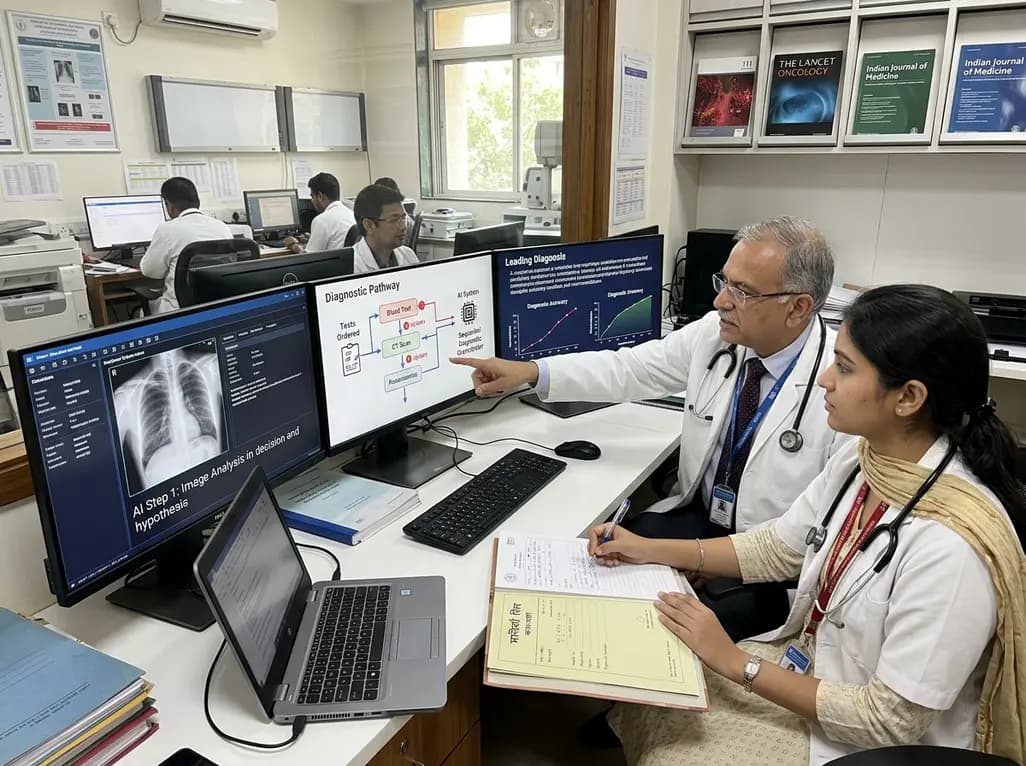
A breakthrough peer-reviewed study demonstrates that a sequential AI diagnosis system can mirror real-world clinical reasoning. By ordering stepwise tests and updating hypotheses dynamically, this multi-agent orchestrator achieved superior diagnostic accuracy while reducing investigative costs.
Today

A prenatal case highlights severe glutaric acidemia type II presenting as bilateral hyperechoic cystic kidneys at 18 weeks. Whole-exome sequencing revealed a novel homozygous ETFDH frameshift variant, demonstrating the power of rapid genetic testing in fetal renal anomalies.
Today

Review how tailored exercise programs benefit frail older patients with heart failure. Explore pathophysiological mechanisms, individualized training prescriptions, and strategies to overcome adherence barriers in clinical practice.
Yesterday

This comparative study evaluates posterior labral tears with and without glenohumeral instability, highlighting distinct demographic patterns, MRI underestimation in stable shoulders, and successful arthroscopic repair outcomes.
Yesterday

A clinical study demonstrates that early intervention with tocilizumab, either as monotherapy or bridged with corticosteroids, achieves significant proptosis reduction and resolves active inflammation in treatment-naive thyroid eye disease.
Yesterday
