.webp&w=384&q=75)

Loading, please wait...
Loading, please wait...

Effective healthcare financing is vital for managing the global tuberculosis crisis. Specifically, TB payment risk adjustment ensures that hospitals receive fair compensation for the varying complexities of patient care. Because drug-resistant tuberculosis (DR-TB) treatment is significantly more expensive than drug-susceptible (DS-TB) treatment, flat-rate reimbursement systems often fail to meet clinical needs. Consequently, researchers recently evaluated the impact of China's innovative diagnosis-intervention packet (DIP) system, which implemented risk-adjusted standards in 2022.
Researchers employed a quasi-experimental difference-in-differences design to analyze 8,465 patients. Furthermore, the findings revealed that this adjustment led to marginally significant reductions in total inpatient expenditure. More importantly, the results indicated a significant decrease in out-of-pocket expenses for TB patients. Additionally, treatment efficiency improved as the average length of stay was reduced. However, these financial and efficiency gains did not compromise the quality of care. Therefore, the study suggests that risk-adjusted models can better align hospital incentives with patient outcomes.
The implementation of risk-adjusted payments addresses the high economic burden of DR-TB. Since DR-TB involves longer treatment cycles and more expensive medications, a one-size-fits-all payment approach can lead to hospital financial strain. Instead, the DIP system's risk adjustment creates distinct reimbursement standards. Consequently, this prevents hospitals from avoiding high-risk patients. Moreover, the study showed that the reduction in out-of-pocket costs was particularly pronounced in the DR-TB subgroup. Thus, risk adjustment acts as a financial safety net for the most vulnerable patients.
For healthcare systems in countries like India, these findings are highly relevant. India currently faces one of the highest TB burdens globally and is transitioning toward more efficient health financing through schemes like AB-PMJAY. Because India is also adopting shorter, cost-effective regimens like BPaL and BPaLM, integrating risk adjustment into payment models could further optimize resource allocation. Indeed, aligning financial mechanisms with the clinical complexity of drug resistance is a critical step toward tuberculosis elimination.
Risk adjustment is essential because treating drug-resistant TB is significantly more expensive and complex than drug-susceptible TB. Without it, hospitals might face financial losses or avoid treating difficult cases to save costs.
By increasing the reimbursement standard for complex cases, the system reduces the financial burden on the patient. This study demonstrated a significant decrease in out-of-pocket spending following the implementation of risk-adjusted payments.
According to the study, risk adjustment did not compromise care quality. Instead, it improved efficiency by reducing the length of hospital stays without negatively impacting clinical outcomes.
Disclaimer: This content is for informational and educational purposes only and does not constitute medical advice or a professional recommendation. The information provided is based on clinical research and should not replace the judgment of a qualified healthcare professional. Refer to the latest local and national guidelines for clinical practice.
References
Zhao M et al. Impact of risk adjustment for drug-resistant types on tuberculosis patients' outcomes under China's innovative payment methods: a quasi-experimental study design. Infect Dis Poverty. 2026 Feb 15. doi: 10.1186/s40249-026-01423-y. PMID: 41691353.
ICMR–National Institute for Research in Tuberculosis. Economic evaluation of BPaL and BPaLM regimens for MDR/RR-TB in India. Indian Journal of Medical Research. 2025.
World Health Organization. Global Tuberculosis Report 2023.
"
Read summarized clinical updates, watch expert medical content, and earn CME certifications right from your smartphone.
Open your smartphone camera to scan and install.





A study on China's DIP system shows that risk-adjusting TB payments for drug resistance reduces patient out-of-pocket costs and improves hospital efficiency...
8 months ago

A retrospective cohort study of 7,716 ICU patients from the MIMIC-IV database demonstrates that Gradient Boosting Decision Trees significantly outperform traditional SOFA scores in predicting in-hospital mortality among patients with sepsis and diabetes, with SHAP analysis providing clinical interpretability.
Today
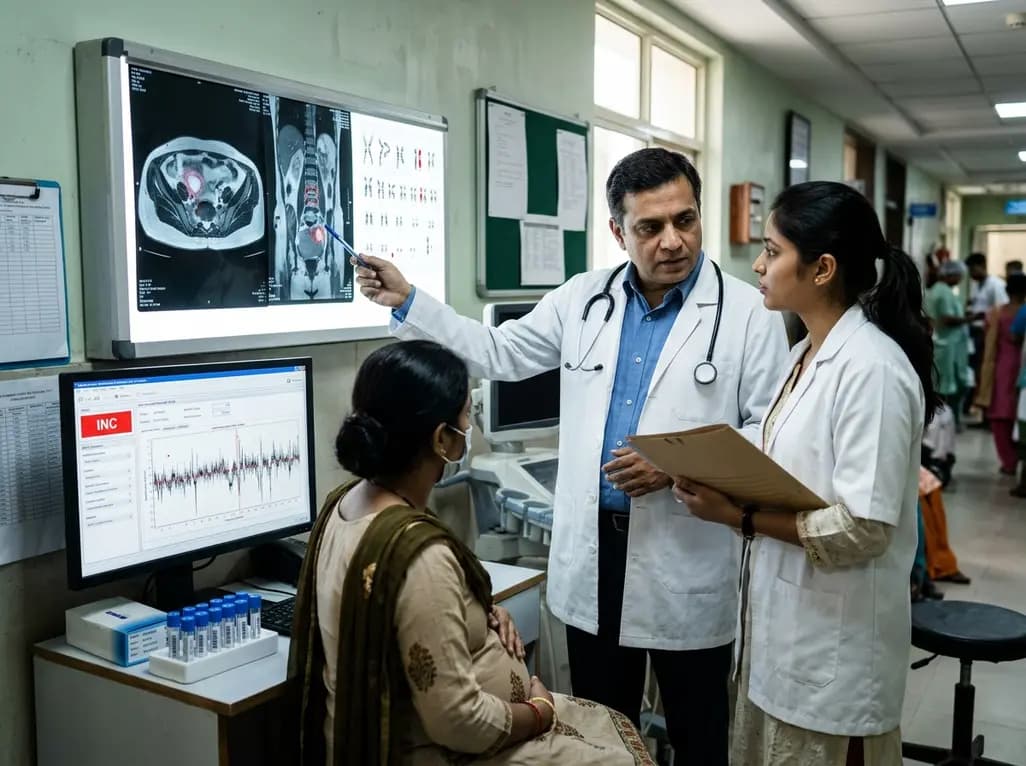
Occult maternal malignancy accounts for 3.82% of persistent unreportable NIPT results with genomic noise. Multiple chromosomal aberrations, notably on chromosome 18, warrant thorough oncological evaluation and whole-body MRI to ensure timely maternal diagnosis while preserving fetal care.
Today
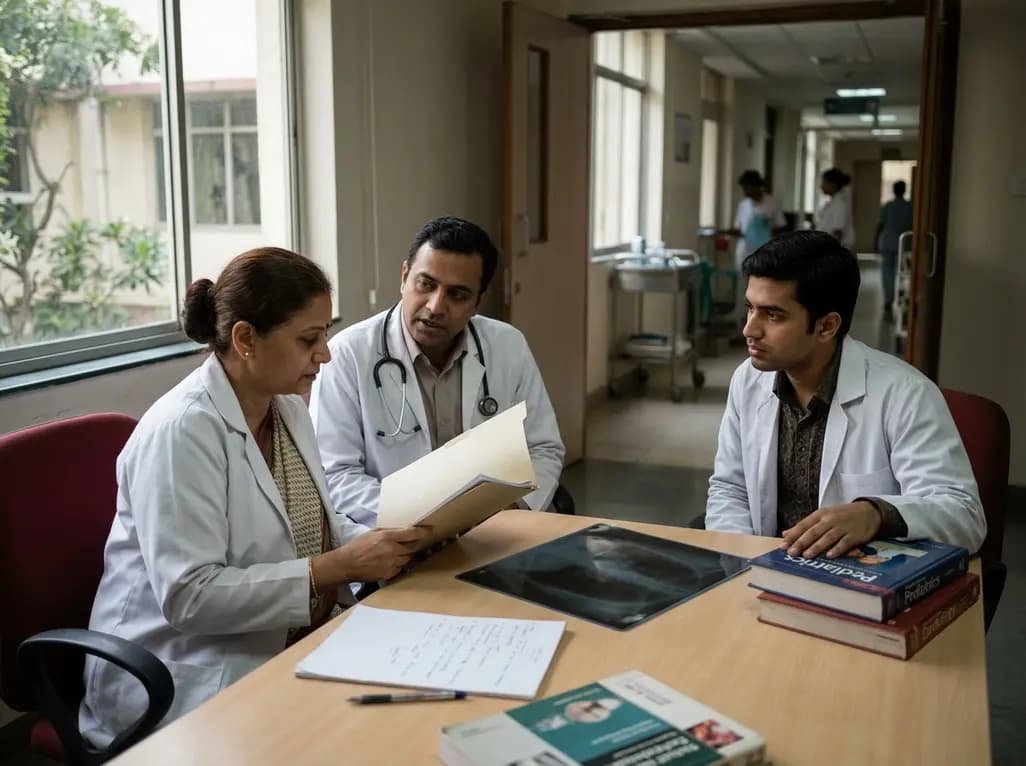
This article reviews the forensic and clinical complexities of acute myocarditis arising on left ventricular hypertrophy in children, highlighting early diagnostic red flags and multidisciplinary postmortem autopsy protocols.
Today

This comparative study evaluates posterior labral tears with and without glenohumeral instability, highlighting distinct demographic patterns, MRI underestimation in stable shoulders, and successful arthroscopic repair outcomes.
Yesterday

A clinical study demonstrates that early intervention with tocilizumab, either as monotherapy or bridged with corticosteroids, achieves significant proptosis reduction and resolves active inflammation in treatment-naive thyroid eye disease.
Yesterday
