.webp&w=384&q=75)

Loading, please wait...
Loading, please wait...

Physicians face a constant challenge in managing acute thrombotic events without causing systemic hemorrhage. Conventional agents like urokinase often have short half-lives and high off-target risks. Consequently, researchers are developing targeted thrombolysis strategies to improve clinical outcomes and patient safety. A recent study published in Advanced Science introduces a sophisticated, macrophage-mimicking microbubble system that selectively navigates to inflammatory thrombotic sites.
The research team engineered macrophages to overexpress the C-C chemokine receptor 2 (CCR2). They then used these cell membranes to wrap liposomes containing the drug urokinase and perfluoropropane gas. These biomimetic microbubbles, termed UK@CCR2/MBs, home in on thrombi by binding to monocyte chemoattractant protein-1 (MCP-1). This specific receptor-ligand interaction ensures that the drug accumulates exactly where it is needed most within the vasculature.
Upon reaching the target, localized low-frequency ultrasound triggers acoustic droplet vaporization. This process ruptures the microbubbles and releases the urokinase precisely at the clot site. Furthermore, the acoustic energy facilitates mechanical clot disruption, which significantly enhances the drug's fibrinolytic activity. Extensive in vivo evaluations in deep vein and carotid artery thrombosis models showed superior efficacy compared to standard systemic treatments.
Safety remains a primary concern in all vascular interventions. Fortunately, this platform demonstrated an excellent safety profile with minimal off-target effects and no significant bleeding complications. Therefore, this technology might transform how clinicians treat microcirculatory and large-vessel thrombosis. It represents a major step forward in creating non-invasive theranostic platforms for modern cardiovascular medicine.
Unlike systemic urokinase, UK@CCR2/MBs use macrophage membranes to target inflammatory markers (MCP-1) at the thrombus site. This localization dramatically reduces systemic drug exposure and associated bleeding risks.
Low-frequency ultrasound triggers the localized release of urokinase through acoustic droplet vaporization. Additionally, the ultrasound provides a \"sonothrombolysis\" effect that helps dissolve the fibrin matrix more efficiently.
Disclaimer: This content is for informational and educational purposes only and does not constitute medical advice or a substitute for professional healthcare consultation. Refer to the latest local and national guidelines for clinical practice.
References
Li B et al. Targeted Thrombolysis via CCR2-Engineered Macrophage-Mimicking Microbubbles Safely Ablates Venous, Arterial, and Microvascular Thrombosis. Adv Sci (Weinh). 2026 Mar 13. doi: 10.1002/advs.202524002. PMID: 41823073.
Wang X, et al. Targeted microbubbles combined with low-power focused ultrasound promote the thrombolysis of acute deep vein thrombosis. Front Physiol. 2022;13:951333.
Wang X, et al. Thrombus-Targeted Theranostic Microbubbles: A New Technology towards Concurrent Rapid Ultrasound Diagnosis and Bleeding-free Fibrinolytic Treatment of Thrombosis. Theranostics. 2016;6(5):726-738.

Read summarized clinical updates, watch expert medical content, and earn CME certifications right from your smartphone.
Open your smartphone camera to scan and install.





Researchers developed UK@CCR2/MBs, macrophage-mimicking microbubbles that use ultrasound to provide safe and precise targeted thrombolysis for vascular dise...
7 months ago

India is advancing preventive healthcare by integrating genomics, artificial intelligence, and quantum technologies. With the SANGAM programme sequencing one million Indian genomes, clinicians can unlock personalized therapies, detect cardiometabolic risks early, and curb the burden of diabetes and heart disease.
Today
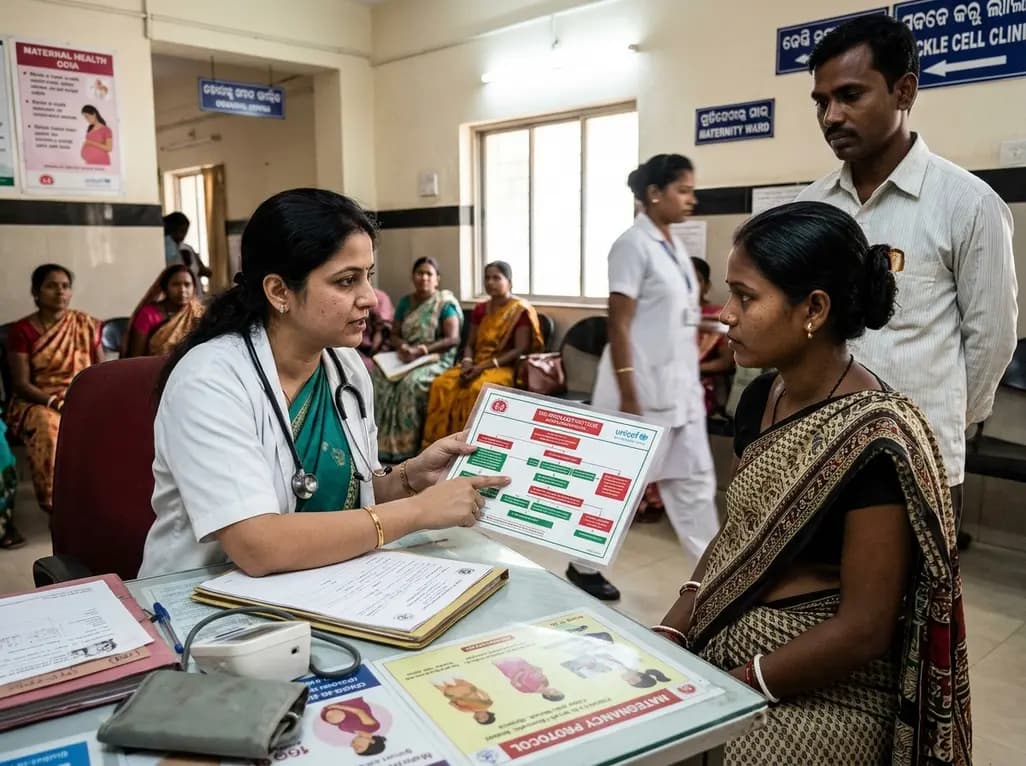
Odisha has established India's first state-level clinical protocol specifically tailored for pregnant women with sickle cell disease. Developed with NHM and UNICEF, the framework provides structured antenatal screening, crisis mitigation, standardized referral pathways, and specialized interdisciplinary care.
Today

This article reviews the forensic and clinical complexities of acute myocarditis arising on left ventricular hypertrophy in children, highlighting early diagnostic red flags and multidisciplinary postmortem autopsy protocols.
Today
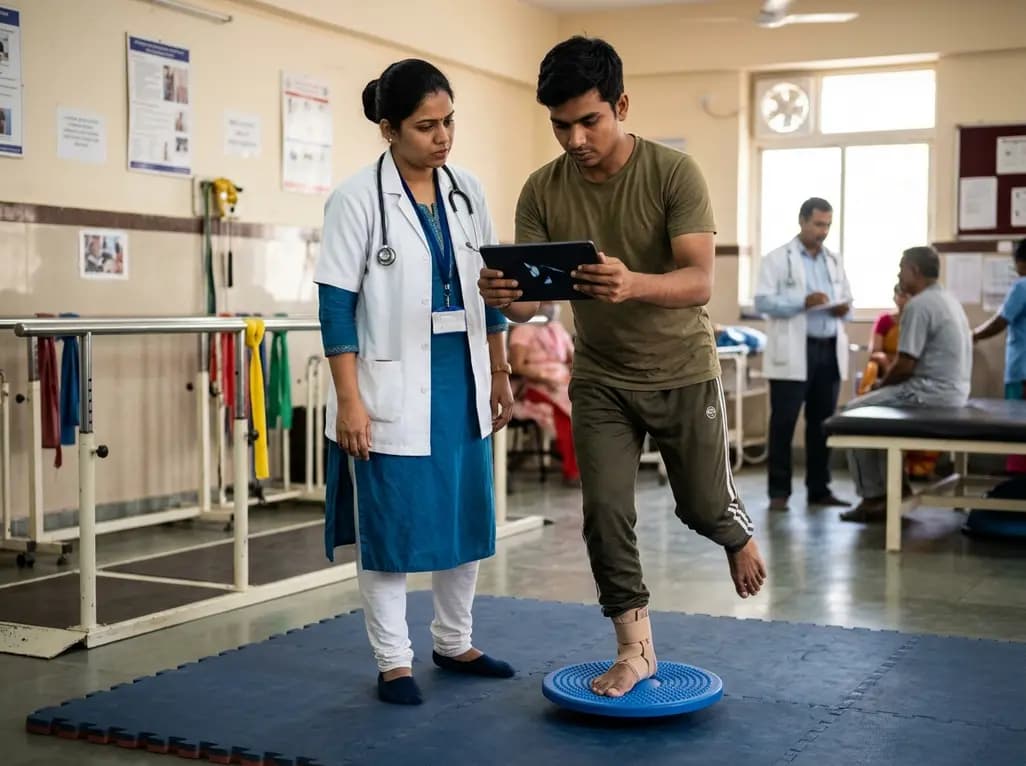
A randomized controlled trial demonstrates that an eight-week dual-task training intervention significantly improves static and dynamic postural control over standard balance exercises in individuals with chronic ankle instability, addressing critical neurocognitive deficits during athletic and daily activities.
Today

A retrospective cohort study of 7,716 ICU patients from the MIMIC-IV database demonstrates that Gradient Boosting Decision Trees significantly outperform traditional SOFA scores in predicting in-hospital mortality among patients with sepsis and diabetes, with SHAP analysis providing clinical interpretability.
Today
