.webp&w=384&q=75)

Loading, please wait...
Loading, please wait...

The T-ERAS strategy offers a pragmatic solution for improving postoperative recovery in healthcare environments with limited resources. By focusing on three essential components—early oral intake, early ambulation, and early urinary catheter removal—this protocol streamlines perioperative care. A recent cross-sectional study in Ethiopian public hospitals investigated how frontline providers perceive and implement these practices. While awareness of Enhanced Recovery After Surgery (ERAS) is high, system-level barriers continue to challenge consistent application.
Healthcare professionals generally recognize the clinical advantages of expedited recovery pathways. According to the study, approximately 80% of participants believe that these protocols significantly improve patient outcomes. Providers view the triple components as effective tools to reduce hospital stays and minimize postoperative complications. Specifically, 75% of surveyed surgeons, anesthetists, and nurses rated the individual elements of the T-ERAS strategy as highly effective. Consequently, there is a strong professional consensus favoring the transition from traditional care models to evidence-based recovery protocols.
Despite the high levels of acceptance, several obstacles prevent the routine use of ERAS principles. Resource limitations remain the most significant hurdle, cited by 85% of participants. Furthermore, 70% of providers pointed toward insufficient staff training as a primary concern. Resistance to changing established clinical habits and inadequate patient education also play roles in slowing adoption. However, the study highlights a promising trend: nearly 85% of workers expressed a firm willingness to adopt these practices permanently. Moreover, every participant indicated a desire for further training to refine their skills in perioperative management.
Sustainable scale-up of recovery protocols requires more than individual effort. It demands robust institutional support and the development of locally sensitive pathways. Strengthening hospital infrastructure and expanding specialized training programs are essential steps. By focusing on simplified, high-impact interventions like the T-ERAS strategy, hospitals in low-resource settings can bridge the gap between guideline recommendations and daily clinical practice. Ultimately, fostering a culture of multidisciplinary collaboration will be key to ensuring that every surgical patient benefits from optimized recovery standards.
The triple-component strategy focuses on early oral intake, early ambulation, and early urinary catheter removal to accelerate patient recovery after surgery.
Resource constraints and a lack of specialized training are the most frequently cited barriers to the consistent implementation of enhanced recovery protocols.
Yes, research shows that a vast majority (85%) of perioperative providers are willing to adopt these practices permanently if given the right support and training.
Disclaimer: This content is for informational and educational purposes only. It does not constitute professional medical advice, diagnosis, or treatment. Always seek the advice of your physician or other qualified healthcare provider with any questions you may have regarding a medical condition. Refer to the latest local and national guidelines for clinical practice.
References
1. Kifle F et al. Healthcare Workers' Acceptance and Willingness to Implement a Pragmatic Triple-Component Enhanced Recovery After Surgery Strategy (T-ERAS): A Cross-Sectional Study in Ethiopian Public Hospitals. World J Surg. 2026 Mar 22. doi: 10.1002/wjs.70319. PMID: 41866292.
2. Ljungqvist O, Scott M, Fearon KC. Enhanced Recovery After Surgery: A Review. JAMA Surg. 2017;152(3):292-298. doi:10.1001/jamasurg.2016.4952.
3. Shida D et al. Modified ERAS pathway for patients with obstructing colorectal cancer. World J Surg. 2017;41(8):2149-2155.
"
Read summarized clinical updates, watch expert medical content, and earn CME certifications right from your smartphone.
Open your smartphone camera to scan and install.





A study in Ethiopian public hospitals reveals high willingness but significant barriers to adopting the pragmatic triple-component ERAS (T-ERAS) protocol....
7 months ago

Novel glucose-responsive mPEG-PSA nanocarriers deliver insulin aspart on demand, achieving dual postprandial and basal glycemic control without hypoglycemia in diabetic models. This biomaterial breakthrough offers promising clinical implications for physiologic diabetes management.
Today
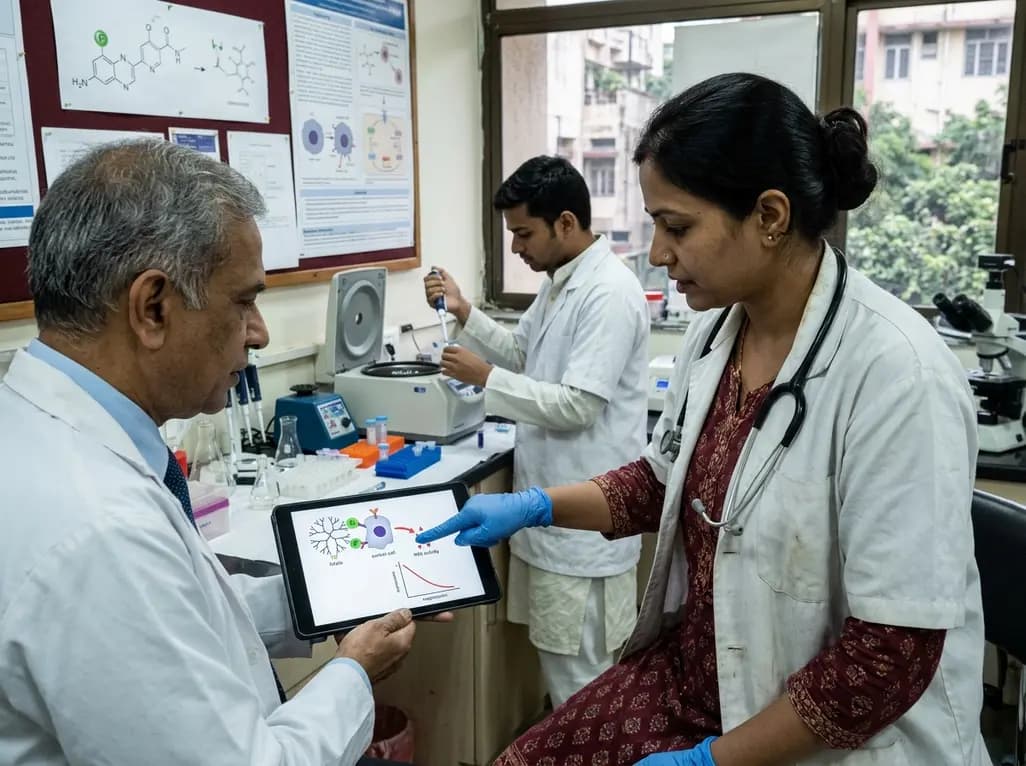
A novel folate-conjugated tecto-dendrimer nanoplatform successfully delivers siRNA to achieve targeted HK2 silencing, disrupting ovarian cancer glycolysis and suppressing lactate output.
Today
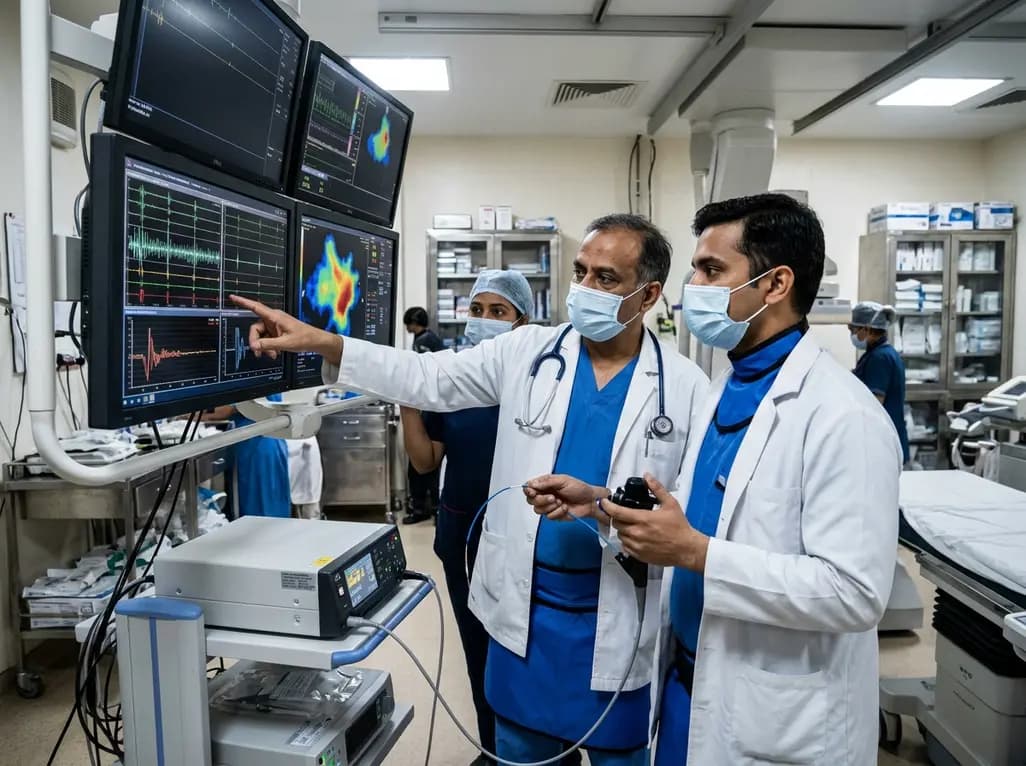
A comparative non-contact study reveals that high-power radiofrequency delivery with the QDOT MICRO catheter induces an artifactual contact force rise. Electrophysiologists must understand this power-dependent thermal and electrical phenomenon to avoid inadvertent catheter withdrawal and ineffective ablation.
Today

A novel proof-of-concept study presents a six-degree-of-freedom articulated manikin neck equipped with linear potentiometers. The system provides real-time kinematic motion feedback during cervical immobilisation, delivering sub-degree tracking accuracy to improve pre-hospital trauma training and patient safety.
Today

A retrospective comparative cohort study evaluated genitourinary safety in HFpEF between dapagliflozin and empagliflozin over six months. Rates of symptomatic UTI and asymptomatic bacteriuria showed no statistically significant differences, supporting comparable safety profiles across both SGLT2 inhibitors.
Today
