.webp&w=384&q=75)

Loading, please wait...
Loading, please wait...

Recent clinical data reveals significant shifts in syphilis testing trends across urban healthcare systems. While syphilis has re-emerged as a major public health challenge globally, laboratory data provides an objective view of the actual disease burden. This perspective is vital for clinicians in India, where sexually transmitted infection (STI) surveillance continues to evolve. Recent studies indicate that testing volumes are steadily increasing, yet infection rates show distinct geographic and demographic patterns.
A comprehensive analysis conducted between 2020 and 2024 highlights that while overall testing volumes have risen, the proportion of positive tests often remains stable across broader populations. However, this stability masks significant local variations. For instance, data from academic medical centers suggests that specific urban regions may demonstrate a two-fold higher positivity rate than others. Furthermore, clinicians have observed that demographic factors significantly influence these outcomes. Specifically, individuals identifying as Black or Hispanic, as well as men who have sex with men (MSM), frequently show higher positivity rates and high rapid plasma reagin (RPR) titers.
Moreover, the data indicates that older age groups are increasingly represented in new positive cases. This shift suggests that screening efforts must extend beyond traditionally targeted younger populations. Consequently, healthcare providers should consider the demographic heterogeneity of their local patient base when implementing screening protocols. In the Indian context, where the National AIDS Control Organisation (NACO) emphasizes integrated STI management, these findings reinforce the need for vigilant, routine testing in diverse clinical settings.
The persistence of high RPR titers in new patients suggests that many individuals are diagnosed at stages of high infectivity. Therefore, early detection through expanded testing remains the cornerstone of syphilis control. In addition, the use of automated treponemal testing has facilitated higher testing volumes, but clinicians must remain adept at interpreting both treponemal and non-treponemal results. Because syphilis can present with diverse clinical manifestations, keeping a high index of suspicion is essential.
Increased awareness, routine prenatal screening, and the integration of STI testing into general health checkups have driven testing volumes upward. Furthermore, the availability of automated laboratory platforms allows healthcare systems to process a higher number of samples efficiently.
Data consistently shows higher positivity rates among MSM, as well as Black and Hispanic populations in urban settings. However, recent trends also indicate a notable increase in cases among older adults and women of childbearing age, highlighting the need for broader screening.
High RPR titers usually indicate active, early-stage infection or a high bacterial load. Consequently, these patients are often highly infectious and require immediate treatment and partner notification to prevent further transmission.
Disclaimer: This content is for informational and educational purposes only. It is not intended as medical advice or a substitute for the professional judgment of a healthcare provider. Clinical decisions should be based on the individual patient's history and physical examination. Refer to the latest local and national guidelines for clinical practice.
References
Andy C et al. Trends in syphilis testing and infections in New York: insights into testing volume, positivity, and demographics. Sex Transm Dis. 2026 Apr 08. doi: 10.1097/OLQ.0000000000002328. PMID: 41949902.
World Health Organization. Global progress report on HIV, viral hepatitis and sexually transmitted infections, 2024.
National AIDS Control Organisation (NACO). National Guidelines for STI/RTI Management, India.

Read summarized clinical updates, watch expert medical content, and earn CME certifications right from your smartphone.
Open your smartphone camera to scan and install.





A study from 2020 to 2024 reveals shifting syphilis testing trends, emphasizing high positivity among specific demographics and the need for targeted screen...
6 months ago

A breakthrough ultrathin multimodal sensor decouples physical hemodynamic monitoring from disposable electrochemical calibration, achieving long-term wearable glucose prediction with 81.36% accuracy and a 9.12% MARD. This offers a robust, drift-free solution for outpatient metabolic surveillance.
Today

A clinical review of menopause and neurology highlights the neurobiological impacts of midlife hormonal shifts on cognition, epilepsy, migraine, multiple sclerosis, and stroke, emphasizing safe hormone therapy prescribing.
Today
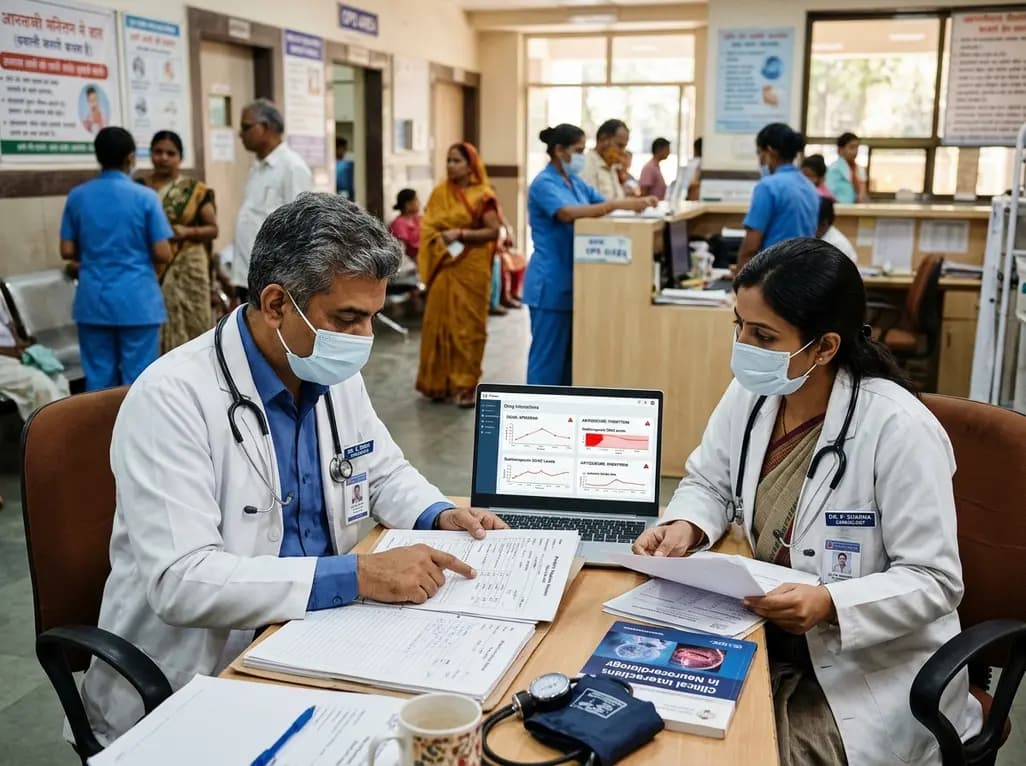
Co-administering antiseizure medications and DOACs frequently causes pharmacokinetic interactions, subtherapeutic drug levels, and thromboembolic failures. This review highlights enzyme induction risks, unpredictable outcomes with levetiracetam, and the vital role of therapeutic drug monitoring.
Today

A comparative review of tension band wiring and intramedullary screw fixation in thumb metacarpophalangeal arthrodesis, evaluating union rates, hardware complications, and clinical outcomes.
Today

Following regulatory scrutiny from FSSAI regarding promotional representations and lean muscle preservation claims, Dr. Reddy's Laboratories and Nestlé Health Science are currently reviewing the branding and marketing strategy for their joint nutritional supplement Celevida GLP+.
Today
