.webp&w=384&q=75)

Loading, please wait...
Loading, please wait...

Researchers are exploring new ways to tackle micronutrient deficiencies by fortifying popular foods with stinging nettle leaf powder. Stinging nettle, or Urtica dioica, is a nutrient-dense wild plant native to many parts of India. Therefore, integrating this plant into familiar snacks like Sev offers a viable strategy for improving public health. This study specifically focused on transforming blanched and dried leaves into a functional powder for food applications.
The fortification process significantly boosted the nutritional profile of the savoury snack. Consequently, a 7% addition of the powder was found to be the most acceptable to consumers. Furthermore, laboratory analysis confirmed a substantial increase in protein, fiber, and essential minerals such as iron and calcium. Moreover, the blanching process effectively reduced antinutritional factors like nitrates and oxalates.
Beyond basic nutrition, stinging nettle leaf powder provides various functional benefits. Specifically, it contains bioactive compounds that may help manage blood sugar levels and reduce inflammation. Additionally, the high fiber content supports digestive health. Because of these qualities, practitioners may consider recommending such fortified foods to patients looking for natural ways to enhance their mineral intake.
Yes, it is safe when processed correctly through blanching and drying. Blanching significantly reduces natural antinutrients like oxalates that could otherwise interfere with mineral absorption.
It is exceptionally high in iron and calcium compared to traditional grains. Therefore, it helps address common issues like anemia and poor bone health in vulnerable populations.
Disclaimer: This content is for informational and educational purposes only. It does not constitute professional medical advice, diagnosis, or treatment. Always seek the advice of your physician or other qualified health provider with any questions you may have regarding a medical condition. Refer to the latest local and national guidelines for clinical practice.
References
Dhyani S et al. Stinging nettle leaf powder: Functional, nutritional, antinutritional qualities and acceptability of a developed savoury snack. J Sci Food Agric. 2026 Mar 30. doi: 10.1002/jsfa.70620. PMID: 41913078.
Adhikari BM et al. Comparison of nutritional properties of Stinging nettle (Urtica dioica) flour with wheat and barley flours. Food Sci Nutr. 2016;4(3):356-363.
Jakubczyk K et al. Stinging nettle (Urtica dioica L.) - botanical characteristics, biochemical composition and health benefits. Pomeranian J Life Sci. 2015;61(2):191-198.

Read summarized clinical updates, watch expert medical content, and earn CME certifications right from your smartphone.
Open your smartphone camera to scan and install.





Study shows stinging nettle leaf powder boosts protein, iron, and calcium in traditional Indian snacks while remaining highly acceptable to consumers....
6 months ago

A landmark 12-year longitudinal study highlights significant reductions in opioid prescribing for nonspecific low back pain following clinical guidelines and prescription monitoring systems, emphasizing non-opioid multimodal pain care.
Today

A study in Ultrasound in Obstetrics & Gynecology shows that quantitative vascularization of the anterior fornix/cervix with transvaginal ultrasound reliably identifies placenta accreta spectrum and predicts severe intraoperative hemorrhage, offering vital objective risk stratification.
Today

A landmark study details how an enterprise pediatric remote patient management model expanded from a single cardiology pilot to 16 diverse specialty programs by combining centralized digital operations with specialty clinical leadership.
Yesterday

A novel proof-of-concept study presents a six-degree-of-freedom articulated manikin neck equipped with linear potentiometers. The system provides real-time kinematic motion feedback during cervical immobilisation, delivering sub-degree tracking accuracy to improve pre-hospital trauma training and patient safety.
Today
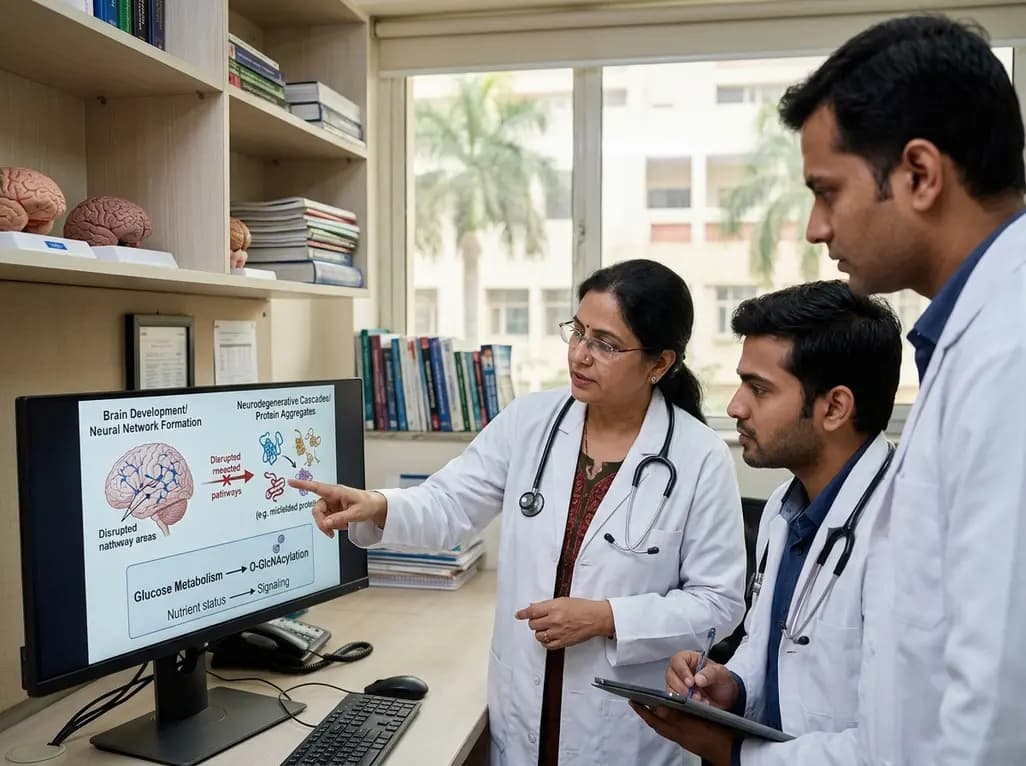
Protein O-GlcNAcylation couples cellular nutrient status to vital neuronal functions. This review explores how disrupted O-GlcNAc cycling drives both neurodevelopmental delays and neurodegenerative cascades, positioning metabolic post-translational modifications as therapeutic targets in clinical neurology.
Today
