.webp&w=384&q=75)

Loading, please wait...
Loading, please wait...

Effective Step 1 predictive methods are now more vital than ever for medical students. Following the USMLE Step 1 transition to pass/fail in 2022, national failure rates have risen. Consequently, medical schools are adopting data-driven approaches to ensure their students are sufficiently prepared before attempting the exam.
A recent study across 12 US medical schools examined various strategies for identifying at-risk students. Although each institution has unique assessment structures, many share common predictive frameworks. Most schools rely on standardized scores from the National Board of Medical Examiners (NBME). Specifically, results from the Comprehensive Basic Science Examination (CBSE) or the Comprehensive Basic Science Self-Assessment (CBSSA) are the most meaningful predictors of success.
Institutions use diverse modeling techniques to forecast student performance. For instance, six schools utilize risk categories based on specific scoring thresholds. Meanwhile, three schools apply multiple regression models to analyze various risk factors simultaneously. Furthermore, some institutions track student growth over time using mixture modeling. Therefore, these Step 1 predictive methods allow faculty to offer personalized interventions during the critical dedicated study period.
While these models offer significant advantages, they also have inherent limitations. Schools vary in their thresholds for intervention, which can impact the timing of support. However, early identification remains the goal. By leveraging early assessment data, medical educators can better guide students toward their academic goals. This proactive approach helps mitigate the risks associated with the recent increase in national failure rates.
Research consistently shows that NBME exams, such as the CBSE and CBSSA, provide the highest predictive value for USMLE Step 1 outcomes. These exams correlate strongly with actual performance, allowing schools to identify students who may need additional study time.
Ideally, identification should occur at or before the onset of the dedicated study period. Early intervention allows students to adjust their study strategies and utilize supplemental resources before taking the actual exam.
Disclaimer: This content is for informational and educational purposes only and does not constitute medical or professional advice. While we strive for accuracy, educational requirements and exam formats may vary by region. Refer to the latest local and national guidelines for clinical practice.
References
Steciuch CC et al. Contemporary Step 1 Predictive Methods Across 12\u2009US MD-Granting Medical Schools. Teach Learn Med. 2026 Apr 13. doi: 10.1080/10401334.2026.2655826. PMID: 41969173.
National Board of Medical Examiners. USMLE Performance Data and Step 1 Pass Rates Summary. 2024-2025 Reports.

Read summarized clinical updates, watch expert medical content, and earn CME certifications right from your smartphone.
Open your smartphone camera to scan and install.





Learn how 12 US medical schools use NBME scores and predictive modeling to identify students at risk of failing the USMLE Step 1 exam....
6 months ago

A retrospective cohort study of 7,716 ICU patients from the MIMIC-IV database demonstrates that Gradient Boosting Decision Trees significantly outperform traditional SOFA scores in predicting in-hospital mortality among patients with sepsis and diabetes, with SHAP analysis providing clinical interpretability.
Today
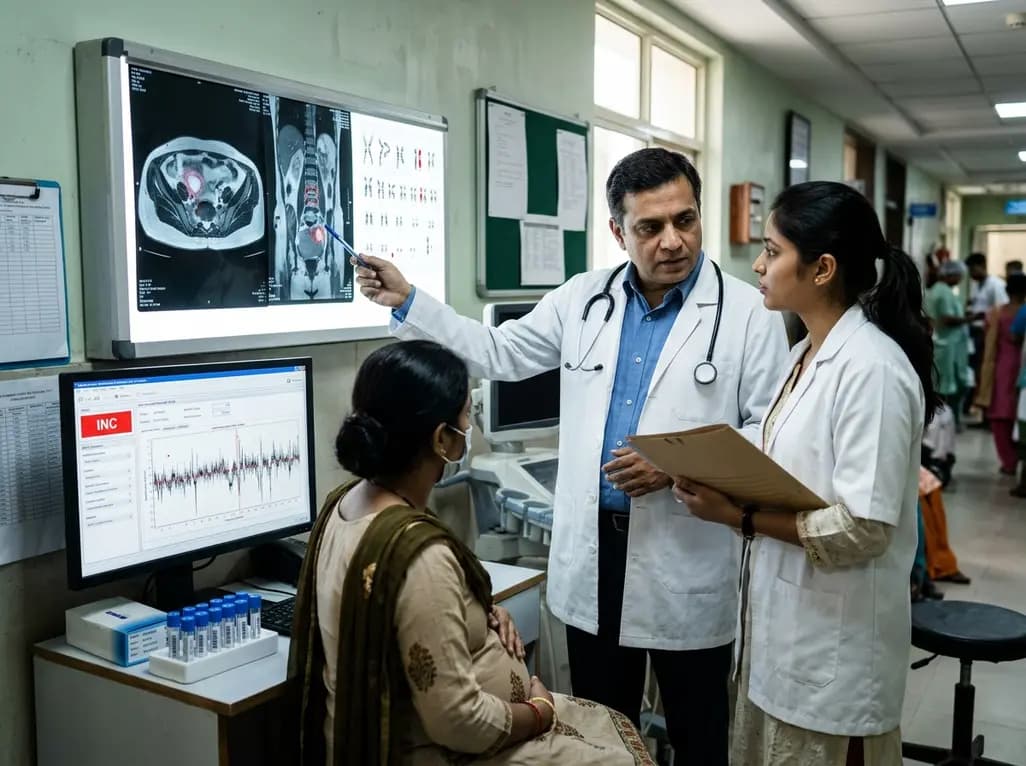
Occult maternal malignancy accounts for 3.82% of persistent unreportable NIPT results with genomic noise. Multiple chromosomal aberrations, notably on chromosome 18, warrant thorough oncological evaluation and whole-body MRI to ensure timely maternal diagnosis while preserving fetal care.
Today
This article reviews the forensic and clinical complexities of acute myocarditis arising on left ventricular hypertrophy in children, highlighting early diagnostic red flags and multidisciplinary postmortem autopsy protocols.
Today

This comparative study evaluates posterior labral tears with and without glenohumeral instability, highlighting distinct demographic patterns, MRI underestimation in stable shoulders, and successful arthroscopic repair outcomes.
Yesterday

A clinical study demonstrates that early intervention with tocilizumab, either as monotherapy or bridged with corticosteroids, achieves significant proptosis reduction and resolves active inflammation in treatment-naive thyroid eye disease.
Yesterday
