.webp&w=384&q=75)

Loading, please wait...
Loading, please wait...

Sports cardiology has emerged as a vital subspecialty bridging the gap between preventive cardiology and athlete-centered care. For those practicing sports cardiology for cardiologists, understanding the unique physiological adaptations of the heart is essential. While regular exercise provides substantial cardiovascular benefits, vigorous exertion can unmask latent diseases. Consequently, it may precipitate sudden cardiac death (SCD) in predisposed individuals. Although these events remain uncommon, they carry a profound societal impact. Therefore, early detection and tailored risk stratification are clinical priorities.
Demographic variations significantly influence the risk profile of athletes. The spectrum of implicated conditions ranges from hypertrophic cardiomyopathy in younger athletes to coronary artery disease in master athletes. Clinicians must recognize that different sports and intensity levels impose varied stressors on the myocardium. Specifically, endurance and power sports trigger distinct structural and electrical adaptations. Understanding these nuances allows for better identification of individuals at the highest risk.
The role of preparticipation cardiac screening remains a central topic of debate in the medical community. Most protocols emphasize the utility of the 12-lead ECG to detect silent electrical or structural disorders. However, the potential for false positives necessitates high-level expertise in ECG interpretation. Furthermore, clinicians often use secondary strategies like echocardiography or cardiovascular MRI to confirm findings. These tools help differentiate benign changes from life-threatening cardiomyopathies. Specifically, clinicians look for markers of diastolic function and symmetrical remodeling to confirm a physiological 'athlete's heart.'
Modern management principles have shifted toward shared decision-making (SDM) between the physician and the athlete. Instead of applying paternalistic restrictions, doctors now focus on evidence-based risk stratification and safe exercise prescriptions. This collaborative approach considers the athlete's personal goals alongside clinical data regarding myocarditis, electrical disorders, or congenital anomalies. Additionally, emerging data on coronary calcification and atrial fibrillation in older athletes provide new insights into managing the lifelong athlete. Consequently, specialized care ensures that patients can continue their physical pursuits while minimizing acute risks.
Distinguishing between the two requires a multi-modal approach. Athlete's heart typically features symmetrical chamber enlargement and normal diastolic function. Conversely, cardiomyopathy often presents with asymmetrical hypertrophy, impaired diastolic filling, and abnormal ECG patterns like deep T-wave inversions.
Mandatory screening varies by region and athletic organization. However, the European Society of Cardiology recommends it as a cost-effective way to identify individuals at risk. Clinicians should use international criteria to reduce the rate of false positives in these populations.
Return to play usually requires a period of rest followed by comprehensive reassessment. Clinicians evaluate for the absence of symptoms, normal cardiac biomarkers, and the resolution of inflammation on cardiac MRI or stress testing before clearance.
Disclaimer: This content is for informational and educational purposes only. It does not constitute professional medical advice, diagnosis, or treatment. Always seek the advice of your physician or other qualified healthcare provider with any questions you may have regarding a medical condition. Refer to the latest local and national guidelines for clinical practice.
References

Read summarized clinical updates, watch expert medical content, and earn CME certifications right from your smartphone.
Open your smartphone camera to scan and install.





This article reviews sports cardiology for general cardiologists, focusing on SCD risk, screening utility, and distinguishing athlete's heart from disease....
7 months ago
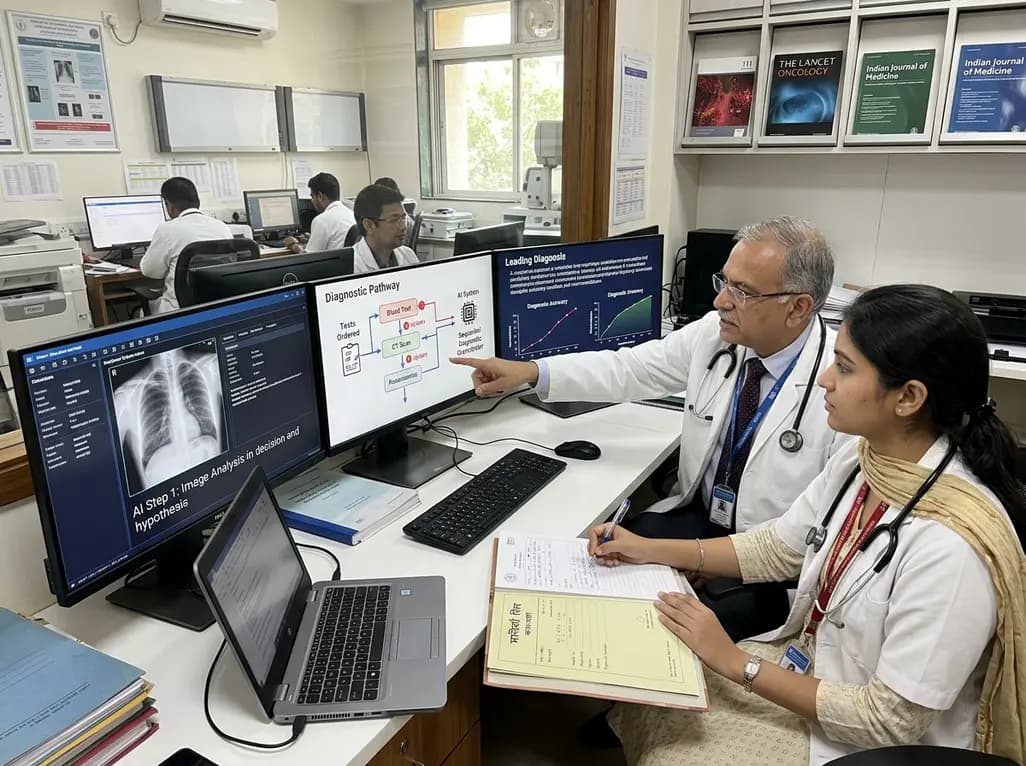
A breakthrough peer-reviewed study demonstrates that a sequential AI diagnosis system can mirror real-world clinical reasoning. By ordering stepwise tests and updating hypotheses dynamically, this multi-agent orchestrator achieved superior diagnostic accuracy while reducing investigative costs.
Today

A prenatal case highlights severe glutaric acidemia type II presenting as bilateral hyperechoic cystic kidneys at 18 weeks. Whole-exome sequencing revealed a novel homozygous ETFDH frameshift variant, demonstrating the power of rapid genetic testing in fetal renal anomalies.
Today

Review how tailored exercise programs benefit frail older patients with heart failure. Explore pathophysiological mechanisms, individualized training prescriptions, and strategies to overcome adherence barriers in clinical practice.
Yesterday

This comparative study evaluates posterior labral tears with and without glenohumeral instability, highlighting distinct demographic patterns, MRI underestimation in stable shoulders, and successful arthroscopic repair outcomes.
Yesterday

A clinical study demonstrates that early intervention with tocilizumab, either as monotherapy or bridged with corticosteroids, achieves significant proptosis reduction and resolves active inflammation in treatment-naive thyroid eye disease.
Yesterday
