.webp&w=384&q=75)

Loading, please wait...
Loading, please wait...

Stroke survivors frequently face secondary complications that significantly hinder their recovery. Recent findings from the Addressing Sleep Apnea Post-Stroke/TIA (ASAP) trial demonstrate that managing Sleep Apnea in Stroke patients requires more than clinical knowledge; it demands robust organizational strategies. Since nearly 70% of these patients suffer from underlying obstructive sleep apnea (OSA), timely screening is essential for effective secondary prevention. Consequently, the study identified four pivotal conditions that ensure a multidisciplinary quality improvement program succeeds.
The research highlighted that successful facilities prioritized standardized routines for ordering inpatient sleep tests. Furthermore, active monitoring of the testing process ensured that patients received timely evaluations during their hospital stay. In addition to these internal workflows, post-discharge care coordination proved vital for ensuring long-term adherence to therapy. Therefore, bridging the gap between inpatient neurology and outpatient sleep services remains a top priority for healthcare providers. Finally, the positive influence of local champions—clinicians who actively advocate for the program—acted as a powerful catalyst for adoption. Moreover, these four difference-makers perfectly distinguished between high-performing and low-performing sites in the study.
Effective management of OSA after a stroke significantly reduces the risk of recurrent vascular events and improves functional status. However, many hospitals struggle to move beyond baseline screening rates, which often hover near 2%. By focusing on organizational difference-makers, healthcare systems can transition to guideline-concordant care. This approach not only enhances neuro-cognitive recovery but also potentially lowers mortality rates in this high-risk population. Implementing these strategies allows for a more tailored approach to patient care, ensuring that risk factors are managed proactively rather than reactively.
Untreated obstructive sleep apnea affects approximately 70% of stroke patients and is linked to impaired recovery, a higher risk of recurrent strokes, and increased mortality. Early diagnosis allows for interventions like CPAP, which can improve neurological outcomes.
The four key factors include establishing routines for sleep test ordering, monitoring those testing processes, ensuring post-discharge care coordination, and having strong local clinical champions to drive the initiative.
Disclaimer: This content is for informational and educational purposes only. It does not constitute medical advice, diagnosis, or treatment. Always seek the advice of a qualified healthcare provider with any questions regarding a medical condition. Refer to the latest local and national guidelines for clinical practice.
References
Rattray NA et al. Difference-making factors in implementing a quality improvement program for sleep apnea in stroke/TIA patients. Implement Sci Commun. 2026 Apr 17. doi: 10.1186/s43058-026-00944-9. PMID: 41998761.
Sharma SK, et al. Consensus and evidence-based Indian initiative on obstructive sleep apnea guidelines 2014. Lung India. 2015;32(4):422-434.
Bravata DM, et al. Quality Improvement Intervention to Increase Sleep Apnea Diagnostic Testing After Stroke and Transient Ischemic Attack. JAMA Netw Open. 2024;7(11):e2444643.

Read summarized clinical updates, watch expert medical content, and earn CME certifications right from your smartphone.
Open your smartphone camera to scan and install.





New research identifies four difference-making factors for successfully implementing sleep apnea quality improvement programs in stroke and TIA patients....
6 months ago
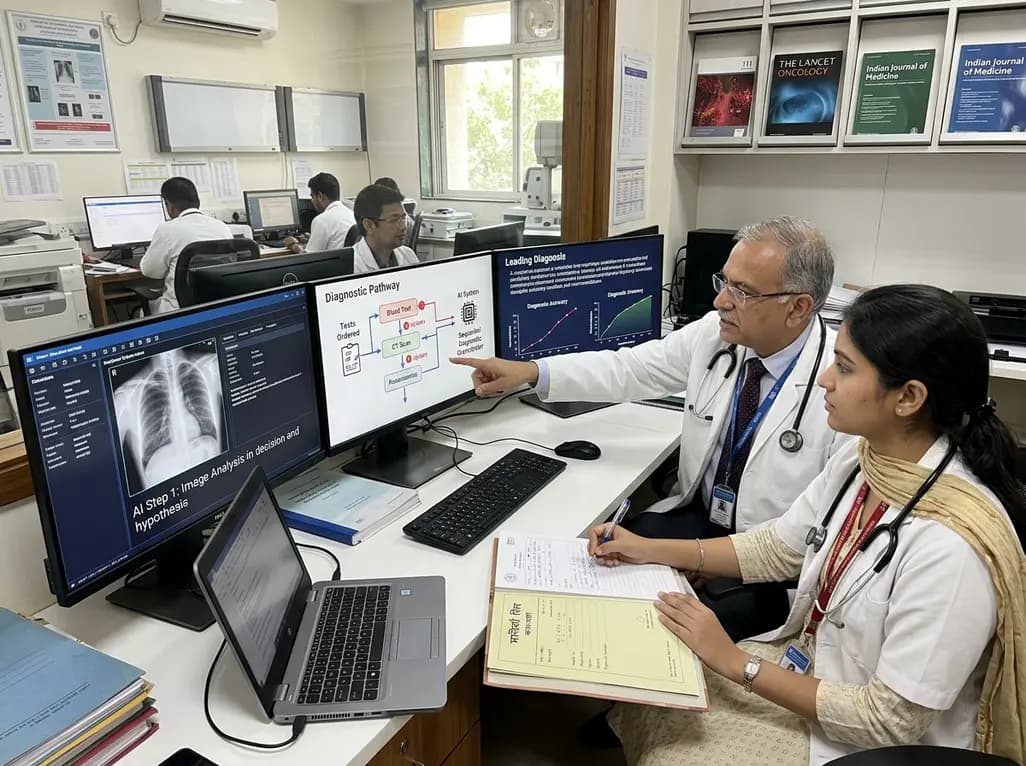
A breakthrough peer-reviewed study demonstrates that a sequential AI diagnosis system can mirror real-world clinical reasoning. By ordering stepwise tests and updating hypotheses dynamically, this multi-agent orchestrator achieved superior diagnostic accuracy while reducing investigative costs.
Today

A prenatal case highlights severe glutaric acidemia type II presenting as bilateral hyperechoic cystic kidneys at 18 weeks. Whole-exome sequencing revealed a novel homozygous ETFDH frameshift variant, demonstrating the power of rapid genetic testing in fetal renal anomalies.
Today

Review how tailored exercise programs benefit frail older patients with heart failure. Explore pathophysiological mechanisms, individualized training prescriptions, and strategies to overcome adherence barriers in clinical practice.
Yesterday

This comparative study evaluates posterior labral tears with and without glenohumeral instability, highlighting distinct demographic patterns, MRI underestimation in stable shoulders, and successful arthroscopic repair outcomes.
Yesterday

A clinical study demonstrates that early intervention with tocilizumab, either as monotherapy or bridged with corticosteroids, achieves significant proptosis reduction and resolves active inflammation in treatment-naive thyroid eye disease.
Yesterday
