.webp&w=384&q=75)

Loading, please wait...
Loading, please wait...

Researchers recently evaluated the long-term outcomes of patients undergoing Skull Base Chordomas Surgery over a 20-year period. Specifically, the study analyzed the efficacy of endonasal endoscopic techniques combined with radiotherapy. Consequently, the findings provide a clearer picture of prognostic factors affecting progression-free survival (PFS) and overall survival (OS). This data is particularly relevant for oncology and neurosurgery teams managing these complex cases.
Notably, the rate of gross total resection (GTR) increased significantly over time. For instance, surgeons achieved GTR in only 25.8% of patients between 2006 and 2014. However, this rate rose to 50.0% during the 2015-2022 period. This improvement underscores the rapid evolution of endoscopic tools and surgical expertise. Furthermore, multivariate Cox regression analysis identified GTR and the absence of surgical complications as independent prognostic factors for improved survival outcomes.
Additionally, the study addressed the controversy surrounding adjuvant radiotherapy (RT). The data suggests that RT plays a vital role in improving OS, particularly when surgeons cannot achieve a total resection. Therefore, a multidisciplinary approach remains essential for long-term disease control. Experts also compared different RT modalities, finding that intensity-modulated radiotherapy (IMRT) serves as a viable alternative when proton beam therapy is unavailable.
Clinicians must focus on maximal safe resection to optimize patient results. Specifically, larger tumor volumes often correlate with a poorer prognosis in multivariate models. In addition, the presence of postoperative complications can negatively impact survival rates. Consequently, surgeons must refine their approach to minimize morbidity while maximizing tumor removal. These insights allow for more personalized treatment planning and better patient counseling regarding long-term expectations.
While complete resection is challenging due to the tumor's proximity to vital structures, modern Skull Base Chordomas Surgery using endonasal endoscopic techniques has significantly improved GTR rates over the last two decades. High-volume centers now report total resection in up to 50% of cases.
Postoperative radiotherapy is a critical factor for improving overall survival. It serves as a necessary adjuvant treatment, especially in cases where residual tumor remains after the initial surgery.
According to the latest 20-year analysis, the extent of resection (GTR), the initial tumor volume, and the absence of surgical complications are the primary predictors of progression-free survival.
Disclaimer: This content is for informational and educational purposes only... Refer to the latest local and national guidelines for clinical practice.
References
Li H et al. Endoscopic endonasal surgery and radiotherapy in skull base chordomas: a 20-year retrospective analysis of long-term outcomes and prognostic factors. Acta Otolaryngol. 2026 May 05. doi: 10.1080/00016489.2026.2659351. PMID: 42084902.
Zhang HK et al. Endonasal Endoscopic Resection and Radiotherapy in Skull Base Chordomas. J Craniofac Surg. 2016 Oct;27(7):e709-e713. doi: 10.1097/SCS.0000000000003031.
Singh H et al. Expanded Endoscopic Endonasal Approach in the Management of Anterior Skull Base Malignancies: Experience from a Quaternary Care Center in India. Indian J Surg Oncol. 2025. doi: 10.1007/s13193-025-02100-y.

Read summarized clinical updates, watch expert medical content, and earn CME certifications right from your smartphone.
Open your smartphone camera to scan and install.





A 20-year retrospective study highlights how improving resection rates and adjuvant radiotherapy significantly enhance survival for skull base chordomas....
5 months ago
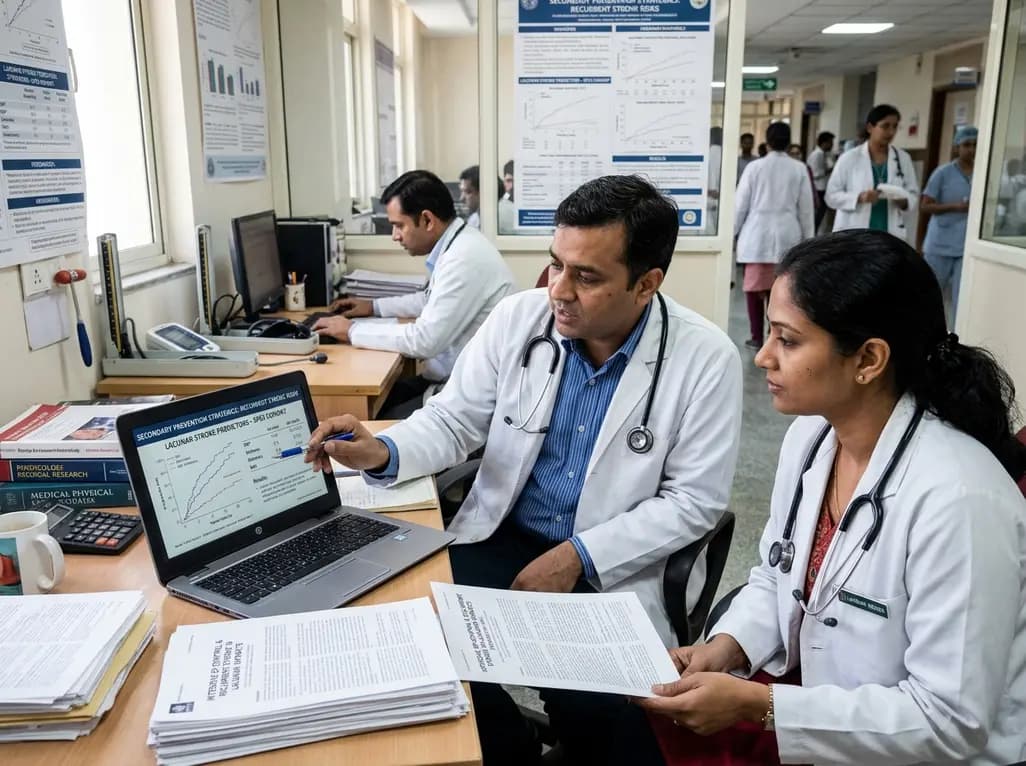
Explore vital recurrent stroke predictors in lacunar stroke patients managed with intensive blood pressure lowering. This analysis examines trial findings from SPS3 to uncover residual vascular risks, metabolic factors, and targeted secondary prevention strategies for high-risk neurological patients.
Today
A comprehensive scoping review synthesises evidence linking prenatal maternal mental health to long-term offspring neurodevelopment, evaluating neuroendocrine, inflammatory, and epigenetic pathways while highlighting clinical screening and future research priorities.
Today

The Directorate General of Health Services directs Indian states to halt the hazardous reuse and reprocessing of single-use medical devices. Discover regulatory implications under the Drugs and Cosmetics Act, critical infection risks, legal liabilities, and operational changes required across clinical specialties.
Today
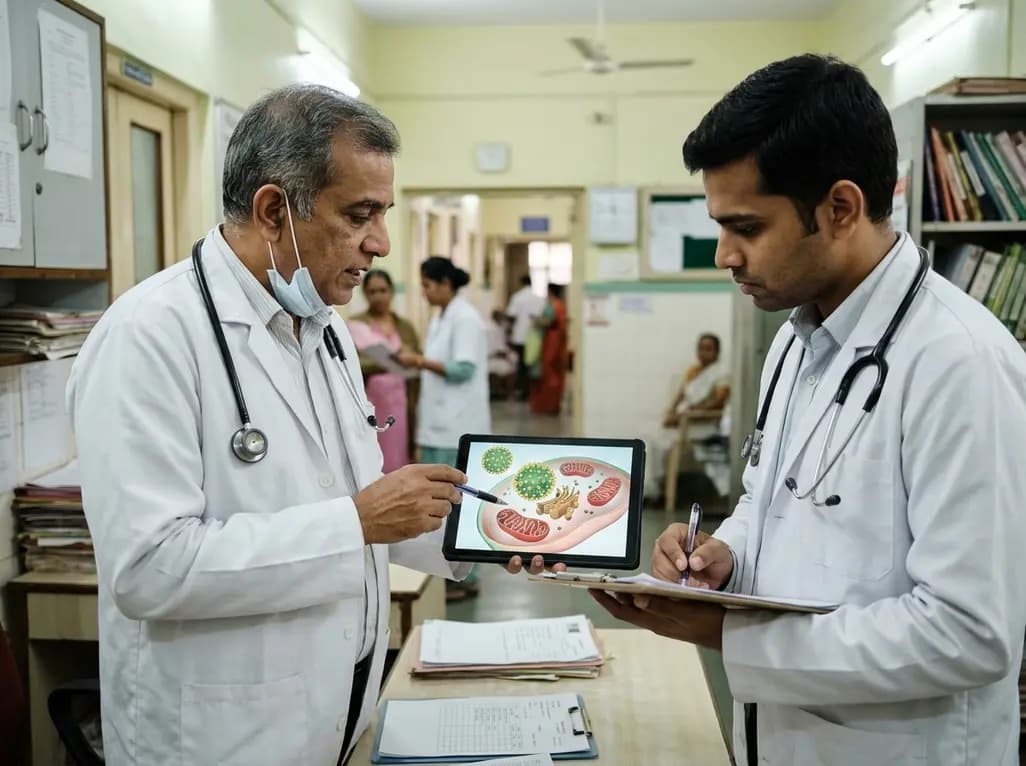
Mitochondria-targeted nanoparticles self-assembled from EGCG and L-glutamic acid effectively restore mitochondrial homeostasis, suppress synovial inflammation, and attenuate chondrocyte senescence in osteoarthritis, offering a promising disease-modifying nanotherapy.
Today

India is advancing preventive healthcare by integrating genomics, artificial intelligence, and quantum technologies. With the SANGAM programme sequencing one million Indian genomes, clinicians can unlock personalized therapies, detect cardiometabolic risks early, and curb the burden of diabetes and heart disease.
Today
