.webp&w=384&q=75)

Loading, please wait...
Loading, please wait...

Eating disorders (ED) represent a significant public health challenge, yet a substantial gap exists between the demand for care and the availability of specialized providers. Consequently, researchers are exploring scalable models to enhance accessibility. Single-Session Interventions for Eating Disorders (SSIs) are structured programs designed for a single encounter. These interventions aim to provide immediate, evidence-based support, thereby bridging the gap between clinical need and resource availability.
A recent systematic review and meta-analysis synthesized data from 22 primary studies to determine the impact of these brief programs. The results indicated that Single-Session Interventions for Eating Disorders yielded a significant, albeit small, effect size (g = -0.23). This finding suggests that even a single encounter can meaningfully reduce symptoms or aid in prevention. Furthermore, the analysis revealed that the efficacy remained consistent regardless of whether the session focused on prevention or active treatment.
One of the most encouraging aspects of the study was the lack of significant moderation by delivery format. Whether the intervention was self-guided or provider-delivered, the outcomes were comparable. Similarly, remote administration performed as well as in-person sessions. This flexibility is vital for practitioners in India, where digital health platforms can help overcome geographic barriers to specialized psychiatric care. However, clinicians should note that while SSIs are effective, they are often best utilized as a first-line or supplementary approach within a broader stepped-care model.
Adopting these interventions allows for a more responsive healthcare model. Because the effects do not significantly diminish over short-term follow-up, SSIs can serve as a robust entry point for patients on waiting lists. Moreover, the scalability of self-guided formats provides an opportunity to reach underserved populations who might otherwise receive no care at all.
SSIs are not intended to replace comprehensive long-term therapy for complex cases. However, they provide a significant, evidence-based reduction in symptoms and are highly effective for prevention and early intervention.
Yes, the meta-analysis found no significant difference in efficacy between remote and in-person administration, making them ideal for telehealth applications.
Disclaimer: This content is for informational and educational purposes only. It does not constitute medical advice or a professional relationship. Always seek the advice of a qualified healthcare provider regarding any medical condition. Refer to the latest local and national guidelines for clinical practice.
References
Negi S et al. A Meta-Analysis and Systematic Review of Single-Session Interventions for Eating Disorders. Int J Eat Disord. 2026 Feb 15. doi: 10.1002/eat.70055. PMID: 41693024.
Schleider JL, Weisz JR. Little Treatments, Big Effects: State of the Evidence for Single-Session Interventions. Clin Psychol (New York). 2017;24(2):132-155.
Fairburn CG, Patel V. The global dissemination of psychological treatments: A novel strategy. Lancet. 2014;384(9941):395-397.
"
Read summarized clinical updates, watch expert medical content, and earn CME certifications right from your smartphone.
Open your smartphone camera to scan and install.





A meta-analysis of 22 studies shows that Single-Session Interventions (SSIs) are effective for eating disorder prevention and treatment across various forma...
8 months ago
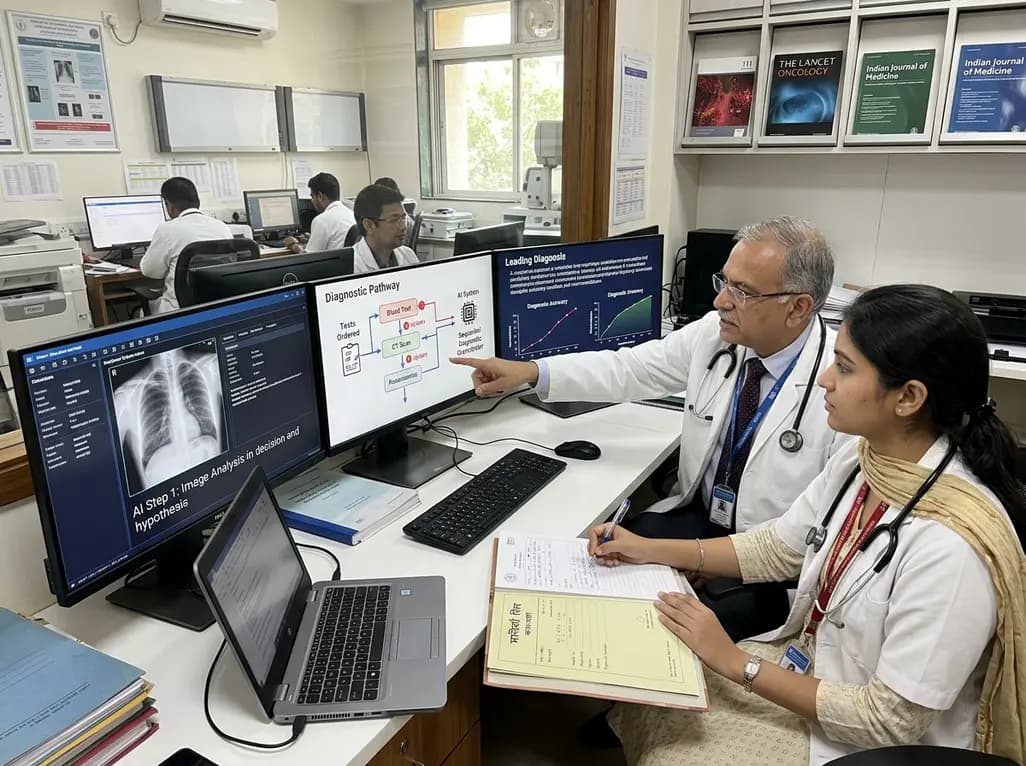
A breakthrough peer-reviewed study demonstrates that a sequential AI diagnosis system can mirror real-world clinical reasoning. By ordering stepwise tests and updating hypotheses dynamically, this multi-agent orchestrator achieved superior diagnostic accuracy while reducing investigative costs.
Today

A prenatal case highlights severe glutaric acidemia type II presenting as bilateral hyperechoic cystic kidneys at 18 weeks. Whole-exome sequencing revealed a novel homozygous ETFDH frameshift variant, demonstrating the power of rapid genetic testing in fetal renal anomalies.
Today

Review how tailored exercise programs benefit frail older patients with heart failure. Explore pathophysiological mechanisms, individualized training prescriptions, and strategies to overcome adherence barriers in clinical practice.
Yesterday

This comparative study evaluates posterior labral tears with and without glenohumeral instability, highlighting distinct demographic patterns, MRI underestimation in stable shoulders, and successful arthroscopic repair outcomes.
Yesterday

A clinical study demonstrates that early intervention with tocilizumab, either as monotherapy or bridged with corticosteroids, achieves significant proptosis reduction and resolves active inflammation in treatment-naive thyroid eye disease.
Yesterday
