.webp&w=384&q=75)

Loading, please wait...
Loading, please wait...

Obesity represents a sophisticated public health challenge globally, significantly impacting India's healthcare landscape. It serves as a precursor to several chronic non-communicable diseases, most notably type 2 diabetes and cardiovascular complications. Recent medical advancements have positioned SGLT2 inhibitors for obesity management as a topic of intense clinical interest. These agents were primarily developed for glycemic control, yet their metabolic benefits extend far beyond sugar regulation. Chronic low-grade inflammation is a primary link between adipose tissue accumulation and metabolic dysfunction. Fortunately, SGLT2 inhibitors exhibit potent anti-inflammatory properties that may mitigate these risks. By targeting the kidneys, these drugs provide a biological rationale for weight reduction that does not depend on insulin secretion. This makes them unique compared to traditional anti-diabetic medications. Furthermore, understanding their role helps clinicians optimize multi-modal treatment strategies for patients struggling with weight-related comorbidities. Consequently, evaluating both preclinical and clinical evidence is essential for defining their therapeutic positioning in modern medicine. While lifestyle interventions remain foundational, pharmacological support is increasingly necessary to achieve sustainable outcomes in diverse patient populations.
The primary physiological mechanism of SGLT2 inhibitors for obesity involves the inhibition of glucose reabsorption in the renal proximal tubules. Under normal circumstances, the kidneys reabsorb virtually all filtered glucose back into the bloodstream. However, SGLT2 inhibitors block this process, leading to significant glucosuria. This loss of glucose in the urine translates directly into a daily caloric deficit of approximately 200 to 300 kilocalories. Additionally, the resulting reduction in circulating insulin levels shifts the body’s metabolic state toward lipid utilization. Specifically, the reduction in the insulin-to-glucagon ratio promotes lipolysis and increases fatty acid oxidation. As a result, patients often experience a reduction in visceral adipose tissue rather than just subcutaneous fat. This shift is critical because visceral fat is highly metabolically active and associated with insulin resistance. Moreover, the osmotic diuresis caused by glucosuria contributes to early weight reduction, though the majority of long-term loss is attributed to fat mass depletion. Therefore, the multifaceted approach of these drugs addresses both the caloric surplus and the hormonal imbalances inherent in obesity.
Preclinical investigations provide deeper insights into how SGLT2 inhibitors for obesity influence adipose tissue at a cellular level. Studies in animal models have demonstrated that these agents can induce the "browning" of white adipose tissue. This process involves the conversion of energy-storing white fat into energy-burning beige or brown fat, which significantly enhances thermogenesis. Furthermore, SGLT2 inhibition has been shown to reduce markers of systemic inflammation by polarizing macrophages toward an anti-inflammatory M2 phenotype. This immunological shift helps preserve insulin sensitivity and protects vascular health. Notably, researchers have observed substantial reductions in ectopic fat deposition, particularly in the liver and around the heart. These findings are vital because ectopic fat is a major driver of metabolic syndrome. In addition, preclinical data suggest that SGLT2 inhibitors may enhance the expression of genes involved in fatty acid metabolism and mitochondrial biogenesis. These cellular adaptations suggest that the drugs do more than just eliminate calories; they potentially reprogram metabolic pathways to favor leaner body compositions. Consequently, these insights support the clinical observation of improved metabolic health beyond simple weight loss metrics.
Clinical trials consistently demonstrate that SGLT2 inhibitors for obesity lead to modest yet statistically significant weight reduction in human subjects. On average, patients can expect to lose between 2 and 4 kilograms over a six-month to one-year period. This effect is observed in both patients with type 2 diabetes and those without the condition, although the magnitude may vary. In diabetic patients, the glycemic benefit is accompanied by improved HbA1c levels and reduced blood pressure. For individuals without diabetes, the weight loss remains consistent, confirming that the caloric loss through glucosuria is a robust physiological response. However, clinicians must recognize that weight loss often reaches a plateau after the first year of therapy. This plateau is largely attributed to compensatory mechanisms, such as hyperphagia, where the body increases appetite to offset the urinary calorie loss. For this reason, SGLT2 inhibitors are often viewed as secondary or adjunctive agents rather than primary weight-loss drugs. Despite these limitations, the consistency of the weight loss across diverse populations makes them a valuable tool in the metabolic toolkit.
When comparing SGLT2 inhibitors for obesity to GLP-1 receptor agonists, there is a clear distinction in the magnitude of weight loss. GLP-1 agonists and newer dual or triple incretin therapies typically achieve much greater weight reduction, often exceeding 10% to 15% of total body weight. In contrast, SGLT2 inhibitors rarely exceed a 3% to 5% reduction. The difference lies in their mechanisms of action; while SGLT2 inhibitors focus on caloric excretion, GLP-1 agonists directly target central satiety and gastric emptying. Nevertheless, SGLT2 inhibitors offer distinct advantages, such as oral administration and exceptional cardiovascular and renal protection. For instance, they are preferred in patients with heart failure or chronic kidney disease where weight management is a secondary goal. Furthermore, the side effect profiles differ significantly, with SGLT2 inhibitors carrying risks of genital infections but fewer gastrointestinal issues than GLP-1 therapies. Therefore, the choice of agent should be individualized based on the patient's primary clinical needs and comorbidities. In many cases, combining these two classes may yield synergistic benefits, addressing both appetite and caloric excretion simultaneously.
In the context of the Indian clinical landscape, SGLT2 inhibitors for obesity are best utilized as adjunctive components of a comprehensive metabolic strategy. They provide a unique benefit for patients who require simultaneous management of glycemia, blood pressure, and weight. However, physicians must remain vigilant regarding safety. Common side effects include genital mycotic infections and increased urinary frequency due to osmotic diuresis. In rare cases, euglycemic diabetic ketoacidosis has been reported, particularly during periods of acute illness or surgery. To maximize efficacy, these medications should always be paired with structured lifestyle modifications and dietary counseling. By integrating SGLT2 inhibitors into a holistic care plan, healthcare providers can help patients achieve durable metabolic improvements while minimizing the risks of long-term obesity-related complications.
SGLT2 inhibitors promote weight loss primarily by blocking glucose reabsorption in the proximal renal tubules, causing about 60 to 100 grams of glucose to be excreted in the urine daily. This process creates a consistent caloric deficit of approximately 200 to 300 kcal per day. Additionally, the lowered insulin-to-glucagon ratio encourages the body to break down fat stores for energy via lipolysis. This dual action effectively reduces both total body weight and harmful visceral fat accumulation.
While SGLT2 inhibitors show weight-loss efficacy in non-diabetic individuals, they are not currently approved as primary anti-obesity agents for this population. Clinical trials demonstrate a modest weight reduction of roughly 2 to 4 kg in normoglycemic patients. However, the magnitude of this loss is significantly lower than that achieved by modern GLP-1 receptor agonists. Currently, their use in non-diabetic patients is largely restricted to managing heart failure or chronic kidney disease where metabolic benefits are secondary.
SGLT2 inhibitors and GLP-1 receptor agonists both contribute to weight loss but through entirely different pathways. SGLT2 inhibitors cause caloric loss via the urine, whereas GLP-1 agonists enhance satiety and slow digestion to reduce calorie intake. Consequently, GLP-1 agonists typically produce much more substantial weight loss, often three to four times greater than SGLT2 inhibitors. SGLT2 inhibitors remain excellent choices for patients needing oral therapy or specific heart and kidney protection rather than maximum weight reduction.
Disclaimer: This content is for informational and educational purposes only. It does not constitute medical advice or establish a doctor-patient relationship. Always seek the advice of a qualified healthcare provider regarding any medical condition. Refer to the latest local and national guidelines for clinical practice.
References
Baletic D et al. Effects of sodium-glucose cotransporter 2 inhibitors on body weight and metabolic parameters in obese patients with and without type 2 diabetes: a systematized narrative review. Curr Med Res Opin. 2026 Jun 24. doi: 10.1080/03007995.2026.2690834. PMID: 42339604.
Pereira MJ, Eriksson JW. Emerging Role of SGLT2 Inhibitors in Obesity: Analysis of Clinical Data and Potential Mechanisms. Drugs. 2019;79(2):197-217. doi: 10.1007/s40265-019-1054-0.
Heerspink HJL, et al. Sodium-Glucose Cotransporter 2 Inhibitors in the Management of Cardiovascular Disease and Kidney Disease. Circulation. 2020;141(3):214-227. doi: 10.1161/CIRCULATIONAHA.119.040900.

Read summarized clinical updates, watch expert medical content, and earn CME certifications right from your smartphone.
Open your smartphone camera to scan and install.





This review examines the impact of SGLT2 inhibitors on body weight and metabolic parameters in obese patients with and without T2DM. While offering modest weight loss of 2-4 kg, they are best used as adjunctive therapy rather than primary anti-obesity agents compared to GLP-1 receptor agonists.
3 months ago

A systematic review of 41 preclinical studies reveals that baicalin dampens systemic inflammation, inhibits NF-κB and NLRP3 pathways, and improves organ preservation in sepsis models. However, substantial study heterogeneity and a complete lack of human clinical trials highlight the need for further translational research.
Today
Discover the crucial distinctions between mesonephric and mesonephric-like proliferations of the female genital tract. Learn the key histomorphologic, immunohistochemical, and molecular differences essential for accurate diagnosis and clinical management.
Today
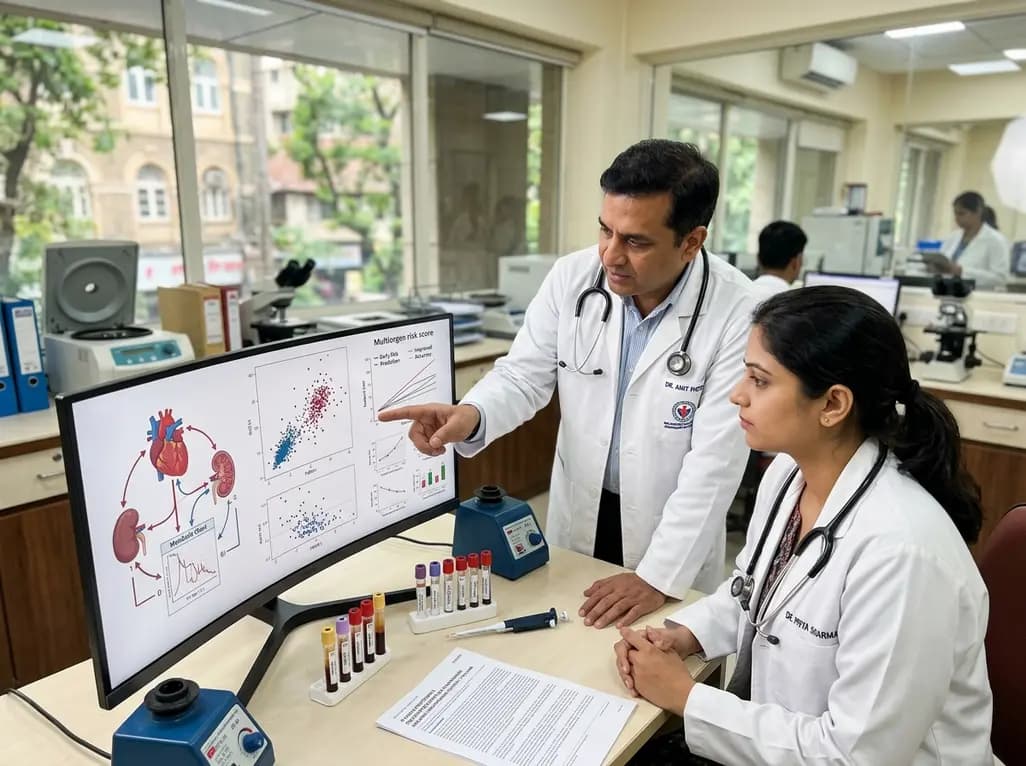
A large UK Biobank study reveals that plasma proteomic signatures capture preclinical organ damage and improve multiorgan risk prediction across early CKM syndrome stages 0 to 2 beyond traditional PREVENT clinical models.
Today
A narrative review investigates whether the articularis genus muscle functions as an independent anatomical entity or blends with the vastus intermedius. We evaluate its morphology, role in retracting the suprapatellar bursa, and direct clinical significance in anterior knee pain and arthroplasty.
Today

A Bayesian multilevel meta-analysis reveals that aerobic training combined with moderate carbohydrate restriction modestly lowers HbA1c in type 2 diabetes. However, sparse data and very low certainty leave incremental benefits over exercise or diet alone unproven, highlighting the need for individualized care.
Today
