.webp&w=384&q=75)

Loading, please wait...
Loading, please wait...

Synthetic DNA data storage is emerging as a revolutionary solution for the global data crisis. It offers unmatched information density and longevity compared to traditional silicon-based media. However, the practical application of this technology has been hindered by the complexity of accessing specific information from vast molecular libraries. A recent study published in Small introduces a machine learning-driven method for selective DNA data retrieval, significantly enhancing the precision of information recovery.
Researchers developed a toehold-triggered isothermal DNA storage system. In this design, a unique stem-loop lock sequence indexes each data sequence. Complementary key oligos then unlock these sequences to reveal the stored data. Furthermore, the team trained a machine learning model on a comprehensive dataset of 12,000 diverse 8-nucleotide sequences. This approach allowed the model to learn nucleotide recognition specificity beyond traditional thermodynamic principles. Consequently, the machine learning model produced high-specificity keys that improved the signal-to-noise ratio by up to 292-fold during data amplification.
This innovation addresses the high-energy demands of current data centers. The isothermal nature of the retrieval method means it requires minimal energy. Thus, it serves as a sustainable candidate for long-term archival storage. Moreover, the insights provided by the machine learning model extend beyond data storage. It offers new perspectives on DNA sequence specificity for diagnostic and therapeutic applications. Because this method is practical and low-energy, it may soon transform how we preserve humanity's digital legacy in the AI era.
It is the process of accessing and amplifying a specific piece of digital information encoded within a large and complex mixture of synthetic DNA strands without disturbing the rest of the pool.
The machine learning model identifies complex patterns in nucleotide interactions that go beyond simple base-pairing rules. This allows for the design of highly specific "keys" that minimize cross-reactivity and noise during data access.
Isothermal methods operate at a constant temperature, eliminating the need for energy-intensive thermal cycling. This makes the storage system more energy-efficient and suitable for portable or large-scale archival applications.
Disclaimer: This content is for informational and educational purposes only and does not constitute medical advice or clinical guidelines. Refer to the latest local and national guidelines for clinical practice.
References
1. Liu Q et al. High-Fidelity Data Retrieval from Synthetic DNA Pools via Machine Learning Model. Small. 2026 Mar 09. doi: 10.1002/smll.202509522. PMID: 41797673.
2. Imec. DNA-based data storage for the AI age. imec-int.com. 2026 Mar 05. Available at: https://www.imec-int.com/en/press/dna-based-data-storage-ai-age
3. Coughlin T. DNA Storage Evolves With Atlas/Imec Collaboration And Biomemory Acquisition. Forbes. 2026 Mar 08. Available at: https://www.forbes.com/sites/tomcoughlin/2026/03/08/dna-storage-evolves-with-atlasimec-collaboration-and-biomemory-acquisition/

Read summarized clinical updates, watch expert medical content, and earn CME certifications right from your smartphone.
Open your smartphone camera to scan and install.





A new machine learning method achieves high-fidelity, isothermal selective data retrieval from synthetic DNA pools, improving signal-to-noise ratios by 292-...
7 months ago

A retrospective cohort study of 7,716 ICU patients from the MIMIC-IV database demonstrates that Gradient Boosting Decision Trees significantly outperform traditional SOFA scores in predicting in-hospital mortality among patients with sepsis and diabetes, with SHAP analysis providing clinical interpretability.
Today
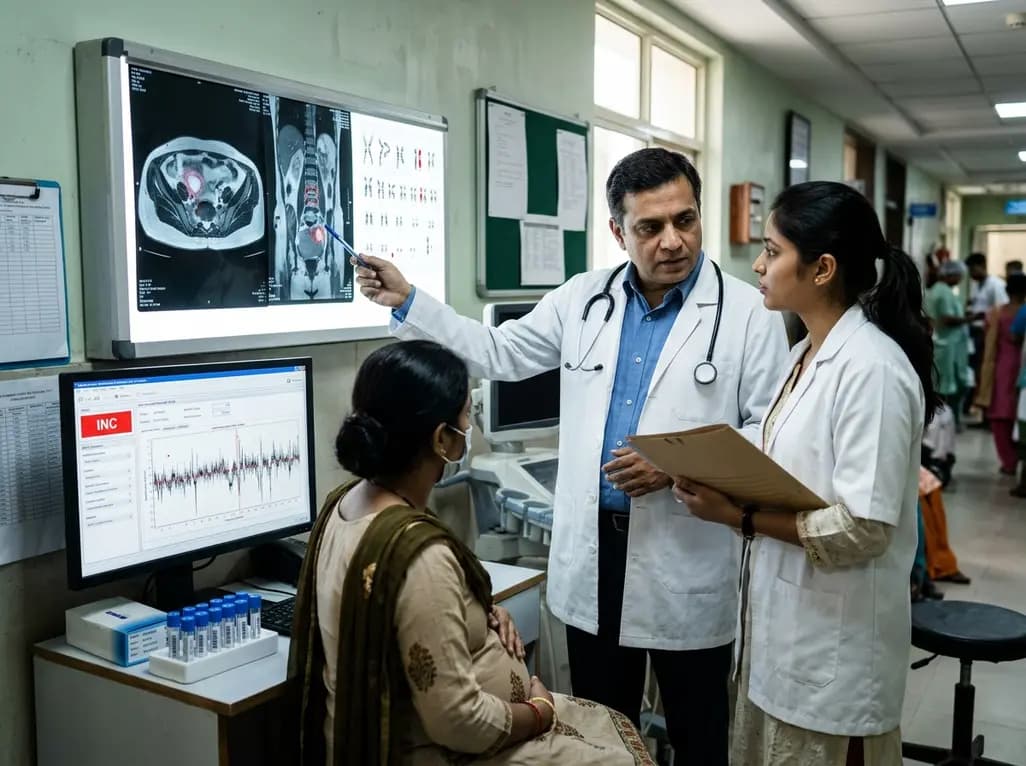
Occult maternal malignancy accounts for 3.82% of persistent unreportable NIPT results with genomic noise. Multiple chromosomal aberrations, notably on chromosome 18, warrant thorough oncological evaluation and whole-body MRI to ensure timely maternal diagnosis while preserving fetal care.
Today

This article reviews the forensic and clinical complexities of acute myocarditis arising on left ventricular hypertrophy in children, highlighting early diagnostic red flags and multidisciplinary postmortem autopsy protocols.
Today

This comparative study evaluates posterior labral tears with and without glenohumeral instability, highlighting distinct demographic patterns, MRI underestimation in stable shoulders, and successful arthroscopic repair outcomes.
Yesterday

A clinical study demonstrates that early intervention with tocilizumab, either as monotherapy or bridged with corticosteroids, achieves significant proptosis reduction and resolves active inflammation in treatment-naive thyroid eye disease.
Yesterday
