.webp&w=384&q=75)

Loading, please wait...
Loading, please wait...

Effective scalp seborrheic dermatitis management requires a structured approach that combines clinical precision with patient-centered care. While the condition is common, its chronic and relapsing nature often complicates long-term control. Recently, Italian dermatology experts developed a practical algorithm to standardize the diagnosis and treatment of this inflammatory skin disorder. This framework emphasizes the importance of distinguishing the condition from similar scalp pathologies to ensure targeted intervention.
Diagnosis begins with a thorough medical history and clinical evaluation. Experts now strongly recommend the use of trichoscopy to enhance diagnostic accuracy. This tool allows clinicians to visualize specific vascular patterns and scaling characteristics that help differentiate seborrheic dermatitis from psoriasis, eczema, or tinea capitis. Consequently, an accurate assessment of disease severity guides the selection of therapy, ensuring that treatment is tailored to the individual's clinical manifestations.
Topical antifungals remain the established first-line treatment for most patients. These agents effectively reduce Malassezia colonization, which is a primary driver of the inflammatory response. For moderate-to-severe cases, clinicians may introduce topical anti-inflammatory agents, such as corticosteroids, to achieve rapid symptom relief. However, providers must limit the duration of steroid use to prevent adverse effects like skin atrophy. Therefore, transitioning to non-steroidal maintenance options is a critical step in long-term scalp seborrheic dermatitis management.
Selenium disulfide has emerged as a versatile option for both acute flare control and long-term maintenance. This agent provides antifungal, sebostatic, and keratolytic properties. Additionally, it aids in microbiome restoration, which contributes to higher patient satisfaction and reduced relapse rates. In rare, refractory cases where topical therapies fail, experts suggest that systemic antifungals may be considered to achieve remission. Ultimately, this structured approach ensures that patients receive evidence-based care that addresses both the pathogenic mechanisms and the psychological impact of the disease.
Topical antifungals are considered the primary first-line treatment because they effectively target Malassezia yeast, which plays a major role in the disease's pathogenesis. Over-the-counter and prescription shampoos containing agents like ketoconazole or selenium disulfide are commonly used.
Selenium disulfide is highly effective for maintenance because it possesses combined antifungal, sebostatic (oil-reducing), and keratolytic properties. It helps restore the scalp microbiome and has been shown to significantly reduce relapse rates compared to other maintenance vehicles.
Differential diagnosis often relies on clinical evaluation and trichoscopy. While seborrheic dermatitis typically presents with greasy, yellowish scales and specific vascular loops on trichoscopy, psoriasis often features thicker, silvery scales and more pronounced, well-demarcated plaques.
Disclaimer: This content is for informational and educational purposes only and does not constitute medical advice or a professional relationship. Always seek the advice of a physician or other qualified health provider with any questions regarding a medical condition. Refer to the latest local and national guidelines for clinical practice.
References
Piraccini BM et al. Experts' view on the management of scalp seborrheic dermatitis in Italy. J Dermatolog Treat. 2026 Dec undefined. doi: 10.1080/09546634.2026.2644012. PMID: 41867134.
Fernandes-Melo et al. Efficacy and safety of selenium disulfide in seborrheic dermatitis: what RCTs tell us? PMC. 2025. PMCID: PMC12577802. PMID: 41180722.
Medical Dialogues. A Comparative Analysis: Selenium Sulfide vs Ketoconazole in Seborrheic Dermatitis and Dandruff. December 2024.

Read summarized clinical updates, watch expert medical content, and earn CME certifications right from your smartphone.
Open your smartphone camera to scan and install.





Italian experts provide a structured algorithm for scalp seborrheic dermatitis management, highlighting the role of selenium disulfide and topical antifunga...
5 months ago

A large NHANES cohort study reveals that higher Healthy Eating Index scores significantly reduce all-cause mortality risk in CKD patients by 45%. This analysis highlights the importance of comprehensive diet quality and medical nutrition therapy in renal care to optimize long-term clinical survival.
Today

Explore real-world data showing how private oncogenetics and molecular tumor boards achieve 3-week consult turnaround, high ctDNA actionability, and vital germline variant detection, enhancing individualized cancer care and familial risk assessment.
Today

A meta-analysis of 13 propensity score-matched studies shows ViV-TAVR delivers lower early mortality and reduced bleeding compared to redo-SAVR for degenerated bioprosthetic aortic valves, though long-term hemodynamics warrant careful anatomical and patient-centered evaluation.
Today
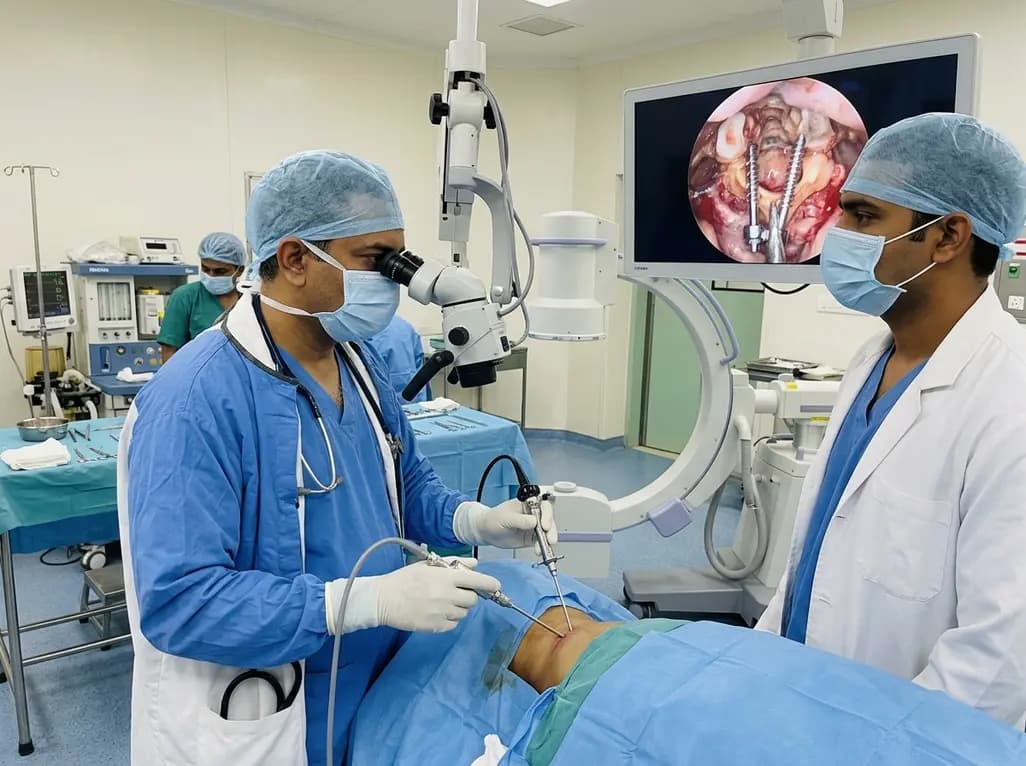
Endoscopic posterior cervical fusion combines minimally invasive decompression, joint preparation, and rigid screw-rod fixation for atlantoaxial pathologies. Early clinical findings demonstrate solid bony union, excellent symptom relief, and minimal soft-tissue morbidity without significant vascular compromise.
Yesterday
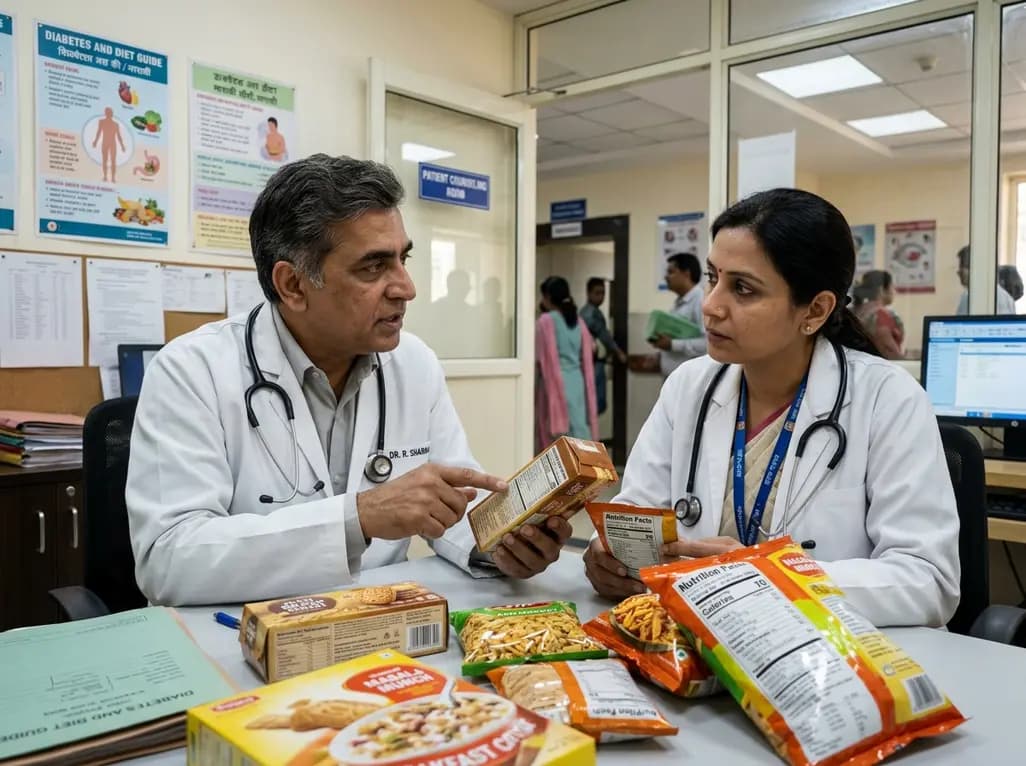
The All-India Food Processors' Association has approached the Supreme Court to oppose FSSAI's proposed per-100g benchmark for front-of-pack warning labels, advocating instead for a per-serving threshold. We explore the regulatory showdown, nutritional evidence, and implications for clinical lifestyle counseling.
Today
