.webp&w=384&q=75)

Loading, please wait...
Loading, please wait...

Stroke remains a leading cause of long-term disability, particularly affecting upper limb function and patient independence. Recently, robot-assisted therapy for stroke has gained attention as a high-intensity rehabilitation alternative. An extensive umbrella review published in 2026 analyzed 21 meta-analyses to clarify its true clinical efficacy. This synthesis covered 535 randomized controlled trials and nearly 28,000 patients across all stroke stages.
The study demonstrated that robotic systems are superior to conventional therapy for improving motor function. Specifically, these devices facilitate the high-repetition, task-oriented movements necessary for neuroplasticity. Subgroup analyses revealed that the level of impairment and the specific type of robot significantly influence treatment outcomes. Furthermore, patients in the subacute stage often showed the most promising improvements in limb mobility.
Despite these motor gains, the research highlighted a critical gap in functional recovery. The review found no statistically significant advantages in activities of daily living (ADL) compared to traditional physiotherapy. Consequently, while patients move better, they may still struggle with complex tasks like dressing or eating. This suggests that current robotic protocols focus heavily on body function rather than real-world participation.
Clinicians must consider the heterogeneity of outcomes when integrating these tools. While the quality of evidence remains high, long-term maintenance of motor gains is not well-documented. Moreover, future research needs to focus on translating these physical improvements into sustained daily activity. Including cost-effectiveness evaluations will also be vital for broader adoption in diverse clinical settings. Ultimately, a more holistic approach is required to bridge the gap between body function and social participation.
Yes, the review indicates benefits across acute, subacute, and chronic stages. However, the degree of recovery depends on the baseline impairment level and the specific device used.
It is statistically superior for improving upper limb motor function. Nevertheless, it has not yet shown a clear advantage for improving independence in activities of daily living compared to conventional therapy.
Disclaimer: This content is for informational and educational purposes only and does not constitute medical advice or a professional relationship. Always seek the advice of a qualified healthcare provider for any questions regarding a medical condition. Refer to the latest local and national guidelines for clinical practice.
References
1. Liu S et al. Robot-Assisted Therapy for Upper Limb Rehabilitation After Stroke: Umbrella Review. J Med Internet Res. 2026 Mar 25. doi: 10.2196/79363. PMID: 41879816.
2. Srivastava A et al. The Role of Robotics in Neuro Rehab for Stroke Patients. Journal of the Indian Federation of Neurorehabilitation (IFNR). 2025 Feb 27; 1(2): 2-10.
3. Kim J et al. Effects of Robot-Assisted Therapy for Upper Limb Rehabilitation After Stroke: An Umbrella Review of Systematic Reviews. Circulation: Cardiovascular Quality and Outcomes. 2025 Mar 21; 18(3): e011245.
"
Read summarized clinical updates, watch expert medical content, and earn CME certifications right from your smartphone.
Open your smartphone camera to scan and install.





A 2026 umbrella review highlights that robot-assisted therapy improves motor function in stroke survivors but shows limited impact on daily activities....
6 months ago

A retrospective cohort study of 7,716 ICU patients from the MIMIC-IV database demonstrates that Gradient Boosting Decision Trees significantly outperform traditional SOFA scores in predicting in-hospital mortality among patients with sepsis and diabetes, with SHAP analysis providing clinical interpretability.
Today
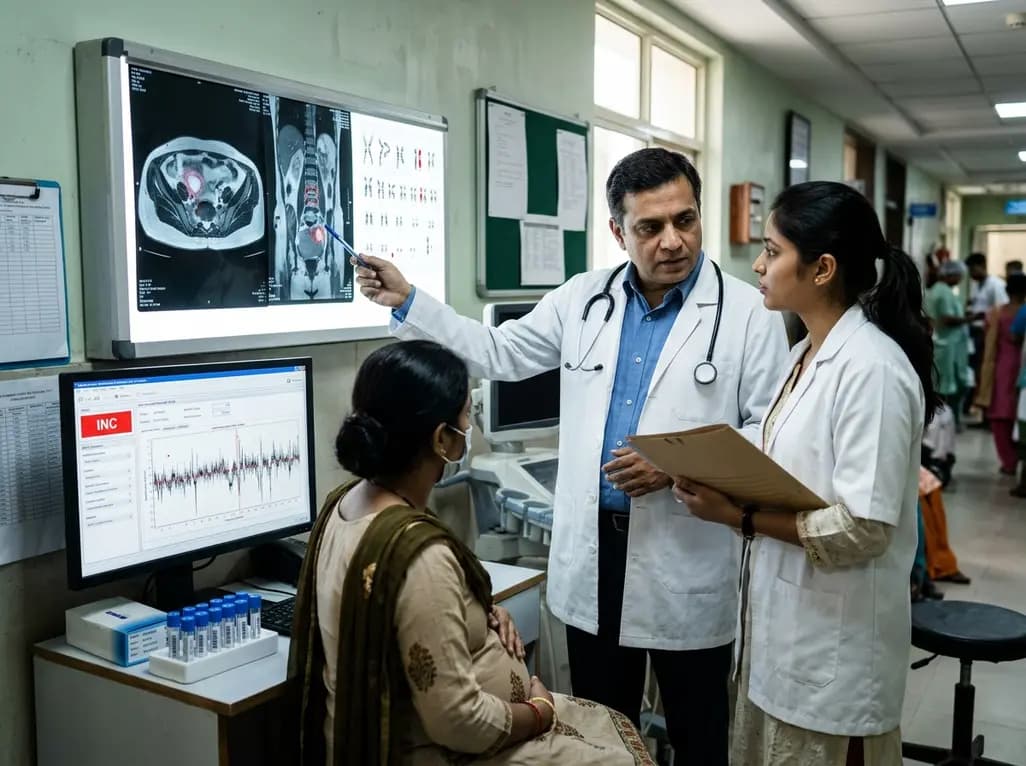
Occult maternal malignancy accounts for 3.82% of persistent unreportable NIPT results with genomic noise. Multiple chromosomal aberrations, notably on chromosome 18, warrant thorough oncological evaluation and whole-body MRI to ensure timely maternal diagnosis while preserving fetal care.
Today

This article reviews the forensic and clinical complexities of acute myocarditis arising on left ventricular hypertrophy in children, highlighting early diagnostic red flags and multidisciplinary postmortem autopsy protocols.
Today

This comparative study evaluates posterior labral tears with and without glenohumeral instability, highlighting distinct demographic patterns, MRI underestimation in stable shoulders, and successful arthroscopic repair outcomes.
Yesterday

A clinical study demonstrates that early intervention with tocilizumab, either as monotherapy or bridged with corticosteroids, achieves significant proptosis reduction and resolves active inflammation in treatment-naive thyroid eye disease.
Yesterday
