.webp&w=384&q=75)

Loading, please wait...
Loading, please wait...

Post-stroke depression (PSD) affects a significant portion of stroke survivors, with research indicating a pooled prevalence of nearly 55% in India. This neuropsychiatric complication severely hinders functional recovery and diminishes the quality of life. Current pharmacological interventions, such as selective serotonin reuptake inhibitors, often yield suboptimal results or present safety concerns. Consequently, Remote Ischemic Conditioning has emerged as a promising, non-invasive therapeutic strategy to address these clinical challenges.
Stroke and depression often share common pathophysiological roots. Specifically, neuroinflammation, impaired neuroplasticity, and cerebrovascular dysfunction drive the progression of PSD. Moreover, the inflammatory hypothesis suggests that cytokines released during the acute phase of a stroke can penetrate the blood-brain barrier. These molecules then trigger mood disorders by disrupting monoamine neurotransmission. Therefore, targeting these shared pathways is essential for effective treatment.
Remote Ischemic Conditioning involves applying transient, repetitive cycles of ischemia and reperfusion to a distant limb. This process activates endogenous protective pathways through neural and humoral mechanisms. Furthermore, RIC appears to mitigate neuroinflammation by modulating microglial activity. It also enhances neuroplasticity by increasing the expression of brain-derived neurotrophic factor (BDNF). Additionally, RIC improves cerebrovascular function, which supports better oxygenation of brain tissues involved in mood regulation.
Despite the therapeutic potential, researchers must still refine the optimal dosage and duration of RIC protocols. Currently, pilot studies suggest that daily conditioning over several months is safe and well-tolerated. However, larger randomized controlled trials are necessary to confirm long-term efficacy. Ultimately, RIC represents a scalable and low-cost adjunct therapy that could revolutionize neuropsychiatric care in stroke rehabilitation centers across the country.
Meta-analyses suggest that approximately 55% of stroke survivors in India experience some form of depression. This high incidence necessitates better screening and innovative treatment strategies like RIC.
Yes, RIC is generally safe and non-invasive. Most clinical studies report only mild adverse reactions, such as temporary bruising or discomfort at the cuff site, making it suitable for geriatric populations.
Disclaimer: This content is for informational and educational purposes only. It does not constitute medical advice or establish a doctor-patient relationship. Always seek the advice of a qualified healthcare provider regarding a medical condition. Refer to the latest local and national guidelines for clinical practice.
References
Zhang H et al. A perspective on the potential role of remote ischemic conditioning in post-stroke depression: Mechanisms and future directions. J Cereb Blood Flow Metab. 2026 Mar 12. doi: 10.1177/0271678X261426923. PMID: 41816873.
Li W et al. A Pilot Study of Remote Ischemic Conditioning in Preventing Post-Stroke Depression. Neuropsychiatr Dis Treat. 2025 Mar 19;21:611-619. doi: 10.2147/NDT.S495215.
Sahu S et al. Prevalence of Depression among Stroke Survivors in India: A Systematic Review and Meta-Analysis. Northumbria University Research Repository. 2021.

Read summarized clinical updates, watch expert medical content, and earn CME certifications right from your smartphone.
Open your smartphone camera to scan and install.





This review examines Remote Ischemic Conditioning (RIC) as a novel therapy for post-stroke depression, focusing on neuroinflammation and neuroplasticity....
7 months ago
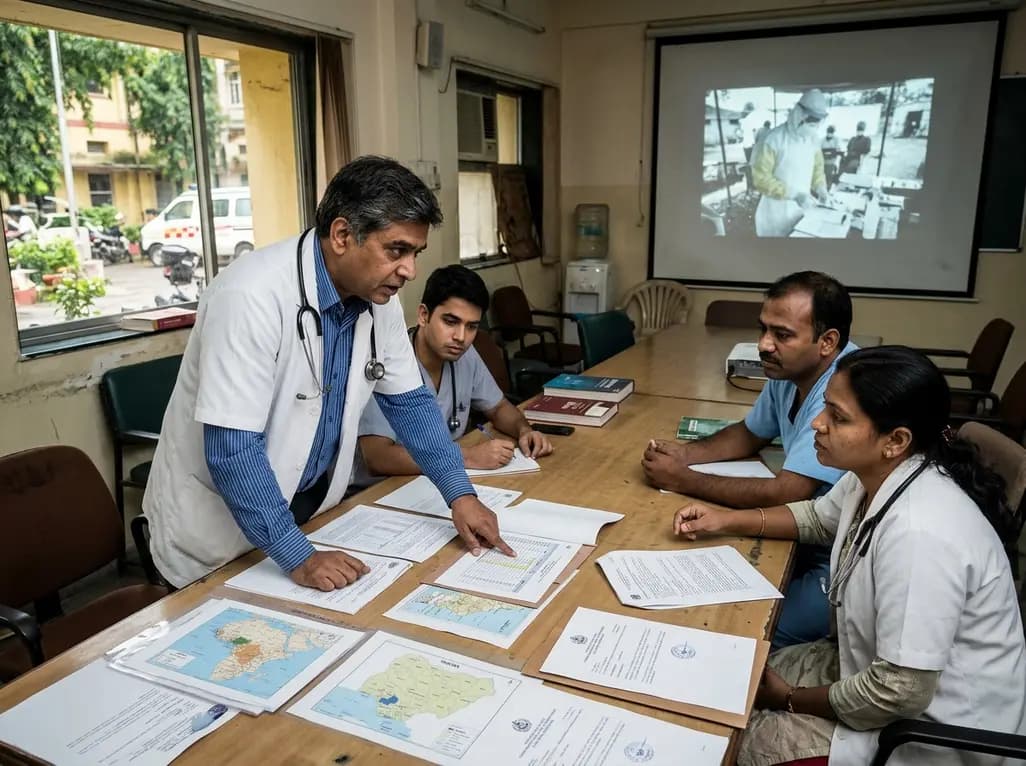
Following Nigeria's first recorded Ebola case linked to regional travel, the Africa CDC has convened an emergency ministerial summit. This alert underscores critical clinical priorities for healthcare professionals, including differentiating early viral infection from malaria, implementing barrier nursing, and triage.
Today

Leucine Rich Bio has introduced South Asia's first comprehensive vaginal microbiome test, BugSpeaks. By profiling microbial dysbiosis, pathogens, and antimicrobial resistance, this next-generation diagnostic platform provides clinicians with deeper insights into recurrent infections, fertility, and reproductive health.
Today

Review how tailored exercise programs benefit frail older patients with heart failure. Explore pathophysiological mechanisms, individualized training prescriptions, and strategies to overcome adherence barriers in clinical practice.
Today

This comparative study evaluates posterior labral tears with and without glenohumeral instability, highlighting distinct demographic patterns, MRI underestimation in stable shoulders, and successful arthroscopic repair outcomes.
Today

A clinical study demonstrates that early intervention with tocilizumab, either as monotherapy or bridged with corticosteroids, achieves significant proptosis reduction and resolves active inflammation in treatment-naive thyroid eye disease.
Today
