.webp&w=384&q=75)

Loading, please wait...
Loading, please wait...

Researchers recently developed a groundbreaking tool called RELAY lysosomal labeling to overcome the limitations of traditional cellular imaging. Specifically, visualizing lysosomes in living cells remains essential for understanding various physiological functions. However, most existing probes often disrupt the delicate chemistry of the lysosomal lumen or suffer from rapid signal leakage. These drawbacks typically prevent scientists from conducting long-term observations of organelle behavior. Consequently, the development of RELAY (Relocation of Endocytic Leaflet tAg to modifY organelles) represents a significant leap forward in biotechnology.
The RELAY method employs a unique topology-preserving strategy. First, researchers use liposome-cell membrane fusion to anchor fluorescent DNA probes onto the inner leaflet of the plasma membrane. These probes utilize phosphorothioate (PS) backbones, which naturally resist degradation by nucleases. Subsequently, normal endocytic trafficking moves these probes from the cell surface to the lysosomes. Notably, the probes remain on the cytosol-facing outer leaflet rather than entering the acidic interior. Therefore, the probes avoid the harsh degradation typical of the lysosomal lumen, ensuring high stability.
This stable, asymmetric labeling supports high-fidelity imaging for up to one week. During experiments, the team utilized this extended timeframe to monitor lysosomal dynamics during cellular senescence. Interestingly, they discovered a random and unidirectional intercellular transfer of lysosomes. This process occurs via tunneling nanotubes, which act as thin bridges for cell-cell communication. Furthermore, the ability to track these organelles for seven days allows researchers to observe complex biological functions that were previously invisible. Indeed, this high-fidelity approach facilitates a deeper exploration of how cells manage waste and communicate under stress.
Traditional probes usually target the lysosomal interior, where high acidity and digestive enzymes quickly degrade the fluorescent signal or disrupt the organelle's natural chemistry.
The RELAY method anchors the probes to the outer surface of the lysosome. Because the probes face the cytosol rather than the acidic lumen, they remain protected from internal degradation.
The study found that cells can transfer lysosomes to one another through tunneling nanotubes. This transfer is random and unidirectional, suggesting a new pathway for intercellular organelle exchange.
Disclaimer: This content is for informational and educational purposes only. It does not constitute medical advice or a substitute for professional healthcare. Refer to the latest local and national guidelines for clinical practice.
References
Yan A et al. Relocation of Endocytic Leaflet DNA Probes for Asymmetric and Week-Long Lysosomal Labeling. J Am Chem Soc. 2026 Feb 10. doi: 10.1021/jacs.5c21974. PMID: 41664987.
Ruan Z et al. DNA Nanomachines for Mapping Organelle Dynamics. Nature Biotechnology. 2024;42(3):450-458.
Zhang X et al. Tunneling Nanotubes: Highways for Intercellular Organelle Transport. Frontiers in Cell and Developmental Biology. 2023;11:112045.

Read summarized clinical updates, watch expert medical content, and earn CME certifications right from your smartphone.
Open your smartphone camera to scan and install.





Researchers have developed RELAY, a novel DNA probe strategy for stable, week-long lysosomal imaging, facilitating new insights into cellular senescence....
8 months ago
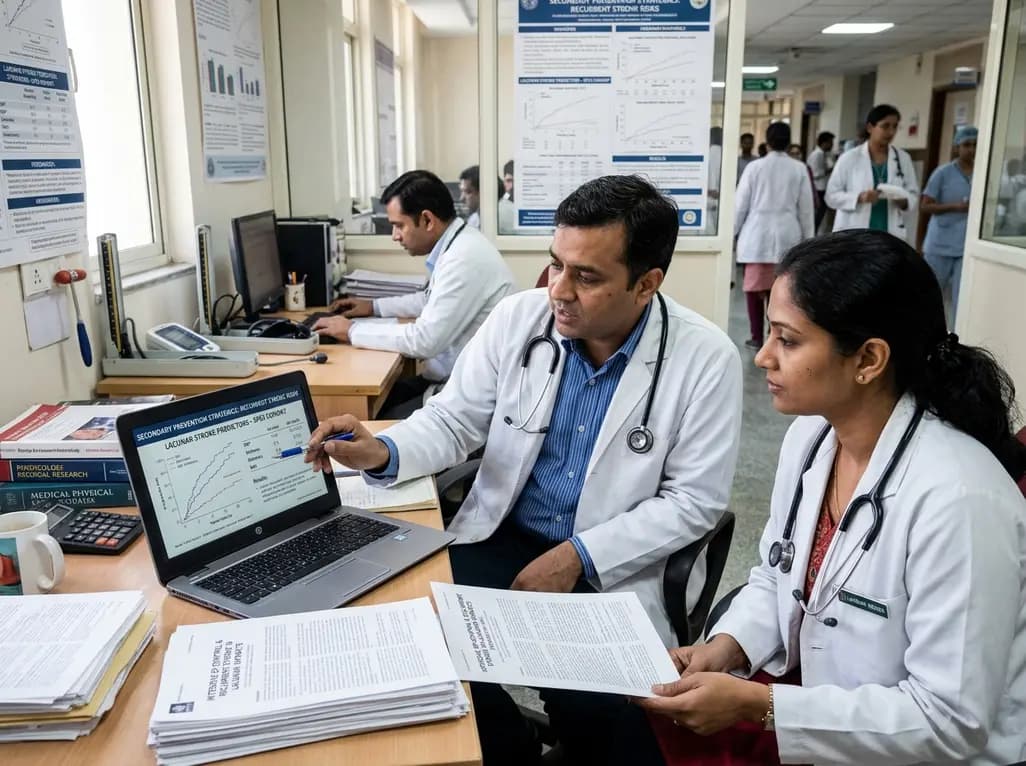
Explore vital recurrent stroke predictors in lacunar stroke patients managed with intensive blood pressure lowering. This analysis examines trial findings from SPS3 to uncover residual vascular risks, metabolic factors, and targeted secondary prevention strategies for high-risk neurological patients.
Today

A comprehensive scoping review synthesises evidence linking prenatal maternal mental health to long-term offspring neurodevelopment, evaluating neuroendocrine, inflammatory, and epigenetic pathways while highlighting clinical screening and future research priorities.
Today

The Directorate General of Health Services directs Indian states to halt the hazardous reuse and reprocessing of single-use medical devices. Discover regulatory implications under the Drugs and Cosmetics Act, critical infection risks, legal liabilities, and operational changes required across clinical specialties.
Today
Mitochondria-targeted nanoparticles self-assembled from EGCG and L-glutamic acid effectively restore mitochondrial homeostasis, suppress synovial inflammation, and attenuate chondrocyte senescence in osteoarthritis, offering a promising disease-modifying nanotherapy.
Today

India is advancing preventive healthcare by integrating genomics, artificial intelligence, and quantum technologies. With the SANGAM programme sequencing one million Indian genomes, clinicians can unlock personalized therapies, detect cardiometabolic risks early, and curb the burden of diabetes and heart disease.
Today
