.webp&w=384&q=75)

Loading, please wait...
Loading, please wait...
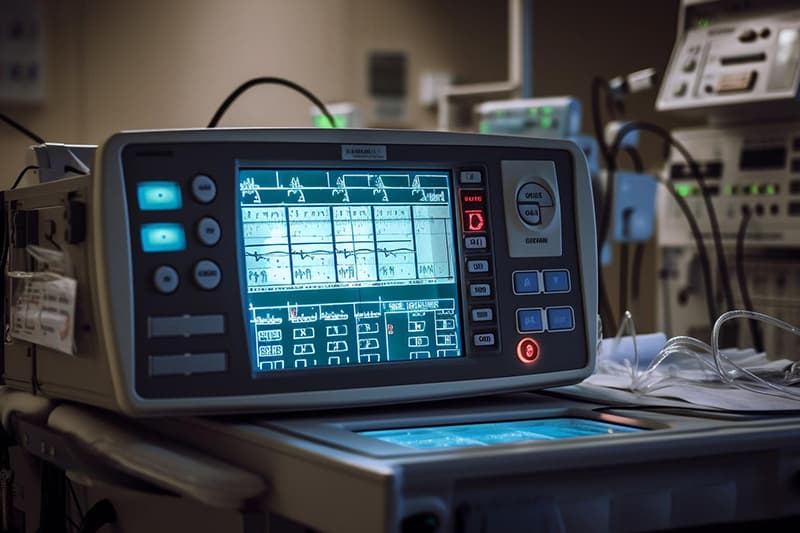
The Union Health Ministry has formed a new committee to regulate the policy on Refurbished Medical Devices in India. This move immediately sparked a sharp debate between the domestic medical technology industry and multinational companies. The domestic industry strongly opposes any relaxation of the existing import restrictions. They cite significant risks to patient safety and a direct threat to local 'Make in India' manufacturing initiatives.
Anupriya Patel, Minister of State for Health, confirmed the ministry's policy review committee. This committee will examine the scope, safety evaluation methodology, performance, remaining useful life, and waste disposal for refurbished devices. However, domestic firms, led by the Association of Indian Medical Device Industry (AiMeD), strongly urge the government to uphold the current ban. Consequently, they seek robust Central Drugs Standard Control Organisation (CDSCO) oversight, benchmarked to global standards. Dr. Sudhir Srivastav emphasized that high-end equipment, like surgical robots, require precision. Permitting pre-owned equipment without a stringent, globally-benchmarked framework introduces unacceptable clinical risk. Furthermore, critics claim that unregulated imports undermine the growth of local firms.
International players argue that refurbishing equipment substantially reduces costs for hospitals. Consequently, this cost reduction ultimately benefits patients, especially those in Tier-2 and Tier-3 cities. Conversely, domestic manufacturers argue that the import of older, unregulated systems suppresses local demand and stifles innovation. AiMeD's Rajiv Nath noted that clinics rarely disclose the true lifespan of their devices. Therefore, the discounted utility of older equipment is seldom transparent compared with new devices in the same facility. Meanwhile, Pavan Choudary of the Medical Technology Association of India (MTaI) views the government's committee decision as an opportunity. He suggests India could position itself as a premier electronics repair hub for the Global South. This initiative would strengthen the Electronics Repair Services Outsourcing (ESRO) sector and facilitate advanced training for healthcare workers.
CDSCO has previously disallowed imports of Refurbished Medical Devices, informing Customs that current regulations permit no such provision. This regulatory clarification followed a brief period in 2023 when the Ministry of Environment, Forest and Climate Change (MoEFCC) had framed imports as a measure to support e-waste management. Globally, regulated markets, including the US and EU, do permit the use of refurbished medical devices. These devices account for approximately 7–9% of total medical equipment volumes in those regions. The Indian market for refurbished equipment accounts for an estimated 10% of the total market. AiMeD claims an unauthorized trade of Rs 12-15,000 crore worth of pre-owned equipment currently operates without regulatory oversight.
Q1: Why is the domestic industry opposing the policy review on refurbished medical devices?
The domestic industry, represented by AiMeD, strongly opposes relaxing import restrictions. They cite the potential for compromised patient safety due to unreliable, obsolete technology and the threat that cheaper, pre-owned equipment poses to local 'Make in India' manufacturers and their economic growth.
Q2: What is the current official stance of CDSCO on the import of refurbished medical devices?
The Central Drugs Standard Control Organisation (CDSCO) has clarified that, under the Medical Devices Rules, 2017, there is currently no specific provision that permits the import of refurbished medical devices for sale and distribution in India.
Q3: How do proponents of refurbished imports argue they benefit the healthcare system?
Proponents, including international players, argue that refurbished medical equipment can significantly reduce costs for hospitals, making high-end technology more accessible and affordable, particularly in Tier-2 and Tier-3 cities where costs are a major factor.
Disclaimer: This content is for informational and educational purposes only. It does not constitute medical advice or replace professional judgment. Refer to the latest local and national guidelines for clinical practice.
References

Read summarized clinical updates, watch expert medical content, and earn CME certifications right from your smartphone.
Open your smartphone camera to scan and install.





The Union Health Ministry is forming a committee to regulate refurbished medical devices in India, sparking a conflict between domestic manufacturers and mu...
8 months ago

A breakthrough study evaluated H5N1 transmission efficiency across mammalian isolates. Researchers discovered that human-derived D1.1 harboring the PB2 D701N mutation spread efficiently in ferrets, unlike strains carrying PB2 E627K. This finding highlights critical genetic markers for zoonotic surveillance.
Today

A comparative cohort study evaluates vNOTES vs TLH hysterectomy for benign conditions, demonstrating shorter operative duration, faster return to daily activities, and equivalent female sexual function scores without increased dyspareunia.
Today

Review how tailored exercise programs benefit frail older patients with heart failure. Explore pathophysiological mechanisms, individualized training prescriptions, and strategies to overcome adherence barriers in clinical practice.
Yesterday

This comparative study evaluates posterior labral tears with and without glenohumeral instability, highlighting distinct demographic patterns, MRI underestimation in stable shoulders, and successful arthroscopic repair outcomes.
Yesterday

A clinical study demonstrates that early intervention with tocilizumab, either as monotherapy or bridged with corticosteroids, achieves significant proptosis reduction and resolves active inflammation in treatment-naive thyroid eye disease.
Today
