.webp&w=384&q=75)

Loading, please wait...
Loading, please wait...

Neutrophils serve as the first line of defense in the human immune system, yet their hyperactivation often leads to significant tissue damage. Therefore, researchers are actively exploring redox-dependent NETosis control to better manage inflammatory conditions. A recent study introduced MorphoMapping, a revolutionary pipeline that analyzes neutrophil morphotypes through high-resolution imaging flow cytometry. Because this approach relies purely on morphology-derived features, it offers a scalable and precise way to quantify cellular shifts in suspension.
The research team applied MorphoMapping to primary human neutrophils treated with the heme-targeted redox modulator WF10 (tetrachlorodecaoxide). This modulator successfully creates a treatment-specific morphological state within the cells. Furthermore, the data revealed a reproducible redistribution of neutrophils away from H3Cit-associated NETotic morphotypes. Instead, the treatment enriched nuclear patterns that suggest safer, non-NETotic termination programs. Consequently, these results highlight a promising therapeutic path for suppressing exaggerated neutrophil activation under priming conditions.
Effectively managing NETosis is vital in critical conditions such as sepsis, respiratory distress, and chronic autoimmune inflammation. Moreover, the precision of MorphoMapping allows for high-throughput screening of potential drugs that influence the cellular redox environment. Doctors may eventually utilize these findings to guide personalized treatments for inflammatory injuries. Overall, this study successfully bridges the gap between single-cell imaging and clinical redox modulation, providing a new framework for therapeutic intervention.
NETosis is a specialized cell death process where neutrophils release chromatin traps to capture pathogens. While protective, excessive NET formation contributes to tissue injury and thrombosis in inflammatory diseases.
MorphoMapping uses imaging flow cytometry and morphology-based features rather than just chemical markers. This allows for scalable, single-cell resolution of neutrophil states in suspension.
WF10 acts as a redox modulator that shifts neutrophils away from inflammatory NETotic states. It promotes alternative nuclear morphologies that are compatible with non-damaging termination programs.
Disclaimer: This content is for informational and educational purposes only. It does not constitute medical advice and is not intended to replace professional judgment. Always seek the advice of a qualified healthcare provider for any medical condition or treatment. Refer to the latest local and national guidelines for clinical practice.
References
Bauerdick A et al. MorphoMapping identifies redox-dependent control of NETotic states in primed neutrophils. J Immunol. 2026 Apr 15. doi: undefined. PMID: 41986879.
Kuhlmann RK et al. Mechanisms of WF10 (tetrachlorodecaoxide) in modulating neutrophil oxidative burst. Journal of Inflammation Research. 2023.
Akong-Moore K et al. Influences of Chloride and Hypochlorite on Neutrophil Extracellular Trap Formation. PLoS ONE. 2012.

Read summarized clinical updates, watch expert medical content, and earn CME certifications right from your smartphone.
Open your smartphone camera to scan and install.





Researchers developed MorphoMapping to track how redox modulators like WF10 suppress harmful NETosis in neutrophils, offering new paths for inflammation the...
6 months ago
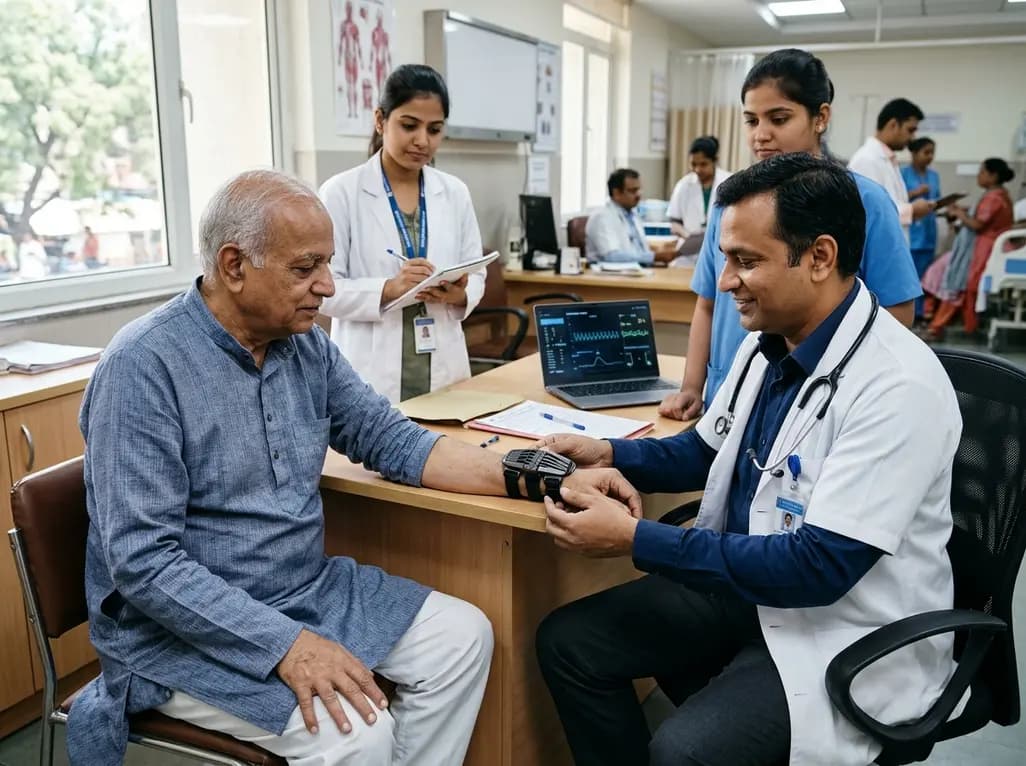
The TREM-AB open-label pilot study evaluated a wearable passive nonlinear vibration absorber for essential tremor. The Nonlinear Energy Sink bracelet reduced clinical Fahn-Tolosa-Marin tremor scores by 32.1% and electrophysiological tremor power by 49.2% with no adverse effects reported.
Today

A study in JAMIA Open shows lightweight open-source reasoning LLMs achieve up to 95% sensitivity and accelerate evidence synthesis screening by nearly twentyfold, presenting a cost-effective, scalable AI solution for biomedical research and systematic reviews.
Today
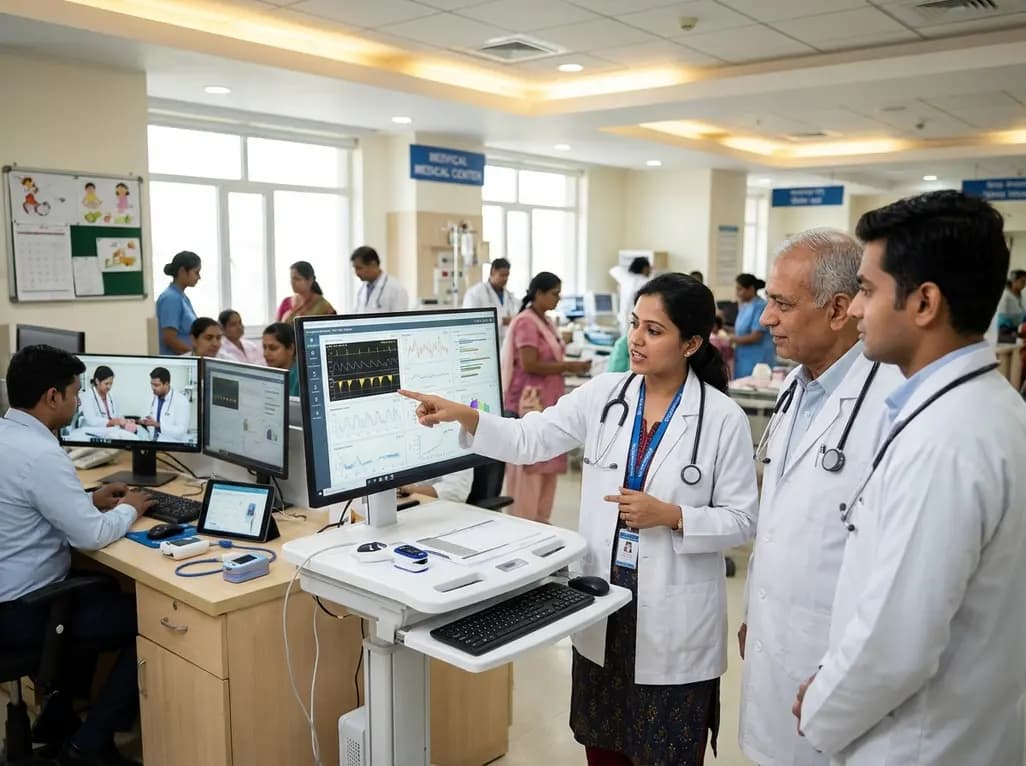
A landmark study details how an enterprise pediatric remote patient management model expanded from a single cardiology pilot to 16 diverse specialty programs by combining centralized digital operations with specialty clinical leadership.
Today
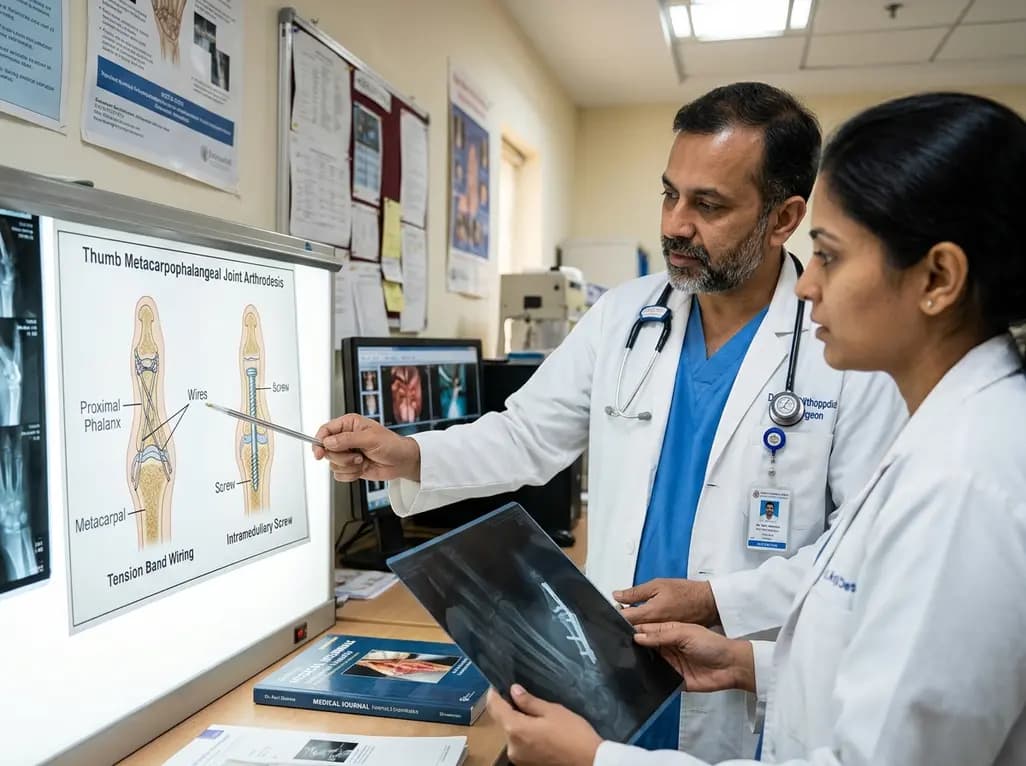
A comparative review of tension band wiring and intramedullary screw fixation in thumb metacarpophalangeal arthrodesis, evaluating union rates, hardware complications, and clinical outcomes.
Today
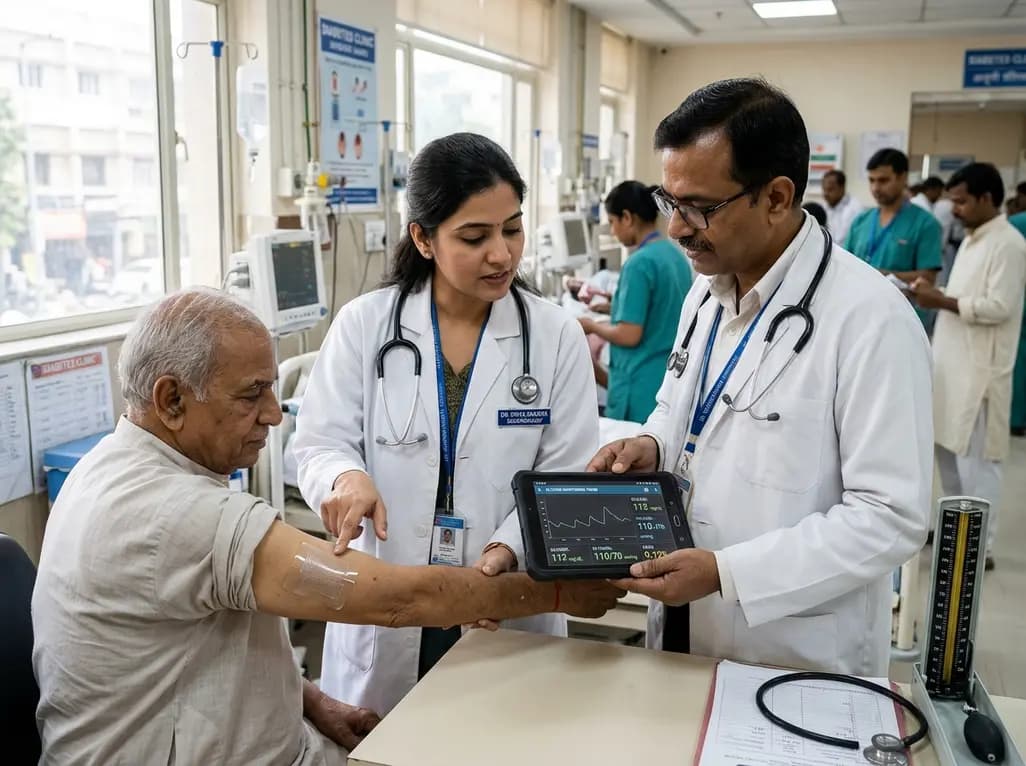
A breakthrough ultrathin multimodal sensor decouples physical hemodynamic monitoring from disposable electrochemical calibration, achieving long-term wearable glucose prediction with 81.36% accuracy and a 9.12% MARD. This offers a robust, drift-free solution for outpatient metabolic surveillance.
Today
