.webp&w=384&q=75)

Loading, please wait...
Loading, please wait...

Traditional randomized controlled trials (RCTs) have long been the gold standard for regulatory approval. However, the landscape for motion-preserving spine technologies is shifting rapidly. Clinical investigators are now leveraging real-world evidence in spine surgery to navigate the complexities of modern device development. Since the early 2000s, escalating costs and patient enrollment hurdles have made traditional RCTs increasingly difficult for smaller innovators to sustain. Consequently, the US Food and Drug Administration (FDA) has expanded its acceptance of alternative evidence standards following the 21st Century Cures Act.
The MOTUS lumbar total joint replacement study serves as a landmark example of this modern methodological framework. Unlike historical trials that required sponsor-funded control arms, the MOTUS IDE employed a prospective dual-arm design. This approach used an investigational arm for the MOTUS device and an independent real-world evidence (RWE) control arm. The control group documented outcomes of standard-of-care fusion procedures in real-world settings. Researchers used propensity score methodology to ensure comparative validity between these groups. Furthermore, the study utilized identical sites and surgeons to enroll participants in overlapping intervals, which significantly reduced potential confounding factors.
The integration of RWE offers substantial benefits over traditional trial designs. For instance, the MOTUS IDE completed enrollment in just 3.5 years, compared to the 4 to 5 years typically required for historical lumbar disc replacement RCTs. Additionally, because insurance covered the standard-of-care procedures in the RWE arm, sponsor costs were reduced by 5- to 10-fold. This financial efficiency is critical for resource-constrained innovators. Moreover, this design bypasses the inherent ethical and practical limitations of blinding in spine device trials. Patients are often reluctant to be randomized into non-motion-preserving groups, such as traditional fusion hardware. By using RWE, the study maintains high enrollment rates while ensuring scientific rigor.
As large manufacturers withdraw from lumbar motion-preservation development, these new trial designs provide a vital pathway for novel technologies. The success of the MOTUS study demonstrates that RWE can effectively support the Premarket Approval pathway. Consequently, this shift allows for more pragmatic trials that reflect true clinical practice. Ultimately, the use of real-world data helps bridge the gap between initial innovation and widespread clinical availability, benefiting both surgeons and patients.
RWE allows patients to receive standard-of-care treatments without the uncertainty of randomization. This reduces patient reluctance and speeds up the recruitment process.
Propensity score adjustment is a statistical technique used to balance baseline characteristics between the investigational and RWE control groups. It ensures that comparisons are scientifically valid despite the lack of traditional randomization.
The MOTUS study is significant because it successfully integrated a real-world control arm into a pivotal IDE trial, drastically reducing costs and timelines while meeting strict regulatory standards.
Disclaimer: This content is for informational and educational purposes only and does not constitute medical advice or a professional recommendation. The information regarding medical devices and clinical trials is subject to change based on evolving regulatory guidelines. Refer to the latest local and national guidelines for clinical practice.
References
Maislin D et al. A Perspective for Integrating Real-World Evidence Into the Investigational Device Exemption Study Design for Lumbar Total Joint Replacement. Int J Spine Surg. 2026 Mar 16. doi: undefined. PMID: 41839575.
U.S. Food and Drug Administration. Use of Real-World Evidence to Support Regulatory Decision-Making for Medical Devices: Guidance for Industry and Food and Drug Administration Staff. 2025.
Sielatycki JA et al. Total Joint Replacement of the Lumbar Spine: 12-Month Pain and Functional Outcomes From an Investigational Device Exemption Clinical Trial. North American Spine Society Journal. 2024.

Read summarized clinical updates, watch expert medical content, and earn CME certifications right from your smartphone.
Open your smartphone camera to scan and install.





Explore how the MOTUS study integrates real-world evidence (RWE) to streamline spine device approvals, reduce costs, and address clinical trial challenges....
7 months ago
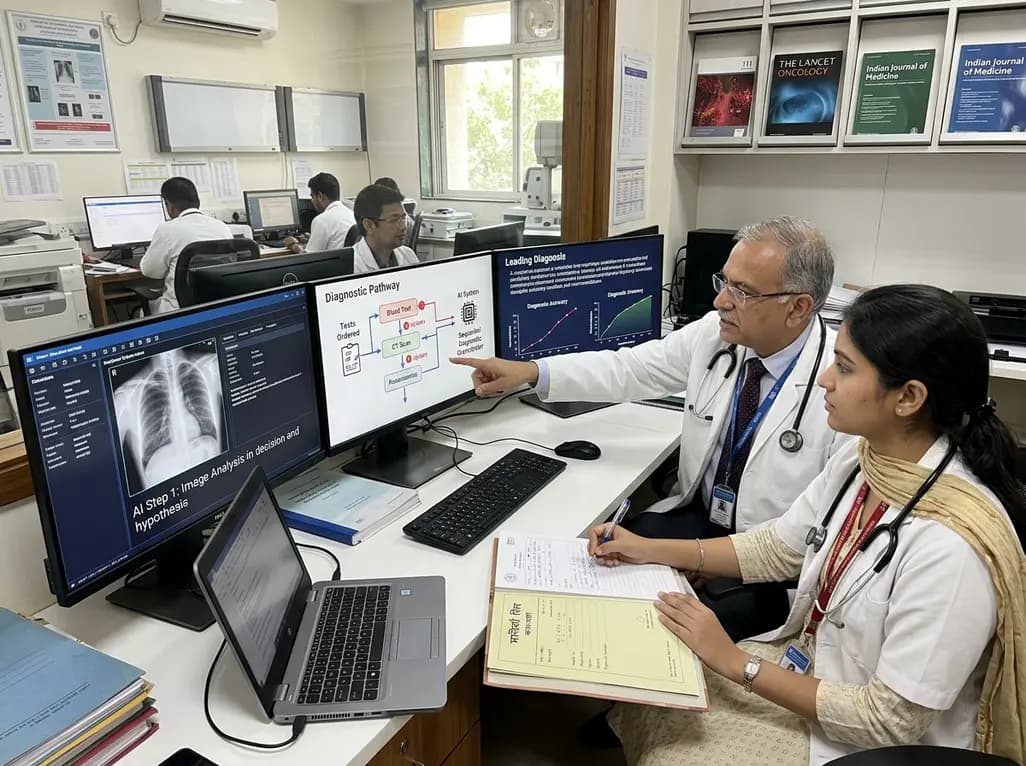
A breakthrough peer-reviewed study demonstrates that a sequential AI diagnosis system can mirror real-world clinical reasoning. By ordering stepwise tests and updating hypotheses dynamically, this multi-agent orchestrator achieved superior diagnostic accuracy while reducing investigative costs.
Today

A prenatal case highlights severe glutaric acidemia type II presenting as bilateral hyperechoic cystic kidneys at 18 weeks. Whole-exome sequencing revealed a novel homozygous ETFDH frameshift variant, demonstrating the power of rapid genetic testing in fetal renal anomalies.
Today

Review how tailored exercise programs benefit frail older patients with heart failure. Explore pathophysiological mechanisms, individualized training prescriptions, and strategies to overcome adherence barriers in clinical practice.
Yesterday

This comparative study evaluates posterior labral tears with and without glenohumeral instability, highlighting distinct demographic patterns, MRI underestimation in stable shoulders, and successful arthroscopic repair outcomes.
Yesterday

A clinical study demonstrates that early intervention with tocilizumab, either as monotherapy or bridged with corticosteroids, achieves significant proptosis reduction and resolves active inflammation in treatment-naive thyroid eye disease.
Yesterday
