.webp&w=384&q=75)

Loading, please wait...
Loading, please wait...

Managing proximal humeral fractures (PHF) in older adults represents a growing challenge for clinicians worldwide. Specifically, a patient's proximal humeral fracture prognosis depends on several factors beyond the fracture pattern itself. Baseline functional status and pre-existing dependency levels play critical roles in determining the clinical course. Recently, researchers analyzed health insurance claims data to quantify how a patient's prior level of care (LoC) influences their survival and recovery. This understanding is vital for Indian practitioners who must balance surgical risks with long-term functional goals in an aging population.
The German health insurance data analysis involved over 55,000 patients aged 65 and older. Notably, the study found that 68% of patients had no prior level of care (LoC) before their injury. However, as the LoC increased—indicating higher dependency—the outcomes worsened dramatically. Consequently, clinicians often opt for non-operative treatment in more dependent patients. Specifically, 52% of patients with no LoC received non-operative care, compared to 76% of those in the highest dependency category (LoC V).
Furthermore, mortality rates showed a staggering correlation with dependency. The 1-year mortality rate for patients with no prior dependency was only 4%. In stark contrast, patients in LoC V faced a 50% mortality rate within a year. These findings suggest that proximal humeral fracture prognosis is intrinsically linked to the patient's physiological reserve and social support systems.
The study confirmed that increasing dependency levels are associated with a greater risk of major adverse events (MAEs) and thromboembolic events. Therefore, orthopedists and geriatricians must work together to risk-stratify patients early. While surgical intervention may offer functional benefits for independent patients, the high mortality risk in dependent cohorts suggests that non-operative management or palliative care might be more appropriate. In the Indian context, where family care often replaces formal LoC, assessing daily living activities (ADL) remains a cornerstone of predicting outcomes.
Pre-fracture dependency is a major predictor of mortality. Higher levels of care dependency correlate with significantly higher 1-year mortality rates, reaching up to 50% for the most dependent patients.
Clinicians often choose non-operative treatment for dependent patients due to higher surgical risks, extensive comorbidities, and lower functional demands. The priority often shifts from anatomical restoration to pain management and comfort.
Yes, increasing levels of care are associated with a higher risk of major adverse events, including cardiovascular issues and thromboembolic complications, during the post-fracture period.
Disclaimer: This content is for informational and educational purposes only. It does not constitute medical advice and should not be used as a substitute for professional clinical judgment. Refer to the latest local and national guidelines for clinical practice.
References
Iking J et al. The impact of prior level of care on the course of proximal humeral fractures in older patients: an analysis based on health insurance claims data. BMC Health Serv Res. 2026 Feb 11. doi: 10.1186/s12913-026-14024-0. PMID: 41673641.
Bhasme AS, et al. Functional outcome following surgical management of proximal humerus fracture in elderly. International Journal of Orthopaedics Sciences. 2017;3(4):437-440. doi: 10.22271/ortho.2017.v3.i4f.51.
Myeroff C, et al. Predictors of Mortality in Elder Patients With Proximal Humeral Fracture. Geriatr Orthop Surg Rehabil. 2017;8(4):231-240. doi: 10.1177/2151458517728155.
"
Read summarized clinical updates, watch expert medical content, and earn CME certifications right from your smartphone.
Open your smartphone camera to scan and install.





A study of 55,798 patients reveals that higher levels of pre-fracture care dependency significantly worsen proximal humeral fracture prognosis and survival....
8 months ago
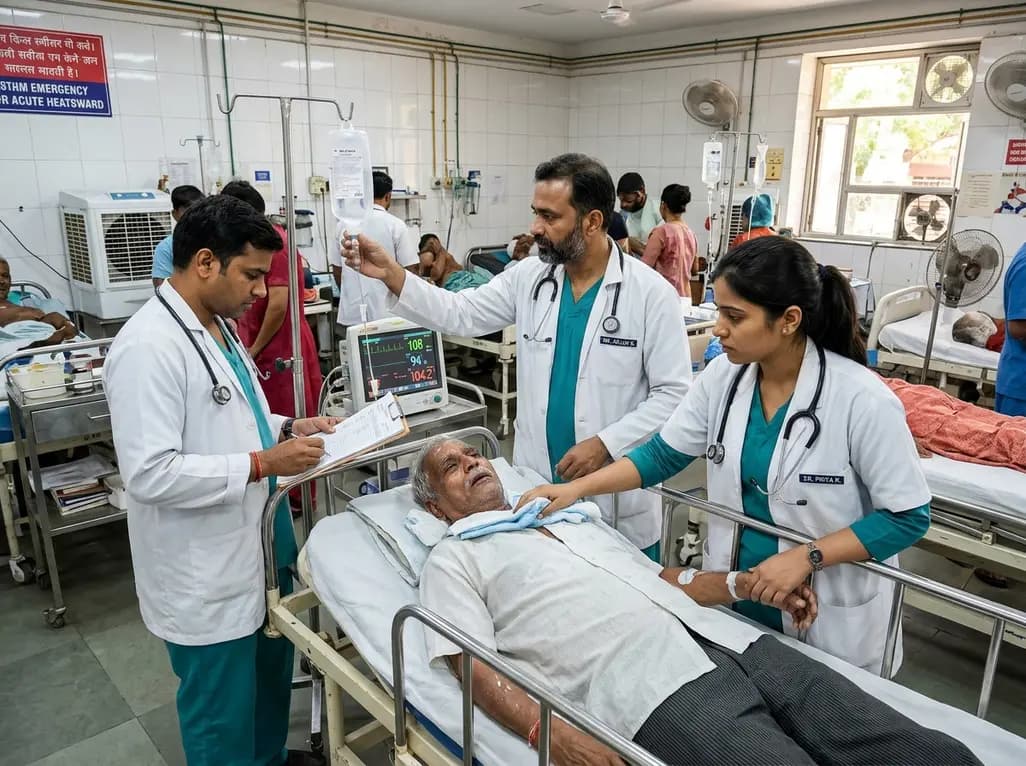
Recent epidemiological data reveals a dramatic surge in summer heat mortality driven by human-induced climate warming. This analysis explores the pathophysiological impacts on cardiac and renal systems, diagnostic dilemmas in death certification, and essential emergency cooling protocols for acute clinical care.
Today
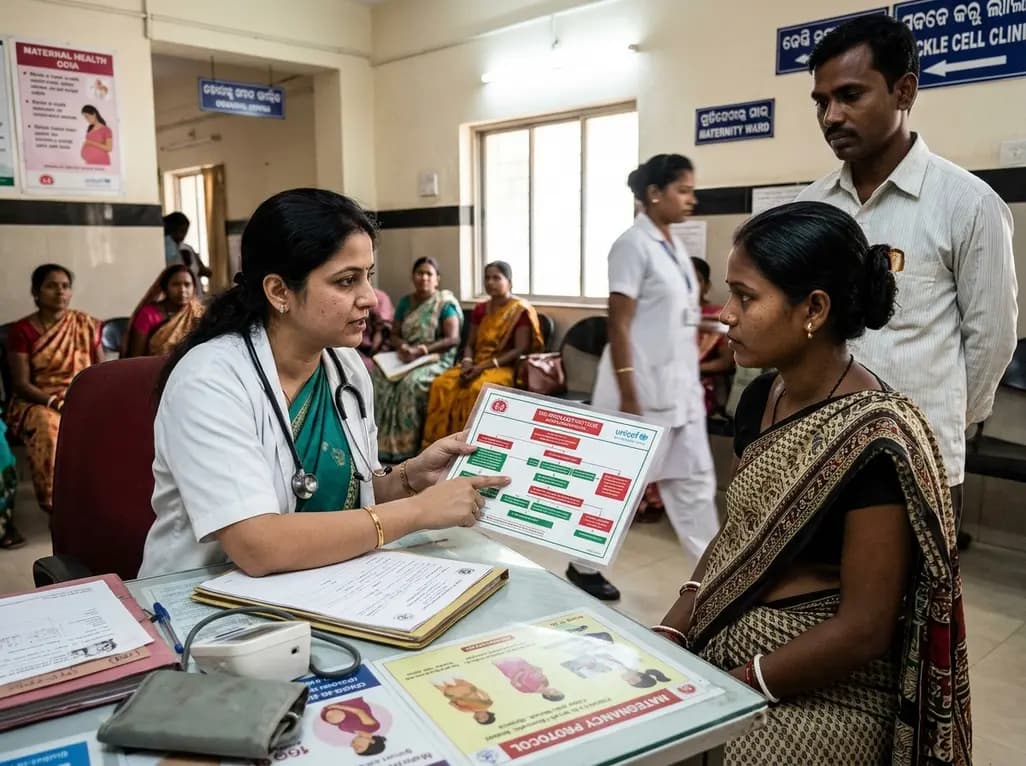
Odisha has established India's first state-level clinical protocol specifically tailored for pregnant women with sickle cell disease. Developed with NHM and UNICEF, the framework provides structured antenatal screening, crisis mitigation, standardized referral pathways, and specialized interdisciplinary care.
Today

India is advancing preventive healthcare by integrating genomics, artificial intelligence, and quantum technologies. With the SANGAM programme sequencing one million Indian genomes, clinicians can unlock personalized therapies, detect cardiometabolic risks early, and curb the burden of diabetes and heart disease.
Today

A randomized controlled trial demonstrates that an eight-week dual-task training intervention significantly improves static and dynamic postural control over standard balance exercises in individuals with chronic ankle instability, addressing critical neurocognitive deficits during athletic and daily activities.
Today

A retrospective cohort study of 7,716 ICU patients from the MIMIC-IV database demonstrates that Gradient Boosting Decision Trees significantly outperform traditional SOFA scores in predicting in-hospital mortality among patients with sepsis and diabetes, with SHAP analysis providing clinical interpretability.
Today
